Chief Bromden's father
One Flew Over the Cuckoo's NestChief Bromden’s father is a remembered chief whose influence reaches the present through scenes of hunting, negotiation, and laughter. Chief Bromden recalls him as both a parent who taught him to hold still and a public figure who could turn an official negotiation into a joke at the negotiators’ expense. These memories give the father a distinctive kind of authority: not merely the status of a chief, but a composure and wit that his son recognizes again in Randle Patrick McMurphy.
Identity and Characterization
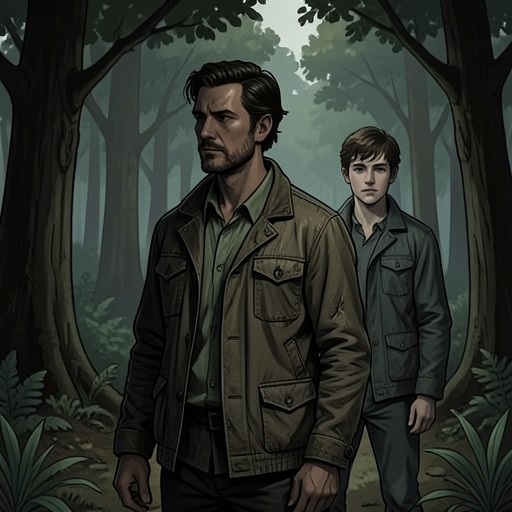
Chief Bromden describes his father as a full-blood Columbia Indian and a chief. His physical presence is rendered through hard, polished comparisons: he was hard and shiny as a gunstock, and broad in a way that Randle Patrick McMurphy is broad. The resemblance, however, is limited. McMurphy is a redheaded white man with long sideburns, unruly curls, and a scar with stitches across his nose and cheekbone; the son explicitly distinguishes his father’s hardness from McMurphy’s, likening the latter instead to a scuffed baseball. The comparison establishes the father not as a replica of McMurphy, but as an earlier figure whose force Chief Bromden can recognize in a different man.
The voice makes the connection more immediate. When McMurphy speaks loudly, with an exuberant edge, Chief Bromden thinks of his father’s manner of talking. The recollection places the father’s authority in his bearing and voice as well as in his formal identity as a chief. Chief Bromden’s memory does not supply a continuous biography; it gathers him through a few vivid scenes and through the qualities that persist in his son’s perception.
Father and Son in the Hunting Memory
In the mop closet, while afraid that he will be taken to shave before breakfast, Chief Bromden tries to turn his thoughts toward the village, the Columbia River, and a time when he and his father hunted birds near The Dalles. The memory cannot fully shelter him: the fear in the ward seeps into the past he is trying to recall. That interruption matters to the portrayal of the father. A remembered lesson in watchfulness becomes entangled with Chief Bromden’s present sense of being hunted.
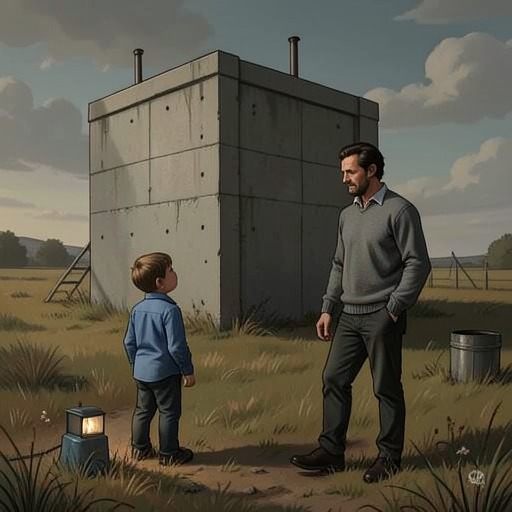
In the hunting scene, the father tells his son to keep still because a pointer dog has sensed a bird nearby. The dog, borrowed from a man in The Dalles, circles beneath a scrub cedar, unable at first to settle on the bird’s position. Chief Bromden sees the bird hunched among the branches and understands that remaining motionless is its protection. The father’s instruction links the boy’s stillness to the bird’s chance of safety; the tension ends when the bird breaks cover and jumps into the shot from his father’s gun. The memory is concrete and unsentimental: the father knows the dog’s work, the boy watches closely, and the hunt concludes in a sudden act of violence.
Negotiation and Comic Resistance
Another recollection places the father on the porch of the family’s shack as government men arrive to negotiate the purchase of land under the treaty. While the officials present papers and explain that their offer could benefit his people and change their lives, he looks up at the sky instead of engaging on their terms. He points out Canada geese, although the men object that geese should not be there in July. He insists that the geese have been there this year, the year before, and for years before that.
The joke works through repetition and the officials’ inability to recognize it at first. They try to redirect the conversation toward the contract; he continues the refrain about the geese. By the time the negotiators understand that he is making fun of them, the council sitting on the porch has broken into laughter. One uncle rolls on the ground, gasping and joining the joke. The officials clear their throats, turn without answering, and walk toward the highway while the people behind them continue laughing. Chief Bromden remembers the exchange as a way of getting under the government men’s skin, not as a successful resolution of the negotiation. The scene shows his father using humor to refuse the officials’ control of the encounter, even as the contract and offer remain before them.
Laughter and the Son’s Present
Chief Bromden’s memories of his father return beside his response to McMurphy. When McMurphy first laughs in the ward, the sound strikes Chief Bromden as real and unfamiliar; he recognizes it as the first genuine laughter he has heard in years. Later, while mopping, he sees McMurphy provoke a ward attendant and grins where the man cannot see him. That action brings back the father’s performance before the government negotiators: the deliberate composure, the refusal to follow the powerful men’s conversational script, and the laughter of those gathered around him.
The parallel is not an assertion that the two men are alike in every respect. Chief Bromden has already marked their differences in appearance and in the particular quality of their hardness. What carries across the contrast is an effect: each can unsettle people accustomed to directing the room, and each makes laughter audible where authority expects compliance. The father’s remembered laughter therefore supplies Chief Bromden with a personal precedent for reading McMurphy’s irreverence. His recollections preserve not only the father’s presence but also a model of how a small refusal—a joke about geese, sustained until the officials understand—can change the balance of a scene.