Chief Bromden's freedom from the hospital
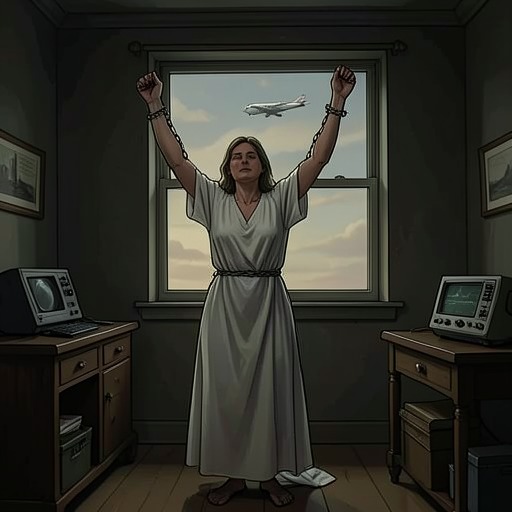
One Flew Over the Cuckoo's NestChief Bromden's freedom from the hospital is secured through a physical breach: he wrenches the Tub-room control panel from the floor, hurls it through a window, and follows it into the moonlight. The escape gives bodily force a concrete destination beyond the ward, but it does not resolve where he will go or what awaits him there.
The Break from the Ward
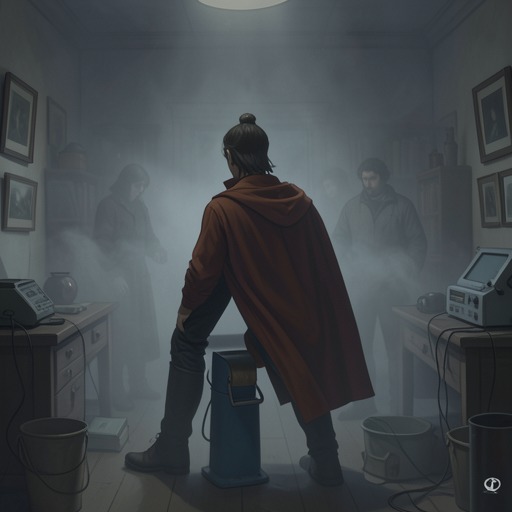
Under the moonlight, Chief Bromden sees the heavy control panel, takes hold of its levers, and heaves until its wires and connections tear out of the floor. He gets the weight to his knees, braces it against his body, and uses its momentum to send it through the screen and window. The crash leaves an opening in the hospital boundary; he vaults through after the panel when he hears the black boys approaching in the hall.
For a moment, he considers returning for Scanlon and some of the other patients. The approaching footsteps end that possibility. Rather than gather anyone else, he puts a hand on the sill and escapes alone. The decision makes the opening both a route to freedom and a point of separation from the people still inside.
Flight and Immediate Freedom
Chief Bromden runs across the grounds toward the highway, following the direction in which he remembers seeing a dog go. He takes huge strides and experiences the run as flight, moving for miles before stopping and climbing the embankment to the road. His escape is not merely a passage out of the building: the sustained run carries him beyond the grounds and into a landscape no longer enclosed by the ward.
He knows that no one usually pursues an AWOL patient and that Scanlon can answer questions about the dead man. Yet he keeps running. That contrast gives the flight its force: practical reasons to stop do not undo the urgency of leaving. The action marks a decisive change from confinement to self-directed movement, without claiming that every danger or obligation has vanished.
An Open Future
After reaching the road, Chief Bromden gets a ride north in a truck full of sheep. He tells the driver a story about being a professional Indian wrestler whom a syndicate had locked in a mental hospital; the man gives him a leather jacket to cover his hospital clothes and lends him ten dollars for food while he hitchhikes toward Canada. Chief Bromden has the driver write down his address and promises to repay him when he is better established.
Canada remains a possibility, not a settled destination. Chief Bromden considers stopping along the Columbia River and visiting Portland, Oregon, Hood River, Oregon, and The Dalles, Oregon, to look for people he knew from his village. He wants to see what has become of them after the government tried to buy their right to be Indians, and he has heard that some members of the tribe are building wooden scaffolding at a hydroelectric dam and spearing salmon in its spillway. Most immediately, he wants to look over the country around the Columbia Gorge and bring it back into clear memory.
Meaning of the Escape
The escape reverses the hospital's control in a material way: the panel that belongs to its machinery becomes the instrument that breaks its window. The image of shattered glass falling into the moonlight accompanies Chief Bromden's crossing from the ward into the outside world. Freedom here is neither a completed return nor a guaranteed future. It is the regained ability to choose a direction—to run, accept help, and decide whether to go on to Canada or first revisit the landscape and people he remembers.