George Sorensen’s contamination anxiety
One Flew Over the Cuckoo's NestGeorge Sorensen’s contamination anxiety governs how he approaches other people, ordinary hygiene, and even a return to the fishing life he once knew. The fear is not simply a reluctance to wash: he avoids soap and towels, worries that a boat will be too dirty, and recoils from a treatment imposed on his body. The contrast between his long experience as a fisherman and his present fear of contamination makes his vulnerability especially visible, while the shower-room confrontation shows how the ward can turn that vulnerability into an instrument of control.
Identity and Everyday Signs
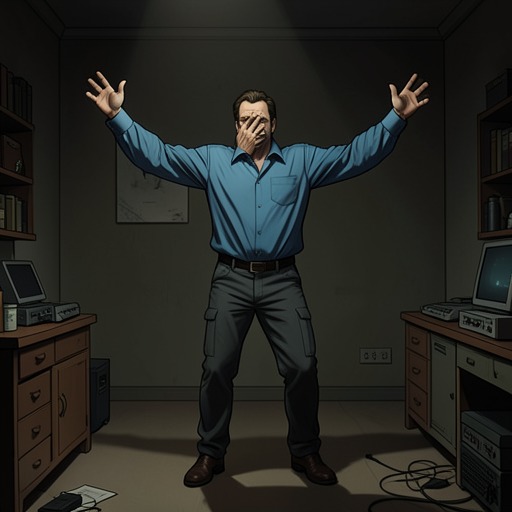
Chief Bromden presents George as an elderly, toothless, knotty Swede whom the black boys call Rub-a-dub George because of his concern with sanitation. His body seems to arrange itself around avoidance. He shuffles with his weight thrown backward, keeping his face as far as possible from the person he is addressing. His eyes are sunk beneath his brow, and he cups a large hand over much of his face while speaking. The backward lean is more than an identifying mannerism: it gives physical form to his effort to keep distance between himself and whatever might contaminate him.
George is shy, and his hand initially muffles his words. When he approaches Randle Patrick McMurphy in the breakfast line, he speaks into his palm about red worms and says he does not think they will do the Chinook any good. McMurphy has to move the hand away so that George can be heard. His anxiety therefore coexists with knowledge and opinions that he struggles to communicate; he is not merely a figure defined by cleanliness, but a person whose guardedness makes it difficult for others to hear him.
A Fisherman Afraid of Dirt
George’s history makes his aversion to contamination strikingly at odds with his former working life. He says he spent twenty-five years on Chinook trollers, fishing from Half Moon Bay to Puget Sound. He recalls owning a forty-foot boat with a twelve-foot draft, built of solid teak and oak, and takes pride in calling it a good troller. His palms bear deep scars from hauling fishing line, physical evidence of years of work at sea.
When he shows his hands, the men around him lean in to look. George then closes them, draws them away, and hides them in his pajama shirt, as if even being looked at might dirty them. The scars connect his present body to a past of strenuous labor, but his handling of them reveals how thoroughly fear has changed his relation to that past. He says he became too dirty to continue fishing and now objects that boats are dirty. The work he once performed has not erased his anxiety; instead, his memories of the sea become a point of conflict between demonstrated competence and present dread.
The Fishing Trip and a Moment of Temptation
While assembling a crew for the fishing trip, McMurphy cannot persuade the remaining patients to volunteer. Nurse Ratched has frightened them with accounts of rough seas and sunken boats. George eventually approaches McMurphy in the breakfast line, but his first concern is the red worms and their effect on the Chinook. When McMurphy recognizes that George knows the fishing business, George describes his twenty-five years of experience and his boat with evident pride.
McMurphy offers him the role of captain, promising that the boat will be sterilized and clean, that George will not have to bait hooks, and that he can give orders to the others. George is visibly tempted: he wrings his hands beneath his shirt, yet continues to say that everything is too dirty. McMurphy then asks what George thinks of Nurse Ratched’s warnings about the dangerous ocean. George concedes that the water can be rough, but his hesitation remains bound up with contamination as well as danger. The exchange exposes a painful divide: the experienced fisherman can still imagine returning to the water, but reassurance about the boat cannot readily overcome his fear of dirt.
The Shower-Room Confrontation
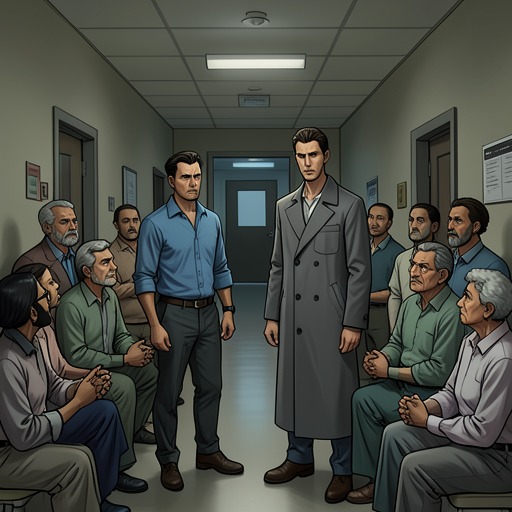
The ward’s routine had long accommodated George’s refusal to use soap or accept a towel. The black boys who supervised the Tuesday and Thursday evening showers had learned not to force him to do otherwise. During a later shower, however, an attendant approaches him with a tube of salve and insists that he submit to treatment, invoking the possibility of bugs. George leans away, covers himself with his large hands, and refuses. Martini and Mr. Sefelt stand motionless nearby as the drain gulps air and soapy water; George watches it, then looks back at the tube, where mucus runs over the attendant’s knuckles. He answers, “No—none that stoof.”
The attendant escalates the pressure, telling George that bugs could be on him and describing how they might attach themselves and bore into him. When the attendant gestures to illustrate crabs and connects them to the fishing boat, George straightens, raises his brow enough for his eyes to show, and cries, “No crabs!” His fear is no longer hidden behind his hand or backward posture. The attendant threatens to put his hand on George if he will not bend down; George raises a fist in refusal. Yet the threat is carried out: the attendant presses the tube against George’s belly button and squeezes, making him double over, then squirts the salve into his wispy white hair and rubs it in with his hand. George wraps both arms around his belly and screams.
Vulnerability and Coercion
McMurphy speaks to the attendant as the confrontation unfolds, addressing him as Washington. The attendant recognizes who has spoken, though he does not turn around; instead, he pauses and traces a finger across the scar on his broken nose. That brief interruption makes McMurphy’s presence perceptible without establishing that he can prevent the forced treatment. George’s refusal, his raised fist, and his scream remain the scene’s clearest record of what happens to him.
The episode brings George’s contamination anxiety into contact with the ward’s power to impose bodily treatment. The same concern that had shaped his distance from others and made the fishing trip seem dirty is now used to frighten him into submission: the attendant invokes unseen bugs and crabs, then applies the substance despite George’s refusal. The earlier shower routine had left George’s habits undisturbed; in this encounter, that accommodation gives way to force. His fear is therefore both a personal condition and a point at which institutional authority becomes concrete, enacted through a tube, a threatened hand, and the contamination George was trying to avoid.