Government acquisition of the Columbia River Gorge tribe's village and waterfall
One Flew Over the Cuckoo's NestThe government’s attempt to acquire the Columbia Gorge tribe’s village and waterfall turns a proposed hydroelectric dam into a story of dispossession: officials plan to replace a lived-in homeland with a reservoir, and Chief Bromden remembers how pressure from the government, the town, and even the tribe wore down Papa until he surrendered. Recounted to McMurphy as a childhood memory, the episode connects the hospital’s coercive order to a wider machinery of social and economic control.
The Appraisers Arrive
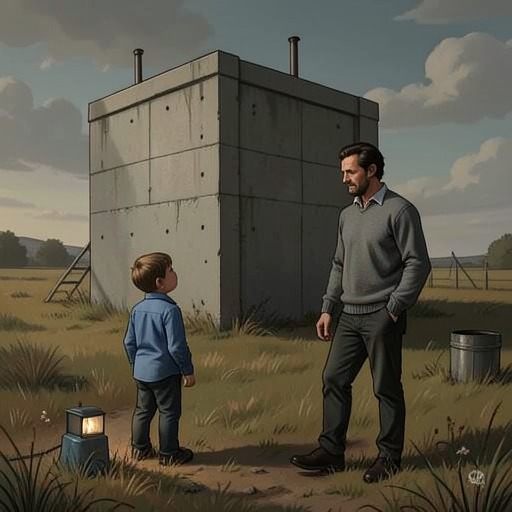
Chief Bromden places the beginning in the summer when he was about ten, still living in the village on the Columbia River. He was outside salting salmon for the drying racks when a car left the highway and jolted across the ruts through the sage, dragging a cloud of red dust behind it. The dust settled over the sage and soapweed like wreckage. These visitors were not the tourists who bought fish from the highway: they had driven directly toward the village, bringing the government’s interest into the community’s own space.
Three people climbed from the car: two men in blue suits and an old, white-haired woman whose stiff, heavy clothing struck the child as armor. In the officials’ conversation, the village is treated as a property to be valued. One man considers an offer sufficient for the place, while another suggests they should speak to the Chief. The woman cuts him off. Her manner recalls Nurse Ratched to Chief Bromden, and her attention moves over the village as if assessing it: she looks at the dresses belonging to his mother, Mary Louise Bromden, hanging carefully on the line, and nods.
A Plan to Bypass the Chief
The woman argues that they should not meet Chief Bromden’s father that day. Instead, she proposes leaving, returning to town, publicizing the advantages of a hydroelectric dam and lake, and then mailing an offer to Mary Louise Bromden, supposedly by mistake. In her calculation, approaching the wife first would make the government’s task easier than facing the husband directly. The plan treats the family’s relationships as leverage and assumes that public persuasion can make a transformed landscape seem preferable to a village beside a waterfall.
She anticipates resistance by describing it as Navaho stubbornness and a love of home. Chief Bromden knows his father is not Navaho, but thinks there is little point in correcting the officials: they are not listening closely enough to care which tribe he belongs to. The error is not incidental to the scene’s meaning. The woman reduces a particular community and its attachment to place to a convenient stereotype, while preparing to work around the person whose decision she claims to seek.
The scene’s physical details make the competing claims to the falls visible. Nearby, an ancient, rickety scaffold zigzags among the rocks, built and extended by the community over generations. Against the proposed lake and dam, it represents an existing way of living with the river, not an empty site awaiting improvement. The officials’ language of development erases that history even as the scaffold remains in view.
Resistance and the Cost of Acquisition
Years later, Chief Bromden explains to McMurphy that the pressure on Papa was part of what he calls the Combine: a system that wanted the family to live in inspected houses and wanted to take the falls. The coercion came from more than one direction. Papa was beaten in town alleys, and once his hair was cut short; Chief Bromden says these assaults were meant to show him what awaited if he refused to sign the papers giving everything to the government. Pressure also came from within the tribe, where people worked on Papa as the wider campaign wore him down.
The proposed acquisition was not just of a scenic place or a source of power. When McMurphy asks what the government wanted, Chief Bromden answers that it wanted everything: the tribe, the village, and the falls. Papa’s objection, as his son recalls it, was that money could not measure the way a man lived or what he was. The government’s offer therefore appears in the story as a mismatch between forms of value: officials could put a price on land, while Papa understood the loss as a change to a whole life and identity.
The tribe received what Chief Bromden describes as an enormous sum, represented by checks that people brought to the family’s door. They asked Papa what to do with the money, whether to invest it, where to go, or whether to buy a farm. But by then he had become too diminished, and too drunk, to guide them. Compensation did not restore the authority or communal life that the acquisition had unsettled. In Chief Bromden’s account, the Combine had defeated Papa after years of resistance, until he gave up.
Aftermath and Meaning
Chief Bromden draws a direct parallel between his father’s treatment and McMurphy’s defiance in the hospital. Papa had been big enough to fight for a while, but was made smaller by sustained pressure; now, he warns, the institution will try to break McMurphy because he has shown himself to be big. The memory gives Chief Bromden a language for understanding resistance and its cost, while making the hospital one expression of a larger system rather than an isolated institution.
The loss is not presented as wholly resolved. Near the end of the novel, after escaping the hospital, Chief Bromden says he may stop along the Columbia River on his way to Canada, visiting Portland, Hood River, and The Dalles to see whether people he knew from the village are still there. He has heard that some members of the tribe rebuilt their old wooden scaffolding across the million-dollar dam and spear salmon in its spillway. This is something he has heard, not a return he has yet made; nevertheless, the image joins imposed infrastructure to a continuing effort to recover an older practice. He wants to look over the country around the gorge and bring it back into focus in his mind. The recollection of acquisition thus ends not with a claim that the loss has been undone, but with the possibility of return and renewed attention to the home from which he has been absent for so long.