R. P. McMurphy’s admission to the ward
One Flew Over the Cuckoo's NestRandle Patrick McMurphy’s admission turns the ward’s daily anticipation of newcomers into the arrival of a disruptive presence. He rejects the routine meant to make an Admission submit, enters the day room laughing, and gives the patients a first glimpse of a resistance that is both exhilarating and dangerous. The event establishes the force of his personality, but its later significance changes when he learns that, unlike many of the men around him, he is committed and cannot simply choose to leave.
The Admission Breaks the Routine
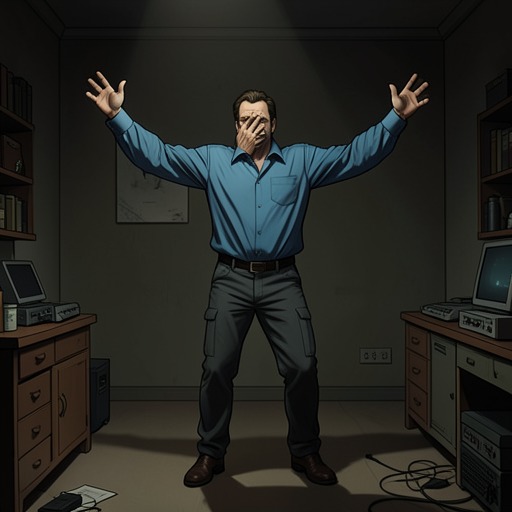
The ward door opens and closes throughout the day, and the patients habitually look up at the sound of a key. New arrivals are ordinarily watched as they creep along the wall, then taken to the shower room by the ward’s black aides. The narrator has often witnessed the procedure: the newcomer is stripped and left shivering while the aides fetch Vaseline for a thermometer. On this morning, however, the narrator is unable to leave his chair, so he first hears the admission rather than seeing it. The escort’s impatient call for someone to sign for the newcomer signals that this is not an ordinary visitor.
The expected submission never comes. When told to shower, McMurphy answers that he has already been washed at the courthouse and jail, jokes about being scrubbed whenever he is transferred, and tells the aides to keep the thermometer away while he looks over his new home. His refusal is not a quiet attempt to evade attention: he speaks loudly enough for the day room to hear. The ward’s familiar intake ritual is still underway around him, but he meets it with comic insistence on his own terms.
A First Impression Made of Laughter
McMurphy’s voice reaches the day room before he does. The narrator hears him coming down the hall with heavy, ringing steps, not sliding timidly along the wall. At the doorway, he stands with his boots planted wide and his thumbs hooked in his pockets. A paper Halloween bat hangs above him; he flicks it into a spin before greeting the patients and remarking on the fall day.
The narrator distinguishes McMurphy’s appearance from his own father’s even as he recognizes a similarity in their loud, forceful voices. McMurphy is redheaded, with long sideburns, unruly curls beneath his cap, and a broad frame. A stitched seam crosses his nose and cheekbone, evidence of a fight. His broad grin and swagger make him seem tough in a different way from the narrator’s father: not the hard, polished figure of a chief, but a man marked by rough contact with the world.
When no one answers him, McMurphy laughs. Nothing in the room has prompted ordinary amusement, and the patients and staff are stunned by the sound. Yet the narrator hears it as free and genuine, unlike the performative laughter of the hospital’s Public Relations man. It spreads through the ward and lingers in McMurphy’s eyes, smile, speech, and swagger. The narrator realizes that it is the first real laugh he has heard in years. That recognition makes the arrival more than a change in the day room’s company: it gives the ward’s silence a sudden, audible contrast.
The Acute Side and the Newcomer’s Purpose
After introducing himself as a gambling man, McMurphy moves to a card game, studies an Acute patient’s exposed hand, and presents himself as someone who has come to bring entertainment to the table. He says that nobody left at Pendleton Work Farm could make his days interesting, so he requested a transfer in search of new blood. His brisk friendliness does not immediately reassure the other patients. He shakes hands and jokes, but his loud manner and open laughter make the Acutes uneasy.
The narrator sees that discomfort registered in the ward’s control panel: its dials twitch at the sound of McMurphy’s laughter. The Acutes appear to fear that his open defiance will bring the staff’s attention down on all of them, as if one disruptive pupil might cause an entire classroom to be punished. McMurphy notices their unease but does not let it slow him. By choosing the Acute side and addressing the men as companions rather than cases, he enters their social world; by refusing to quiet himself, he also exposes how thoroughly that world has adapted to surveillance and discipline.
The Risks Behind the Defiance
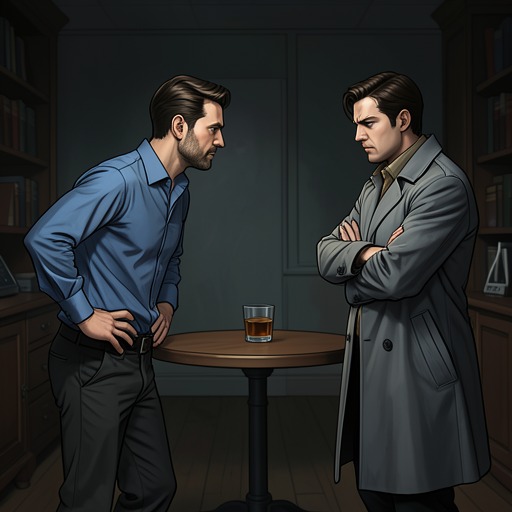
The later consequences of McMurphy’s arrival show that the ward’s rules are not merely a matter of manners. When he urges the Acutes to resist Nurse Ratched, Fredrickson explains that telling her to go to hell can result in being labelled potentially assaultive and sent upstairs to the Disturbed Ward. He has experienced that outcome three times. The men there do not even get to leave the ward for the Saturday movie or watch television. Harding adds that hostile behavior can lead to the Shock Shop or even an operation. Their warning gives the brashness of McMurphy’s entrance a sharper edge: the ward can punish defiance by narrowing a patient’s world still further.
McMurphy’s later attempt to change ward policy through a vote meets another limit. Nurse Ratched declares the vote defeated because only twenty of the ward’s forty patients voted, so the required majority has not been reached. When McMurphy protests that the men have been cheated, she turns his anger into something for the doctor to note. The democratic procedure he has tried to use is thus shown to operate within rules controlled by the staff.
The most consequential discovery comes when McMurphy learns that many patients are voluntary, while he is committed. Harding explains that he can choose to leave, but McMurphy cannot. McMurphy first suspects that the others have been withholding this fact and confronts them when they fail to reassure him. He then recognizes why they have let him challenge Nurse Ratched: they could benefit from his resistance while he bears the risk of provoking her and lengthening his stay. His admission therefore begins with a performance of freedom, but later knowledge reveals its unequal terms. The newcomer who seemed able to enter the ward on his own terms is already subject to a decision about how long he must remain there.