The World Series Television Vote
One Flew Over the Cuckoo's NestThe World Series Television Vote begins as a practical request to watch baseball and becomes a public test of the ward’s power structure. McMurphy’s first effort fails when most patients stay silent or withdraw their support, but he brings the question back on Friday, when the Acutes raise their hands together. The decisive twenty-first vote comes from Chief Bromden, whose participation turns a stalled protest into a majority and marks a change in his own willingness to stand visibly with the others.
The First Vote and Its Failure
Several days before the World Series, McMurphy proposes changing the daily routine: the patients could do their cleaning at night, during television hours, and watch the games in the afternoon. Nurse Ratched rejects the switch, arguing that the schedule has been arranged for a delicate balance that a change would throw into turmoil. Her answer is expected; McMurphy is more surprised by the patients’ response when he asks what they think.
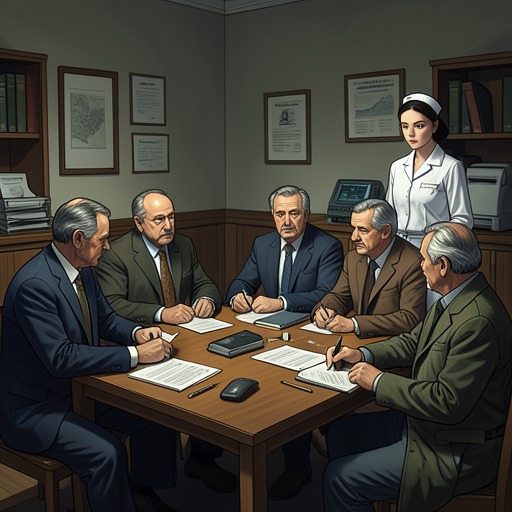
At the meeting, the Acutes appear sunk into pockets of fog, and no one answers at first. McMurphy reminds them that at least twelve patients have a personal interest in the games and urges them to vote for afternoon television. Cheswick rises at the call for a show of hands, but McMurphy clarifies that he means raised hands as the formal vote. When the question is put again, Cheswick raises his hand higher, Scanlon hesitates before raising his, and nobody else joins them. McMurphy cannot speak, then sinks down in his chair as Nurse Ratched returns the meeting to its agenda.
Cheswick sits beside McMurphy, pleased to have company in a lost cause; it is the first time he has had someone alongside him in one. Afterward, McMurphy is too angry and disgusted to speak to the patients. Billy Bibbit approaches him and points to the difference between McMurphy’s temporary stake in the games and the patients’ long future on the ward: some have already been there five years and expect to remain after the Series is over. His explanation does not undo McMurphy’s anger, but it names the fear behind the failed vote: the patients must live with the consequences of defying the ward long after this particular request has passed.
McMurphy Calls for a Second Vote
On Friday, McMurphy raises the question again, explicitly recalling the earlier vote and asking whether anyone has found a little more courage. Nurse Ratched objects that the meeting is for group therapy and dismisses the schedule complaint as petty. Cheswick backs McMurphy and presses for the vote. When Nurse Ratched offers a show of hands or a secret ballot, McMurphy insists on seeing both the hands that rise and those that do not. The vote is thereby made public: support, hesitation, and refusal will all be visible in the room.
McMurphy’s own hand rises first. Chief Bromden notices the bandage on it, left where the hydrotherapy control panel cut him when he tried to lift it. The mark connects this appeal to McMurphy’s earlier physical challenge to the ward’s arrangements, while his raised hand gives the other patients a visible lead. One by one, hands emerge from the fog. Chief sees the gesture as McMurphy reaching into it and drawing the men into the open. By the count, all twenty Acutes have voted for the change—not only for afternoon television, but against Nurse Ratched’s effort to send McMurphy to the Disturbed Ward and against the way she has subdued them over the years.
The Majority Rule and the Deciding Hand
The result astonishes both patients and staff. The previous day, Nurse Ratched could have expected only four or five votes; now the count reaches twenty. She rules the motion defeated because the ward has forty patients and a change in policy requires a majority of all forty, not merely a majority of those who voted. As the hands begin to fall, the men start to retreat toward the safety of the fog. McMurphy protests that the votes of the older patients are being used to defeat the proposal, exposing how the threshold turns absences into a barrier even when every Acute has supported him.
Chief first experiences his own rising hand as if McMurphy had attached hidden wires to it, lifting it and drawing him out where he will be exposed. Then he corrects that account: he lifted it himself. The distinction is crucial. McMurphy has helped make collective action imaginable, but Chief’s vote is his own act, not a trick performed on him. McMurphy whoops, pulls Chief to his feet, and pounds his back. He counts Chief’s hand as the twenty-first and declares that it makes a majority. Cheswick celebrates, and the other Acutes come toward Chief.
Nurse Ratched insists that the meeting was already closed. She leaves for the Nurses’ Station with her smile still in place, while the back of her neck reddens and swells. Her formal ruling prevents the vote from producing the requested schedule change, but it cannot erase what has happened in the room: the Acutes have acted together, and Chief has joined them openly. The event’s decisive outcome is therefore both procedural and personal. The vote exposes the ward’s rule as a means of controlling collective choice, while Chief’s hand shows that the fog no longer wholly determines whether he can act.
Significance
The repeated vote gives the protest its shape: first a conspicuous failure, then a renewed attempt in which McMurphy asks the patients to make their positions visible. The World Series is the immediate stake, but the second vote gathers wider opposition around it. The hands signify support for the games and resistance to Nurse Ratched’s treatment of McMurphy and the patients; their rising sequence makes solidarity something the ward can see rather than a private feeling.
The narrow difference between twenty and twenty-one also makes the procedure consequential. Nurse Ratched’s count initially converts the Acutes’ unanimous support into defeat because the ward’s forty-person threshold includes patients who have not raised their hands. Chief’s vote changes the arithmetic, but its force exceeds the single additional count: the man who has remained inside the fog chooses to be counted. The vote does not immediately overturn the ward’s policy or Nurse Ratched’s authority. It does, however, make collective resistance—and Chief’s participation in it—impossible to mistake for silence.