
Kristín’s Passage from Caregiver to Witness
Operation NapoleonKristín’s thread traces how a lifelong sense of responsibility for others becomes a dangerous search for truth, then leaves her with both hard-won independence and an unresolved burden of memory.
increasing Bearing strength in each event
 decreasing
Bearing strength in each eventdecreasingA Childhood of Responsibility

The Child Who Kept Watch
Learning to Care
Kristín grows up in a quiet household where her parents’ emotional distance leaves her to look after herself. When Elías is born, she welcomes the sibling she had long wanted, but she soon takes on much of the practical and emotional work of raising him.
She learns to anticipate trouble: collecting Elías from nursery, feeding him, settling him at night, and trying to keep the household calm. Her closeness to him is loving, but it is also shaped by the belief that his safety is her responsibility.
Guilt Made Permanent
After Elías is badly injured in a childhood traffic accident, Kristín internalizes the idea that she should have prevented it. Although he recovers, she carries a persistent fear that future harm to him will somehow be her fault, making his appetite for adventure difficult for her to bear.
A Life Kept Apart
Independence and Isolation
The Safe Distance
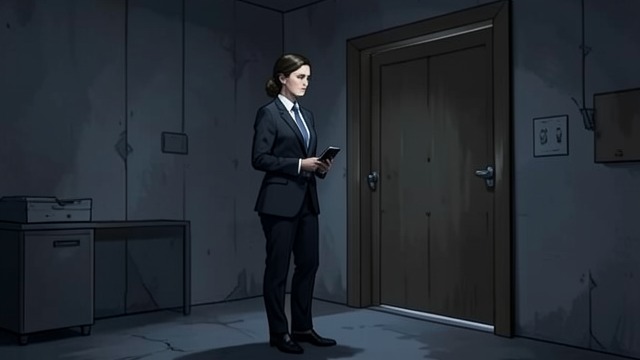
As an adult, Kristín builds a life around privacy and self-reliance. She works as an international-law specialist at the Icelandic Ministry of Foreign Affairs, lives alone, and prefers to avoid the dark, cold interior of Iceland in winter.
Her relationship with a former lawyer ends partly because he challenges how much care she gives Elías. His criticism unsettles her, but the relationship itself becomes controlling, and she is relieved when it ends. She is left wary of surrendering her independence to another person.
A Missed Beginning
Kristín also regrets the way she withdrew from Steve after their relationship began to deepen. Her political opposition to the military presence at the base and her fear of the social stigma attached to Icelandic women with American servicemen make intimacy feel like a betrayal of her principles.
The two have not spoken for months when the crisis begins. Kristín’s solitude protects her from unwanted demands, but it also leaves her without an obvious confidant when danger suddenly enters her life.
The Flight into Danger
An Ordinary Day Breaks Apart
From Witness to Target
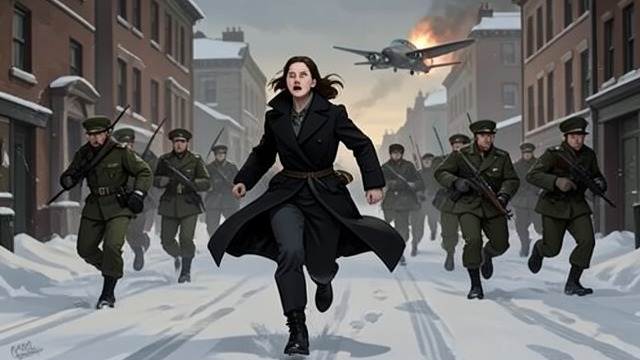
When Elías calls from Vatnajökull Glacier, his broken connection leaves Kristín with fragments: armed soldiers, a plane, and an abrupt end to the conversation. Soon two American operatives invade her apartment, announce that Elías is dead, and try to make her accept a fabricated suicide note.
Runólfur arrives unexpectedly and is shot in front of her as she escapes. With the attackers pursuing her and uncertainty over whether the police or ministries can be trusted, Kristín must decide whom to approach without knowing the full conspiracy.
Choosing to Act
She reaches Steve, her former partner, and asks him to help investigate the military activity. Together they flee the base, seek out retired pilot Michael Thompson and Sarah Steinkamp, and then travel east to Jón’s farm, where Kristín learns that the plane is German and that old rumors about its cargo are unreliable.
Her journey changes the meaning of responsibility. She is still driven by fear for Elías, but she also wants to expose what has happened and stop the military from suppressing it. The old instinct to protect her brother becomes a choice to confront people far more powerful than herself.
The Cost of Knowing
The Search Becomes Personal
Confronting the Operation
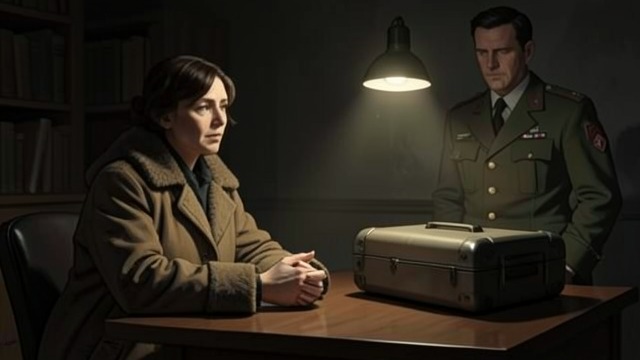
Kristín presses on toward the glacier even after learning that Elías has been found gravely injured. She and Steve are intercepted, taken to the military camp, and brought before Ratoff, whose cruelty confirms that the danger is real rather than imagined.
When Ratoff threatens her with an awl and demands to know who understands the name Operation Napoleon, Kristín has little reliable information to offer. Steve tries to divert the threat toward himself, but Ratoff shoots him. Kristín collapses, overwhelmed by grief and by the belief that her persistence has cost Steve his life.
Survival in the Cargo
Júlíus helps Kristín conceal herself in a body bag as the Americans prepare to remove the wreckage. She is carried off the glacier inside the aircraft and wakes in the cargo hold, where she confronts Robert Miller and learns that he has spent decades searching for his missing brother.
Miller explains fragments of the secret operation, including the possibility that Adolf Hitler escaped Berlin, but cannot tell her where the plan ended. Kristín hears enough to understand the scale of the concealment, yet not enough to resolve it. Her survival delivers her to knowledge, not certainty.
A Quiet Life Under Threat
Returning Without Closure
Public Denial, Private Memory
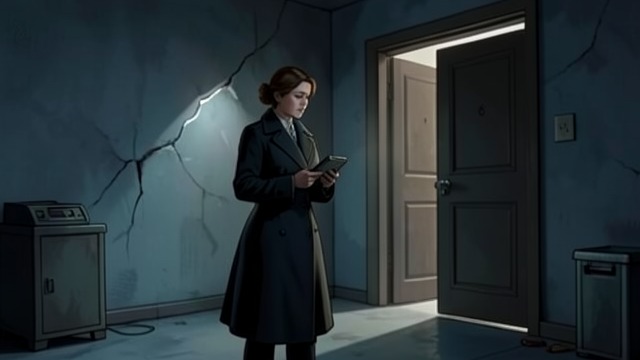
Kristín returns to Iceland and finds Elías alive in hospital. He recovers slowly, while the authorities and the U.S. military offer shifting explanations for the glacier operation and deny the central allegations. Steve is reported dead, and the official account cannot give Kristín a truthful explanation of his fate.
She chooses not to publicize what she learned about Operation Napoleon. The threats against her, Elías, and Júlíus make the cost of disclosure tangible, while the competing official stories make it difficult to imagine that the public would believe her.
The Unfinished Journey
Kristín leaves government service, opens her own legal practice, and maintains her closeness to Elías and Júlíus. Yet she becomes guarded: she avoids travel, distrusts surveillance, and rarely speaks openly about the events that changed her life.
A fragment of the damaged document eventually gives her a lead to Borne Island. Years later, she travels there and finds a marker bearing the name Blondi and the date 1947. The discovery suggests that the old secret has left a trace, but it does not tell her what became of the people at its center. Kristín’s fate is therefore neither full escape nor final revelation: she has reclaimed a measure of freedom while carrying the unresolved story with her.
Years before the glacier crisis
Before the January 2000 events
29 January 2000
30–31 January 2000
After the recovery, through the following years
