
Labels, Rumors, and Deliberate Distraction
Operation NapoleonThis thread explores how labels such as gold, bomb, virus, exercise, and Napoleon shape what characters believe, showing rumor and secrecy working together to obscure rather than clarify events.
increasing Bearing strength in each event
 decreasing
Bearing strength in each eventdecreasingThe Gold Explanation
A Story Designed to Persuade
A scandal with leverage
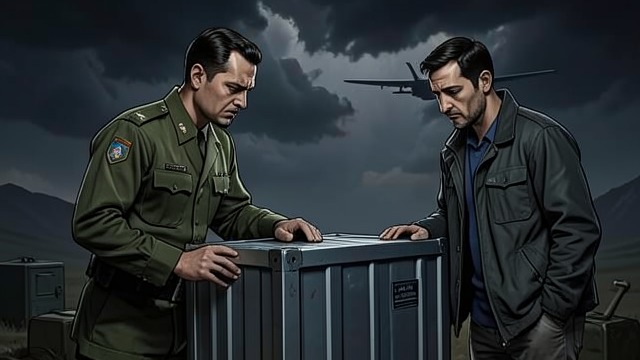
Carr describes the aircraft as carrying several tons of stolen Nazi gold, including Jewish gold, and presents its recovery as a matter of national embarrassment. The story gives the Defense Secretary a reason to approve an expensive covert operation and makes secrecy seem like a moral necessity. It is effective because its elements are plausible enough to provoke fear and familiar enough to require little explanation.
A misleading certainty
The story gives officials an apparent answer before the wreck is recovered, but it does not establish what the aircraft actually contains. When Ratoff finds only two small crates of gold, the mismatch exposes the limits of his briefing without yet revealing the real secret. The gold account is simultaneously a rumor, a partial truth, and a deliberate instrument of persuasion.
The Bomb Rumor

Fear Makes a Convincing Cover
Stories gather around the wreck
Michael Thompson recalls rumors that the plane may contain a bomb; Jón remembers being told it carried dangerous biological weapons. Other people suspect gold or plundered art. These stories arise from real secrecy, but none gives Kristín reliable access to the aircraft’s contents. Their variety makes the operation seem important while keeping its purpose indistinct.
A false warning becomes official
When Icelandic leaders demand an explanation, U.S. representatives claim that a primitive German hydrogen bomb is aboard and that the rescue team may be in danger. The assertion shifts the discussion from sovereignty and the deaths of rescuers to emergency risk. The rumor’s political usefulness does not depend on its being true; it needs only to make the Icelandic officials hesitate.
An Exercise Explains Everything
Military Activity Recast as Routine
From covert recovery to training
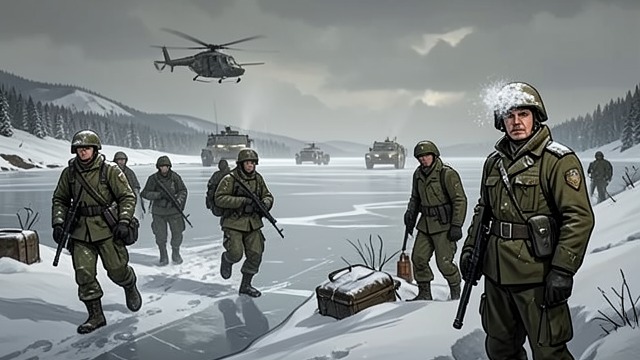
American officials describe the deployment as a winter exercise involving visiting NATO forces, and elsewhere as a scientific expedition or simulated crash response. These labels offer mutually convenient ways to explain troops, vehicles, and helicopters without acknowledging the recovery’s real purpose. Their inconsistency is not a flaw from the authorities’ perspective: each new version helps dilute the possibility of a single coherent accusation.
Language changes the terms
The Icelandic government is pressured to repeat an explanation that treats the operation as authorized military activity, despite the absence of meaningful prior consent. Calling the deployment an exercise makes armed coercion sound procedural and temporary. By the time the aircraft has left Iceland, the dispute is no longer only over what happened, but over which description the public will accept.
Napoleon Names the Secret

A Code Replaces an Answer
The word changes the stakes
Kristín invokes Operation Napoleon while trying to delay Ratoff, although at first she does not know what the name means. Its power comes from what it signals to Ratoff: the recovered papers contain a secret beyond the gold and bomb stories he has been given. A single code word proves more dangerous than the many rumors that have circulated openly.
A history folded into a name
Robert Miller explains that the operation concerned a possible plan to extract Adolf Hitler from Berlin and conceal him on a remote island, with the name “Napoleon” serving as part of its coded logic. He cannot confirm whether the plan was carried out or where its subject went. The codename seems to promise a key to the mystery, but the explanation remains partial and arrives from a man who admits he never saw the final documents.
Rumor Becomes the Public Record

Multiple Stories Bury One Event
Explanations scatter
After the operation, spokesmen describe lost satellite equipment, a staged DC-8 crash, conventional exercises, and a search for gold. Each version provides the press with something quotable while pulling attention away from the recovered Junkers and the violence on the glacier. Their accumulation makes it harder for a witness’s coherent account to compete with the many official fragments.
Suspicion without resolution
Kristín recognizes that an unverified claim about Hitler’s fate could be dismissed as conspiracy, especially when authorities have denied the aircraft’s existence. The misinformation does not eliminate doubt; it multiplies doubt until belief itself becomes unstable. The public can hear that something happened without gaining a dependable way to know what it was.
January 2000, before the plane is opened
As Kristín and Steve question witnesses in Reykjavík
During the secret negotiations and public statements of 30–31 January
On the C-17 transport plane, after the glacier recovery
The months after the operation is officially denied
