
From Rumor to Operation Napoleon
Operation NapoleonThis flow follows the competing explanations for the aircraft’s cargo as partial discoveries gradually reveal secret Allied–German negotiations and an uncertain plan concerning Adolf Hitler.
increasing Bearing strength in each event
 decreasing
Bearing strength in each eventdecreasingRumors Surround the Wreck
Rumors Surround the Wreck
A mystery without a cargo
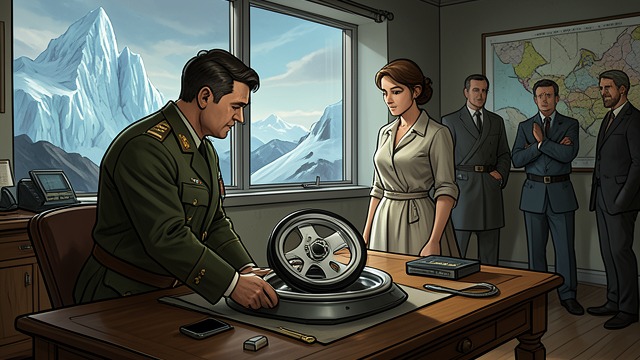
The only early physical evidence is a wheel recovered from the glacier. Colonel Miller refuses to explain the search, and the brothers who guide his soldiers keep their promise not to discuss what they learn.
In later years, local speculation fills the silence: the plane might contain Jewish gold, diamonds, plundered art, a senior German officer, or a secret weapon. Each theory gives a shape to the military’s persistence without providing reliable knowledge.
Stories passed between generations
By the time of the 1967 search, military personnel have again heard rumors about the aircraft. The expedition fails, and the visit of Neil Armstrong and other astronauts supplies a public cover for troop movements.
Because no one possesses the full account, rumor becomes part of the operation’s camouflage. The competing claims are not merely mistakes; they demonstrate how secrecy creates a space in which every group invents a different explanation.
The Bomb and Virus Stories

The Bomb and Virus Stories
Conflicting accounts
Michael Thompson recalls rumors of a Nazi bomb, while Jón says Colonel Miller once described dangerous biological weapons. Sarah Steinkamp remembers Leo Stiller identifying the aircraft as German but does not explain its cargo.
These stories lead Kristín and Steve toward alarming possibilities: a hydrogen bomb, a virus, or another weapon that might justify military intervention. None is confirmed by the evidence they have found, but each helps explain why authorities are behaving as if the wreck must be seized immediately.
The material clue
At Jón’s farm, Kristín sees a damaged metal case and papers bearing the words “Operation Napoleon.” The case had belonged to a German officer found near the farm, suggesting that a person left the aircraft carrying documents rather than a weapon.
The discovery shifts the question from what physical cargo the plane carried to what knowledge the papers contained. It does not yet reveal the answer, but it provides the first named connection between the wreck and a larger historical secret.
Ratoff Reads the Papers
Ratoff Reads the Papers
Gold proves insufficient
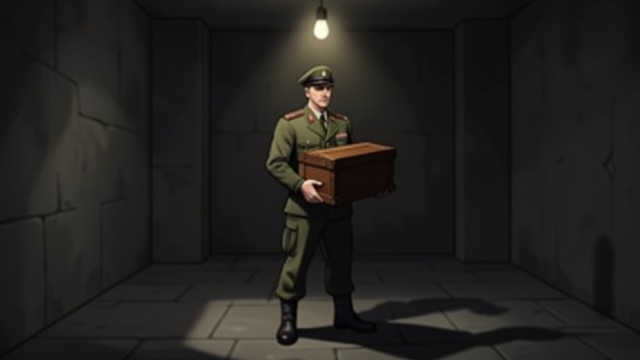
Ratoff finds only two crates of gold, far less than the treasure he had been led to expect. He also discovers a two-star American general, German officers, William Miller, and a briefcase containing documents.
The discrepancy makes him suspect that the gold is a decoy explanation. When he reads the English-language memorandum and related papers, he realizes that the documents describe an extraordinary political and military scheme rather than a conventional cargo mission.
Knowledge becomes a liability
The papers concern the possibility of ending the war through negotiations with German leaders and then using German forces in an attack on the Soviet Union. Ratoff connects the proposal to Operation Unthinkable and understands why the military has spent decades suppressing the aircraft’s story.
Once he recognizes the political stakes, Ratoff expects Carr to eliminate him. He removes or hides the consequential documents and demands money and safe passage, making his new knowledge a weapon in the struggle for his own survival.
Miller Reveals Napoleon
Miller Reveals Napoleon
A brother’s mission
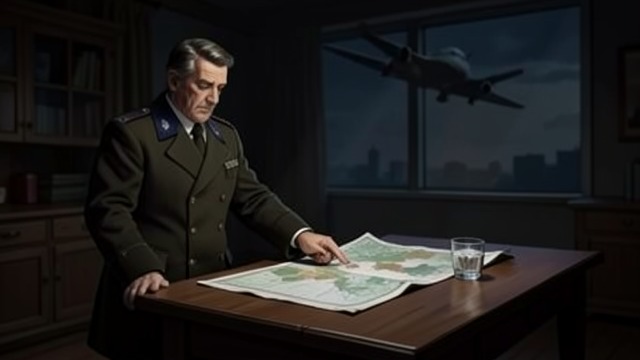
Colonel Miller explains to Kristín that he sent William to pilot the aircraft and expected to meet him in Reykjavík before they continued to South America. He had been kept from the operation’s full purpose and only gradually learned about the secret talks.
The plane carried German negotiators and two gold crates, which were intended to help secure the escape or cooperation of Nazi figures. The gold alone does not account for the broader effort; the planned political bargain was the true source of the danger.
The hidden name
Miller connects the discussions to Operation Unthinkable, the proposed Allied assault on the Soviet Union with German participation. He then explains the codename Operation Napoleon: it referred to a plan in which Adolf Hitler might be removed from Berlin and secretly detained rather than simply left for the Soviets.
Miller does not know whether the plan was carried out or where Hitler was supposedly taken. He says that the historical account of Hitler’s death suited several governments, while the surviving evidence and the missing papers leave the truth unresolved.
A Clue Beyond the Glacier
A Clue Beyond the Glacier
A fragment survives
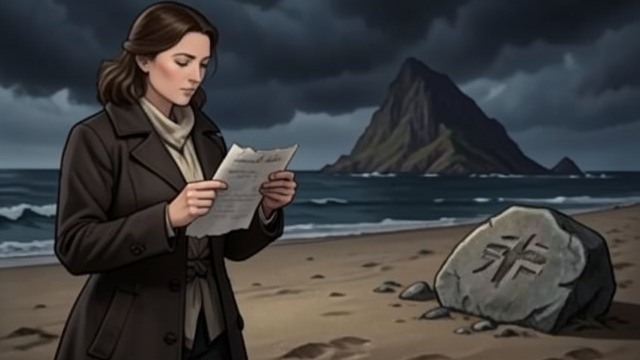
After the crisis, Kristín finds a scrap from the damaged German documents among her belongings. A diplomatic acquaintance translates the few readable lines, which describe an island near Argentina as a possible destination for Operation Napoleon.
Kristín keeps the discovery to herself. The clue does not establish whether Hitler reached the island, whether the plan was ever implemented, or whether the document records only a proposal. Its incompleteness preserves the uncertainty that the military operation was meant to bury.
A stone marked Blondi
Years later, Kristín travels to Borne Island, the place identified in the fragment. The island’s ruins initially provide no answer, but on her return she notices a buried stone engraved “BLONDI” and dated 1947.
The inscription offers a striking possible link to Adolf Hitler’s dog, Blondi, and to Miller’s account of the operation. It does not prove the history behind it, but it gives Kristín a physical trace where official records and military denials have left only competing stories.
From the first searches in 1945 through the decades after the crash
Saturday, 30 January, during Kristín and Steve’s investigation
Saturday, 30 January, after the aircraft is opened
Sunday, 31 January, aboard the C-17 over the Atlantic
Several months after the operation, followed by Kristín’s later journey
