
Iceland Resists the Secret Operation
Operation NapoleonThis flow traces how a concealed military recovery becomes a confrontation over Icelandic sovereignty, then is contained through force, negotiation, and competing public explanations.
increasing Bearing strength in each event
 decreasing
Bearing strength in each eventdecreasingAn Unwelcome Expedition
An Unwelcome Expedition
A request without full disclosure
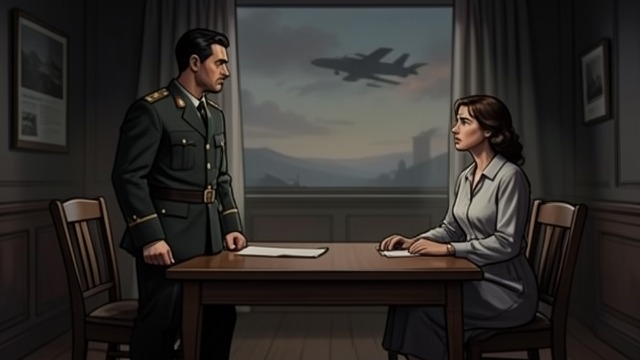
U.S. representatives summon Iceland’s prime minister and foreign minister and explain that a World War II aircraft has resurfaced on Vatnajökull. They describe the mission as a scientific recovery and ask for cooperation with troop and equipment movements.
The Icelandic leaders quickly recognize that the Americans are withholding the reason the aircraft matters. They object that the troops are already moving and that the proposed cover story about small NATO exercises does not answer their questions.
An alliance under strain
The American representatives insist that the operation must remain secret and initially tell the Icelanders that the plane’s significance is not their concern. The meeting ends without a clear agreement, exposing the gap between the treaty relationship and the Americans’ assumption that they can act unilaterally.
The secrecy itself becomes a political problem. Iceland’s leaders fear that any public account will make them appear complicit in an operation whose purpose and legal basis they do not know.
A Second Explanation
A Second Explanation
The story changes under challenge
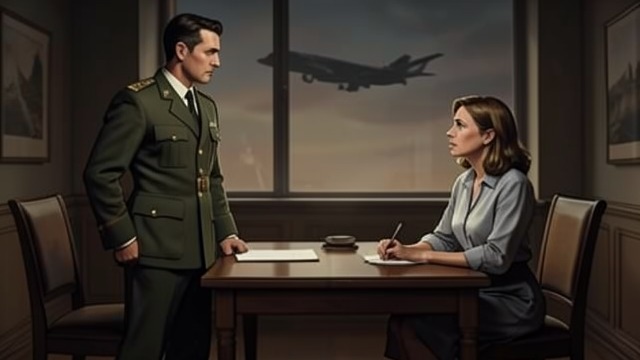
When Icelandic officials refuse to accept a vague account of a plane recovery, General Wesson offers another explanation: the aircraft carried German nuclear scientists whose history could revive controversy over American postwar recruitment.
This account is designed to justify secrecy without revealing what the aircraft actually contains. The Icelanders remain unconvinced, particularly because the Americans still will not explain why the wreck cannot simply be discussed openly.
The price of withheld facts
The meeting demonstrates that the Americans are prepared to tailor their explanation to their audience. Icelandic officials are asked to cooperate while being denied the information necessary to judge the risks or the legitimacy of the operation.
The government’s position becomes increasingly difficult as the soldiers continue their recovery work. What began as diplomatic suspicion will soon be tested by reports of injuries, armed troops, and a possible murder connected to the operation.
The Rescue Team Is Fired Upon
The Rescue Team Is Fired Upon
A local team meets a military cordon
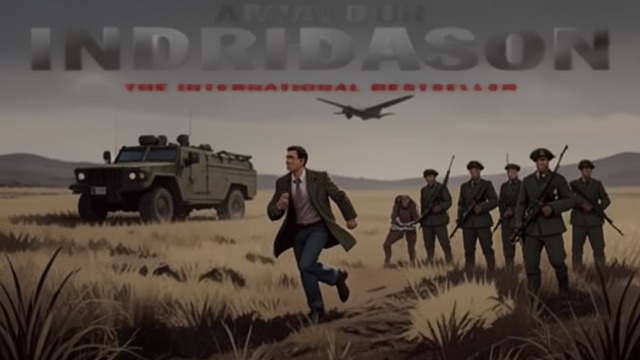
Júlíus leads the Reykjavík rescue team toward the reported danger area after two of its members are found in a crevasse. U.S. soldiers block the team, demand its communications equipment, and claim that the area is a prohibited military zone.
The rescuers refuse to surrender their equipment or abandon people who may be in danger. In response, a soldier fires on one of their tracked vehicles, setting it ablaze and demonstrating that the U.S. force intends to enforce its restrictions with weapons.
Sovereignty becomes undeniable
The confrontation turns a secret operation into a public crisis. The Icelanders are in their own country, responding to a rescue situation, while armed foreign troops attempt to control their movement and suppress communications.
Júlíus later escapes the cordon and witnesses the scale of the camp, including the aircraft and the captured Kristín and Steve. His account gives the Icelandic side direct knowledge that cannot be explained away as an ordinary training exercise.
The Government Draws a Line

The Government Draws a Line
The dispute reaches the cabinet
After learning about armed troops, injured rescuers, the failure to answer a mayday, and unauthorized helicopter movements, Iceland’s prime minister convenes an emergency meeting with American officials. The Icelandic leaders demand an account of the deaths and the soldiers’ conduct.
The Americans deny responsibility, describe the event as an exercise, and claim that the shots and the glacier operation are unrelated. Their explanations fail to reassure the Icelanders, who see the operation as a direct affront to national authority.
A threat produces a stronger response
When Wesson tells the prime minister to remove the rescue team from the glacier, the Icelandic leader refuses and threatens to close roads, address the nation, and demand a public investigation. The Americans then invoke a supposed German hydrogen bomb as a reason the team must leave.
The bomb story briefly raises the stakes, but it is another unverified explanation meant to control the situation. The meeting ends with the government increasingly prepared to challenge the Americans, even as it lacks access to the facts needed to expose the deception.
Public Denial and Diplomatic Containment

Public Denial and Diplomatic Containment
Competing accounts reach the public
After the operation, U.S. spokesmen describe conventional winter exercises involving Dutch and Belgian forces, deny knowledge of the German aircraft, and offer other explanations for the activity. Iceland’s government says it granted permission for exercises, while news reports circulate accounts of an attack on the rescue team.
Kristín and Júlíus provide testimony that contradicts the official story, but the Americans deny the presence of special forces and reject claims that the injuries and deaths resulted from their conduct. The changing explanations make it difficult for the public to know which account to trust.
A dispute without resolution
Investigations and legal proceedings drag on but do not produce a successful prosecution. The murder of Runólfur remains unsolved, and the army denies responsibility for Jóhann’s death and Steve’s disappearance or murder.
The political crisis gradually fades from the headlines, leaving the sovereignty dispute without a conclusive public reckoning. The military succeeds in removing the aircraft, but the conflicting accounts remain as evidence of how power and secrecy can limit what a small state can compel an ally to reveal.
Thursday, 28 January, after the U.S. deployment reaches Iceland
Friday, 29 January, during the first emergency talks
Late on Saturday, 30 January
Saturday night, 30 January, at the secret meeting on Lake Thingvallavatn
From 31 January through the months after the recovery
