
The Glacier as a Reluctant Archive
Operation NapoleonThis thread follows Vatnajökull as a material archive that buries evidence, preserves bodies, and eventually returns fragments without guaranteeing that they can be understood or publicly acknowledged.
increasing Bearing strength in each event
 decreasing
Bearing strength in each eventdecreasingThe Glacier Conceals the Crash
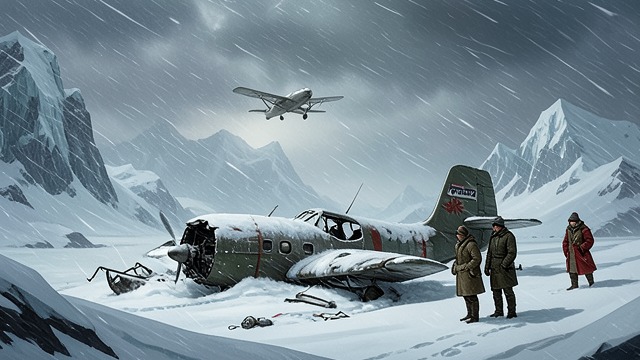
A Landscape Takes Custody
The crash vanishes
A blizzard hides the low-flying Junkers Ju 52 as it comes down on Vatnajökull. Snow quickly covers the trail of wreckage, and the first large search finds only the rim of a nose wheel. The aircraft’s disappearance is not a clean end to the event: it leaves an unresolved site, known to a few witnesses but inaccessible to ordinary investigation.
A natural burial
The glacier becomes an unintended repository for bodies and documents. Unlike a deliberately built archive, it preserves without sorting, labeling, or explaining what it holds. Its silence gives the people who know about the crash time to construct stories around it, while the material evidence remains out of reach.
A Wheel Surfaces
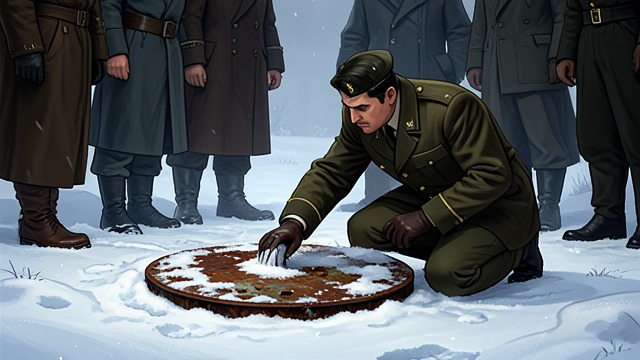
A Fragment Without Its Whole
The clue
The brothers guiding the American searchers find a wheel rim inscribed with the word “Kruppstahl.” The fragment confirms that a German aircraft has crashed, but tells the searchers neither why it was flying there nor what it carried. Colonel Miller takes possession of it, turning a small object into a piece of evidence controlled by military intelligence.
A clue becomes an institution
The wheel gives the authorities a reason to keep watching the glacier after the immediate search ends. It offers enough certainty to sustain years of surveillance, but not enough information to settle the mystery. The archive begins in this imbalance: a physical trace survives, while the explanation attached to it remains restricted and changeable.
The Aircraft Returns
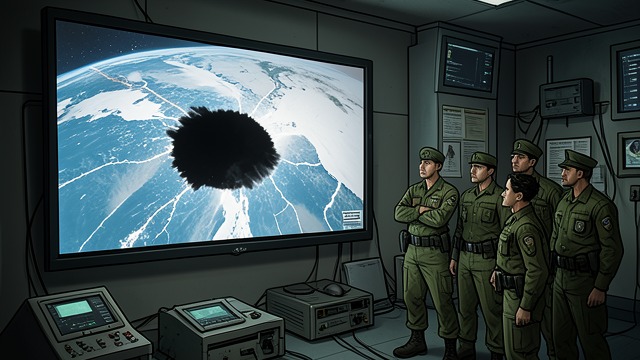
A Moving Archive Opens
Detection from space
Vatnajökull Glacier Satellite Imagery reveals a dark shape emerging from the ice, prompting a new recovery operation. Satellite surveillance makes the old search easier to target, but it does not make the aircraft’s history any clearer: operators see a shape, while the meaning of the shape remains known only in fragments and restricted briefings.
Recovery and exposure
The U.S. forces excavate the wreckage and uncover bodies, documents, and gold crates. The fuselage begins to break apart under the strain of excavation, converting a sealed archive into a fragile scene that must be removed quickly. The glacier’s slow return of the evidence coincides with an effort to take that evidence out of Iceland before it can be examined independently.
Bodies Become Evidence
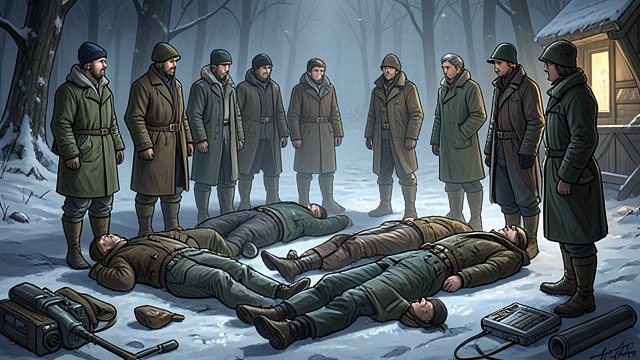
Preservation Without Testimony
The dead emerge intact
The cold has preserved several passengers in strikingly good condition. Their clothing and injuries offer clues about rank, survival, and the final hours inside the aircraft, but the bodies cannot explain why the flight took place or what its organizers intended. Even the apparently careful placement of one body outside the plane suggests a story that the excavation cannot fully recover.
The archive remains incomplete
There should be seven people associated with the aircraft, but the searchers find six bodies, while the missing Count von Mantauffel may have tried to reach help. His absence is as meaningful as the bodies’ preservation: the glacier returns evidence selectively, and discovery does not equal completeness. The recovered scene therefore remains an archive with missing pages.
Fragments Reach Borne
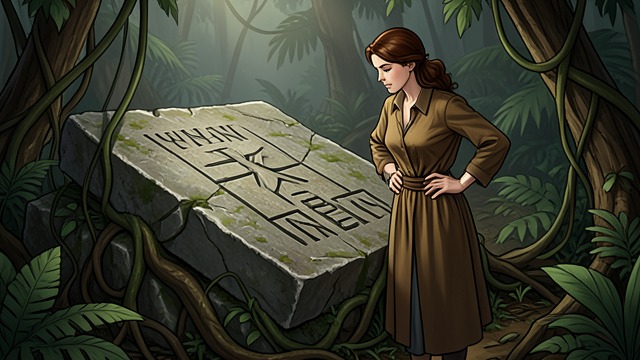
The Archive Extends Beyond Iceland
A damaged scrap survives
Kristín later studies a fragment of the Operation Napoleon papers salvaged from the German officer Jón found near the farm. Its partly legible text refers to a remote island and to Borne, giving her a direction but not an explanation she can verify. Unlike the intact documents removed from the aircraft, this fragment has been damaged by exposure and cannot fully restore what was lost.
A mark in stone
Kristín eventually travels to Borne Island and finds an inscription reading “BLONDI” and “1947.” The stone is not a definitive account of who was buried there or who placed it, but it gives physical form to a possibility suggested by the papers and the story she has heard. The novel ends with another fragment: evidence has crossed continents, yet it still leaves its finder to interpret what the official record denies.
The winter of 1945
During the first search after the crash
January 2000, when new satellite images reveal the wreck
January 2000, during excavation of the plane
Several years after the glacier events
