1945 Vatnajökull aircraft crash
Operation NapoleonThe 1945 Vatnajökull aircraft crash is the catastrophe at the heart of the book’s buried history: a transport plane breaks apart on the glacier, while the storm and the military response conceal both the wreck and the identities of its passengers. What begins as an isolated disaster becomes an unexplained operation, its evidence preserved in ice and its investigation removed from local hands.
The Crash and First Reports
The aircraft came down in winter darkness during a blizzard. It skimmed the surface of Vatnajökull Glacier; one engine burst into flame, a wing sheared off and vanished into the snow, and the other wing followed in a shower of sparks. The wingless fuselage careened across the ice before grinding to a halt. The storm swallowed the noise, leaving only its own howl.
One man escaped almost unscathed. The pilot and three others had been strapped into their seats, but two passengers panicked at the first sign of trouble, leapt up, and tried to force their way into the cockpit. The impact flung them against the cabin’s ceiling and walls, then hurled them to the rear, where their cries stopped. The scene establishes the crash’s violence before the fate of everyone aboard is known.
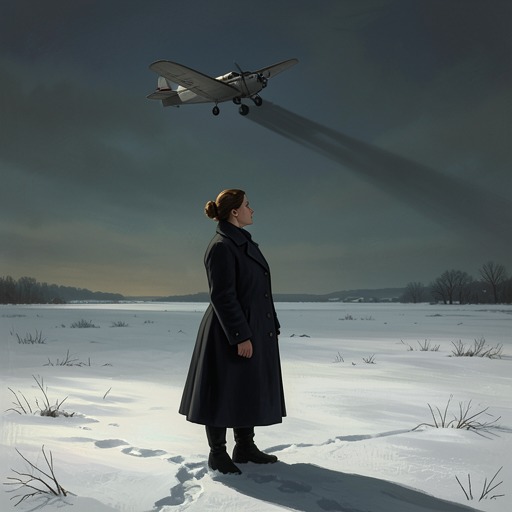
That night, people at a farm heard an aircraft unlike any they knew, its engines roaring so close that it seemed to be diving towards them. They watched its dark shape pass overhead, nose raised as if trying to climb, then heard the sound recede towards the glacier. With visibility at zero and the ice cap close by, they feared it would crash. Their telephone had been out of order since an earlier storm, so they could not alert the authorities; they waited four days for conditions to improve before setting out on horseback for Höfn.
The brothers reported what they had seen to the district official, who relayed the sighting to the authorities in Reykjavík. Air traffic control at the US army base had recorded no aircraft in the area, where severe weather had reduced flights to a minimum. Later that day, a telegram from US military headquarters announced that the army would take over the investigation and send a rescue party. The military also prohibited traffic on the part of the glacier where the plane was believed to have crashed, without offering an explanation. For local people, the case was declared closed even as the unexplained restriction made the wreck a secret.
Military Secrecy and the Wreck’s Return
Four days after the brothers reported the aircraft, twelve military transport vehicles reached Höfn carrying two hundred soldiers. The force could not use the Hornafjördur airstrip, closed during the darkest winter months, and the unbridged rivers of the Skeidará sands blocked the direct route west to the capital. Instead, the expedition had circumnavigated the country in six-wheeled vehicles fitted with snow chains, moving north and then south along the East Fjords; heavy drifts forced the soldiers to dig their way across the eastern desert of Mödrudalsöraefi. The scale and difficulty of the journey made the army’s takeover tangible, while its ban on glacier traffic ensured that local witnesses would not follow the investigation.
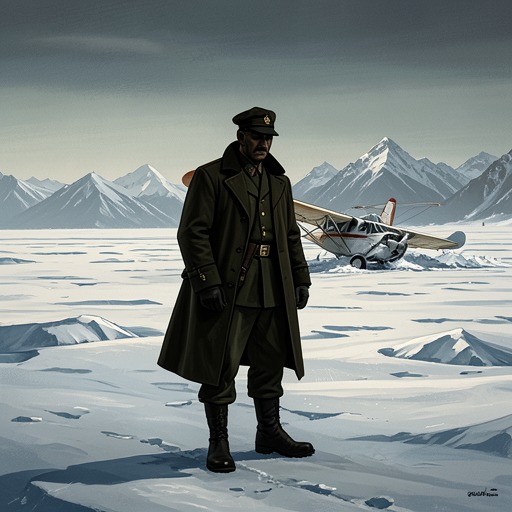
When the wreck was later excavated, the aircraft emerged not as an ordinary lost plane but as a German transport, a Junkers Ju 52. Under floodlights, its relatively intact nose jutted from the ice, with the propeller still attached and its blades mangled. The outline of a black swastika showed beneath flaking camouflage paint, while the tail and the wings remained buried or lost. The exposed fuselage made the crash site legible in fragments: enough to identify the plane, but not enough to explain why a German aircraft had been flying there.
The excavation also turned the ice into a scene of death and uncertain care. Soldiers found a body beside the fuselage, dressed as a high-ranking German officer, with an Iron Cross at his neck, hands crossed over his breast and a cap frozen over his face. One leg had been torn away at the hip. Its placement beside the aircraft suggested to Ratoff that someone who survived the impact had moved or tended to those killed in it. The passengers who made it through the crash, he reasoned, could not have endured the glacier’s cold for long, even if they had initially survived.
When the plane’s front section eventually broke under its own weight and collapsed onto the ice, Ratoff entered the cabin for the first time in more than half a century. He found two more bodies close together: one in a German officer’s uniform, the other in the uniform of a two-star American general, with a locked aluminium briefcase handcuffed to his wrist. Ice had kept the men’s skin bluish-white but free of decay. In the tail, three further bodies lay huddled together; crude splints on some legs suggested attempts to treat injuries, and one body wore a U.S. fighter pilot’s jacket, with an American flag on its sleeve and a name embroidered on the chest. Counting the officer found outside, Ratoff had located six bodies, although his briefing had specified seven. Their uniforms, injuries and careful or desperate arrangements did not resolve the mystery; they sharpened it, exposing a German plane, American personnel and an unexplained absence within the same frozen wreck.
The buried dead reappeared again beneath a tarpaulin in a camp tent. Kristín and Steve glimpsed a grey body bag, then drew it into view and saw a peaked cap bearing an eagle and swastika above the pale face of a middle-aged man. The discovery echoed the earlier unearthing of the officer beside the fuselage: the wreck’s history was not confined to the ice but was being handled, concealed and carried away by the people conducting the recovery.
The Survivor and the Case
The crash did not end with the fuselage at rest. One survivor left the wreck in the blizzard, although the others remained behind as snow began to cover the aircraft and fill the scar it had cut across the ice. Their choices were bleak: the oil for their lamps would not last, an open door would let snow into the cabin, and the cold made staying inside or venturing onto the glacier seem equally fatal. He refused to sit still and wait for death, and set out into the storm while the others faced the consequences of remaining with the wreck.
A briefcase accompanied him into the darkness, secured to his wrist by a handcuff. Its chain rattled as he let the case drag behind him rather than carry its handle; the cuff chafed, but he had passed beyond caring. The image of the case’s weight and chain gives the escape a material cost, while anticipating the locked aluminium case later found handcuffed to the wrist of the American general in the cabin. The wreck preserves the connection as an unresolved clue: the briefcase survives the crash and the passage of time, but its contents and importance are not disclosed here.
The Witnesses and the Limits of the Record
The first account of the crash begins not with a sighting but with sound. Shortly before eleven at night, two brothers on an isolated farm heard an engine unlike those of the British and American aircraft they knew from wartime traffic around the British base in Hornafjördur. The roar seemed to pass almost directly over their home. They glimpsed the plane for only a moment, its nose raised as if struggling to gain height, before it vanished into darkness towards the glacier. With visibility reduced to zero and the ice cap so close, they believed a crash was imminent; they could not know what had happened beyond the storm.
The brothers lived alone, their parents dead and neither of them married. Because their telephone line had been down since an earlier storm, they could not report the aircraft that night. Four days passed before the weather eased enough for them to ride to Höfn. They stopped at farms on the way and told others what they had heard, but none of those farmers had heard the plane. Their testimony thus reached the authorities through a narrow chain of witnesses, after the storm had already obscured the crash site.
That fragile local account contrasts with the military’s immediate authority over what followed: the army took charge, restricted access to the glacier, and offered no explanation. Later, the wreck yielded tangible but incomplete traces—German insignia, American uniforms, bodies preserved in ice, and a locked case—without resolving why those people had been aboard together or accounting for every passenger named in the briefing. The crash is therefore both a physical catastrophe and the beginning of a contest over evidence: the glacier preserves the remains, while the operation around them determines who may see them and what can be known.