1967 U.S. Military Search on Vatnajökull
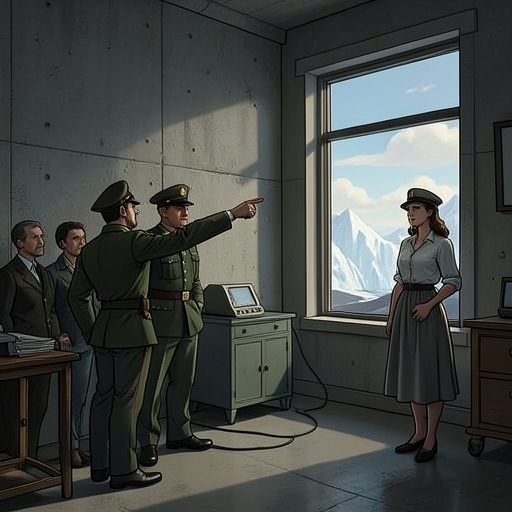
Operation NapoleonThe 1967 U.S. Military Search on Vatnajökull was the largest expedition the farmer Jón had seen sent to the glacier, a secretive U.S. Army effort prompted by aerial photographs of wreckage emerging from the ice. The operation’s scale made concealment difficult: the troops had to cross Iceland by rough roads, while a publicized astronaut training visit provided cover for the military movements. For Jón and his brother, who guided the soldiers, the search was another turn in a long history of American interest in the wreck—and another reason to keep its purpose from their neighbours.
Earlier Searches and the 1967 Discovery
The 1967 mission followed Colonel Miller’s wartime attempt to find the aircraft. For years afterwards, Miller returned alone every few years, staying with the brothers for two or three weeks and searching Vatnajökull Glacier with a small metal detector. The brothers were on friendly terms with him. When they asked soldiers in 1967 for news, they were told that Miller was dead. The new expedition was markedly larger than his solitary visits, and the brothers again acted as guides, leading soldiers through the foothills and up onto the ice sheet.
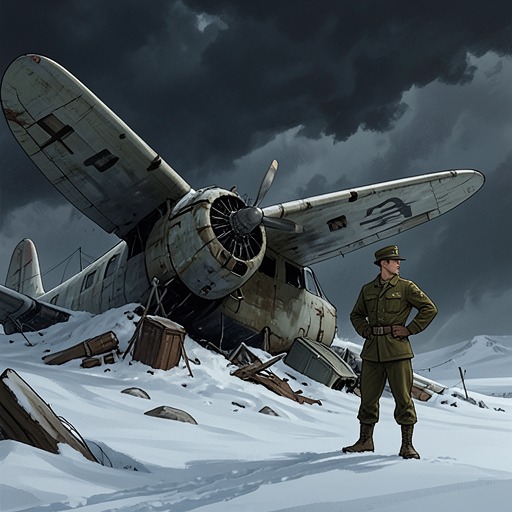
The immediate lead came from the sky. Surveillance flights had been routine, but during one flight Leo Stiller thought he saw something on the ice. He flew back and forth over the area, taking photographs. Stiller later told Michael Thompson about the sighting; Thompson, who had not been involved, recounted that a helicopter attempt to land failed in the middle of winter. A small expeditionary force then went onto the glacier with a metal detector. Preparations for a major operation followed. The brothers learned that part of the wreck had appeared in a satellite image; by then, the military had stopped using spy planes, and the new technology had brought earlier patrols of the area to an abrupt end.
The Expedition and Its Cover
The operation’s approach was difficult to hide. According to the account preserved by Jón, the troops had to circumnavigate Iceland on rough dirt roads, travelling first north and then approaching the ice cap from the east. The terrain and the movement of equipment made avoiding attention difficult. The brothers guided the soldiers onto the glacier, but they were not told what the aircraft contained or why the army was so intent on finding it.
The military’s cover story addressed a particular political sensitivity. Icelanders were wary of troop movements, especially in 1967, so military intelligence arranged for Armstrong and other American astronauts to visit Iceland for training exercises in lava fields north of the glacier. The public explanation was that the interior landscape resembled conditions on the moon. The astronauts were welcomed, and the accompanying military manoeuvres attracted understanding rather than suspicion. In Thompson’s account, however, the training visit was designed to deflect attention from the largest movement of American troops and equipment in Iceland since the war. The disguise was imperfect: Iceland was a small community, and people heard about the operation despite its secrecy.
Secrecy, Local Knowledge, and Speculation
Colonel Miller had asked the brothers to keep the real purpose of the expeditions secret. If neighbours asked questions, they were to describe the activity as military training exercises; they kept their promise. Their silence did not mean they were uninterested. In private, they tried to explain why the Americans monitored the glacier and arrived in force whenever their images suggested that wreckage was emerging from the ice. They speculated about Nazi-plundered Jewish gold, diamonds, or art, a high-ranking general, or a secret wartime weapon. These were theories, not discoveries, and the brothers did not know which, if any, came close to the truth.
The secrecy itself became part of what they observed. The army wanted to reach the aircraft without drawing attention, and Jón found the authorities’ agitation over each dark mark on their images amusing. The search thus left the brothers with two kinds of knowledge: they knew how to guide the soldiers across the glacier, and they knew that the explanation given to the public was not the whole story. The latter knowledge was bound by a promise, while the object of the search remained unknown to them.
Reported Cost and Narrative Significance
Michael Thompson recalled that four soldiers had lost their lives on the glacier during the 1967 expedition. His recollection supplies a human cost to a mission otherwise described through photographs, satellite images, troop movements, and secrecy. The account does not give the circumstances of those deaths, so they remain a stark but limited measure of the danger involved in the search.
The expedition’s history is disclosed retrospectively through different witnesses: Jón’s account of the soldiers and the brothers’ role, and Thompson’s report of what Leo Stiller later told him. Together, those accounts connect a physical search for wreckage with a second operation conducted in public view: the management of what Icelanders believed they were seeing. The astronauts’ visit made the troop movements easier to explain, but could not erase them from local memory. Nor did the change from spy-plane patrols to satellite imagery remove the mystery. The aircraft’s appearance in an image was enough to set a large, secret search in motion, while the reason for the army’s urgency remained beyond the guides’ reach.