2000 Vatnajökull Aircraft Recovery Operation
Operation NapoleonThe 2000 Vatnajökull Aircraft Recovery Operation begins when a new satellite image reveals a mark on Vatnajökull that had not appeared in an image taken about a year earlier. The covert U.S. mission is meant to recover an aircraft lost there many years before, but the plane’s emergence from the ice brings its buried human and political history into view. The operation’s methodical preparations give way to a race against weather, scrutiny, and the consequences of what the wreck contains.
Discovery and Authorization
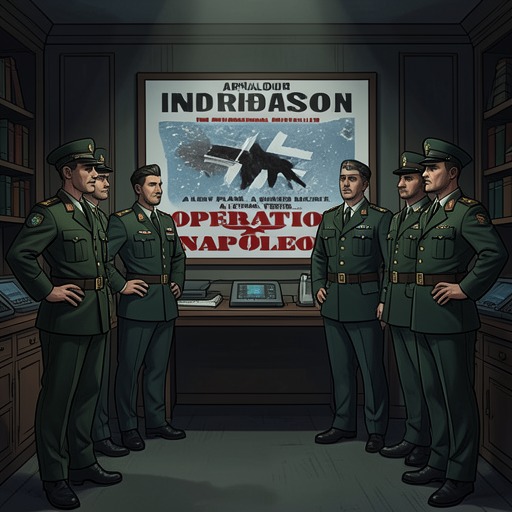
The trigger is a comparison of two images drawn from a vast archive of satellite photographs: an older view of the glacier’s white surface and a new image showing a dark mark in its lower-left corner. General Vytautas Carr orders the detail enlarged until it fills the screen. The mark indicates that the glacier is returning something once lost there, and Carr concludes that a covert recovery must begin before the discovery attracts attention.
Carr assigns the mission to Ratoff, ordering him to take two special-forces squadrons and choose the necessary equipment. The operation is to be presented as a routine exercise. Carr also anticipates political resistance: locals are to be directed to the defense secretary, while he arranges to speak with the Icelandic government. Because the military base is a sensitive issue in Iceland, Immanuel Wesson is sent to take over the embassy in Reykjavík and serve as spokesman. The assignment is explicitly covert, and Ratoff is promised more detailed instructions en route.
The urgency has a longer history. In an earlier search led by Colonel Miller, the only aircraft fragment found was the rim of a nose wheel, which Miller immediately took charge of. Beyond it, the ice appeared unmarked; local brothers suggested that drifting snow might already have covered the wreck. Severe storms eventually forced the expedition to abandon its search, burying tents and equipment. Decades later, Icelandic personnel recall regular monthly flights photographing the southeastern glacier, organized by Leo Stiller, and rumors that the military was looking for a plane carrying dangerous cargo. Stiller’s widow confirms that he knew the aircraft belonged to the Nazis. These fragments make the new image less a first discovery than the return of a secret that has persisted through surveillance, rumor, and an unsuccessful search.
Deployment and Recovery Camp
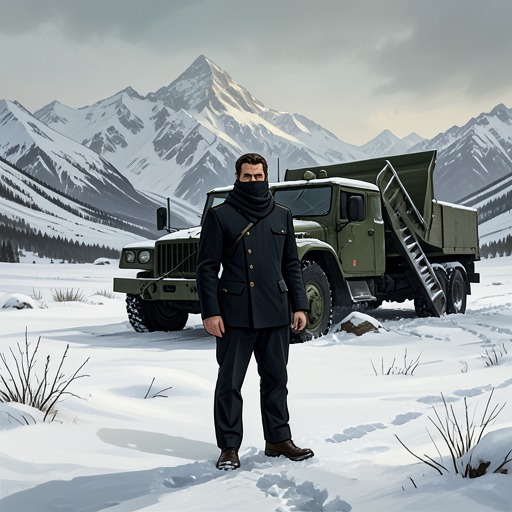
On Thursday, 28 January 2000, a C-17 transport plane lands at Keflavík Airport at about eight in the evening. Its cargo includes snowmobiles, tracked vehicles, skiing equipment, and other gear for glacier travel. Four civilian-looking trucks leave at half-hour intervals, blending into traffic as they carry equipment east. Heavy snow, worsening visibility, and the remote winter roads conceal the convoy as it continues toward Vatnajökull.
Carr has prepared the wider operation as well as the field deployment. The C-17 remains on standby at Keflavík Airport under the protection of eight armed guards. General Immanuel Wesson and ten Delta Force operators are sent to Reykjavík with orders to assume control of the embassy; the ambassador and immediate staff are sent on leave without explanation. The military effort thus extends beyond the glacier itself, managing both transport and the public-facing institutions that might otherwise complicate the mission.
Ratoff and an interpreter later travel from a farmhouse toward the foothills in a tracked vehicle, following the tracks of the larger trucks through the blizzard. At the camp, floodlights illuminate a rough circle of tents, supplies, and soldiers in snow camouflage. A communications tent and large satellite dish connect the field operation to its command structure. Once the plane is located, the camp is intended to move onto the ice. On Saturday, 30 January, the Delta operators dig from both sides of the wreck. The nose rises at an angle while the tail remains locked in hard ice; the fuselage appears largely intact, with little snow inside. Pickaxes break the surface, and oxyacetylene torches begin cutting the plane into sections for transport to trucks waiting to take it toward Keflavík Airport.
The Aircraft and Its Dead
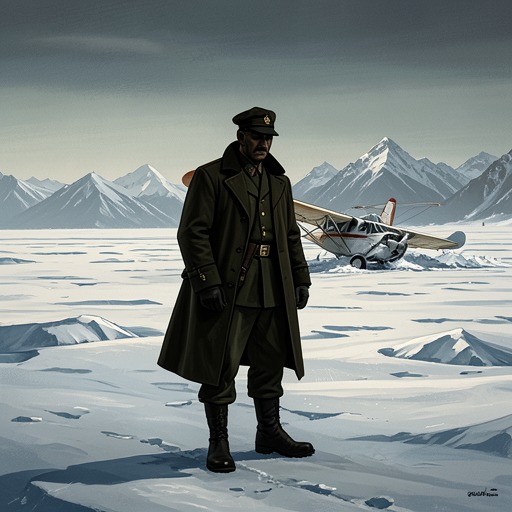
The exposed nose confirms that the wreck is a Junkers Ju 52, Germany’s principal transport aircraft during the Second World War, known to Allied troops as Iron Annie or Auntie Ju. Its three-engine design is still legible in the wreckage: the nose-mounted propeller remains attached, its blades mangled by impact with the ice. Beneath flaking camouflage, a black swastika can be made out below the cockpit. Two of the seven side windows have emerged, while the tail remains buried and the wings appear to have been sheared off.
The recovery also reveals bodies preserved by the glacier. A leg in a black army boot protrudes from the ice beside the fuselage. Ratoff orders the soldiers to uncover the corpse: a high-ranking German officer, wearing an Iron Cross, his hands crossed over his breast and a cap frozen over his face. One leg is missing at the hip. Ratoff judges from the body’s placement that it may have been laid beside the aircraft by passengers who survived the crash long enough to tend to those who died. He orders it freed and taken into a tent, considering how quickly the cold would have killed passengers without Arctic clothing or training.
When the aircraft’s front section bends and the fuselage breaks in half under its own weight, Ratoff enters the cabin. He finds two more middle-aged men, one in a German army uniform and one in the uniform of a two-star U.S. general. A heavy, locked aluminium briefcase is handcuffed to the general’s wrist. In the tail section, Ratoff discovers three further bodies huddled together. With the officer found outside, six corpses have been accounted for, although his briefing specified seven. One of the men in the tail wears a U.S. fighter pilot’s World War II jacket, with an American flag on its sleeve and a name sewn onto the breast. The combination—a U.S. general, an American pilot, German officers, and a Nazi aircraft painted in U.S. camouflage—turns a recovery job into an investigation of an unexplained wartime mission.
Secrecy, Resistance, and the Briefcase
The operation’s secrecy becomes harder to maintain as people approach the glacier and the recovery exposes more than the commanders planned to reveal. Ratoff worries that news of armed troops and an aircraft on the ice will spread, and treats any leak as something that must be stopped. Carr, meanwhile, begins to doubt his choice of mission director: Ratoff produces results, but his over-zealousness alarms his superior. Carr nevertheless puts the second phase in motion and calls Colonel Miller, honoring an old promise when he tells him that the plane has turned up.
The command structure does not mean that every participant knows the same facts. Miller says Ratoff has not been briefed on the plane’s contents, though he expects him to retrieve the documents. Trucks are ready to move the dismantled aircraft, and the bodies are to travel with the wreckage. Miller has instructed Ratoff what to do with any papers he finds, while acknowledging the risk that Ratoff may read them. He expects the episode to be closed within days, but the plan depends on controlling both the objects and the information they carry.
Icelandic authorities challenge the military presence, including an allegation that the Defense Force failed to answer a mayday requesting helicopter assistance from the glacier. At the talks, a U.S. general bluntly demands that the Icelandic rescue team be removed from the area. The exchange makes the sovereignty dispute inseparable from the physical recovery: the armed operation is taking place in a politically sensitive country, and local rescuers have reached the glacier while U.S. forces are trying to control access to it.
Kristín and Steve encounter the same concealment at close range when they glimpse a grey body bag beneath a tarpaulin in a tent. By carefully dragging the canvas with her foot, Kristín exposes a cap marked with an eagle and swastika and then the face of a dead middle-aged man. The body bag makes the operation’s handling of the dead visible even as the troops work to erase traces of their presence.
At a later confrontation, Ratoff holds up the briefcase and says that he has the information, hoping to reach an agreement. Its contents are not disclosed here, but its importance is clear: the aircraft, the bodies, and the papers are not merely remnants to be hauled away. The operation’s effort to close a chapter of wartime history instead brings a concealed record into the hands of a mission director whose loyalties and judgment Carr has already begun to question.