Borne Island
Operation NapoleonBorne Island is a small, isolated island in an uninhabited archipelago off the southernmost tip of Argentina, and the last of three proposed locations named in a fragment of the Operation Napoleon document. Its importance lies in the way it joins a concealed wartime plan to Kristín’s later search for meaning: initially only a name in a damaged text, the island becomes a real place she reaches, explores, and finds marked with an inscription that points back toward the story’s buried past.
Name and setting
The surviving fragment describes an archipelago that had been inhabited in earlier centuries but was abandoned because of its harsh climate and barren terrain. Within it, Borne is identified as the final option for Operation Napoleon; the other two proposed locations are not disclosed in the portion Kristín can decipher. The document’s language makes the island more than an obscure geographical reference: it presents Borne as a possible destination in a secret plan, while leaving the plan’s purpose and full itinerary unresolved.
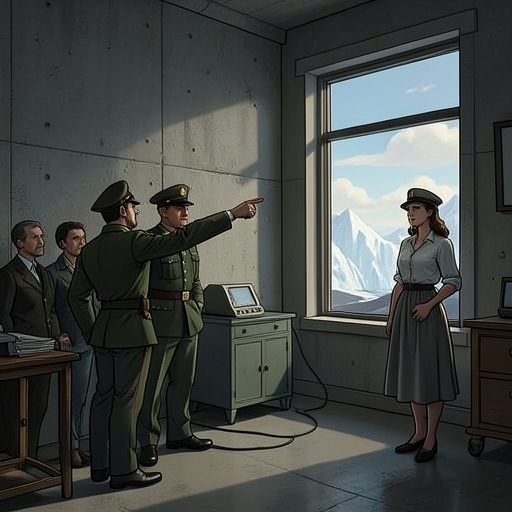
The fragment comes from a document found by Jón on the body of a German officer. Kristín had kept a scrap from the pocket of her overalls, among the small items she emptied from her bloodstained clothes after the glacier events. Some six months later, she returned to it, recognized the words “OPERATION NAPOLEON,” and tried to recover the rest of its typewritten contents. She could make out only scattered words and letters. A friend at the foreign ministry, formerly a diplomat in Germany, translated her notes and filled gaps where possible, but the resulting passage still offered no explanation of what the operation added up to. Borne therefore entered her knowledge as both a specific place and an unresolved clue.
From document to destination
Kristín did not tell anyone about the translation, not even Elías or Júlíus. She locked the scrap away, yet the island’s name stayed with her. In the years after the glacier, she repeatedly recalled the camp, the plane, the swastika, the bodies in the tent, and Ratoff, along with the secret knowledge she carried. Borne resisted her efforts to treat the affair as finished. Its distance did not make it irrelevant; rather, the unanswered reference came to represent how much of the story remained beyond her reach.
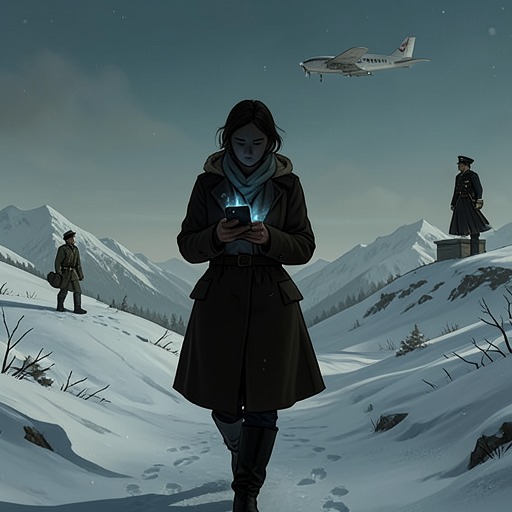
Steve’s death gave that unresolved clue a personal force. Kristín thought he had died because of what she knew, and the thought that the matter might end without explanation was unbearable to her. She eventually considered going to Borne, but chose not to travel by air or through the ordinary routes that would expose her to cameras, passenger records, and passport control. The decision reflects the island’s unusual place in her life: it was not simply a destination for exploration, but a place she believed she had to reach without drawing attention to herself.
To verify that Borne existed and locate it, she consulted the British Royal Geographical Society’s website at the National Library. Its information was chiefly geographical, with a brief account of the island’s history and coordinates for its exact location. When a merchant-ship captain she knew agreed to help her stow away, she eventually reached the region and arranged passage from a harbour with a local fisherman. He said he knew nothing about Borne and that there was nothing to know, a dismissal that contrasts with the island’s importance to Kristín and to the document that had sent her there.
The island and its ruins
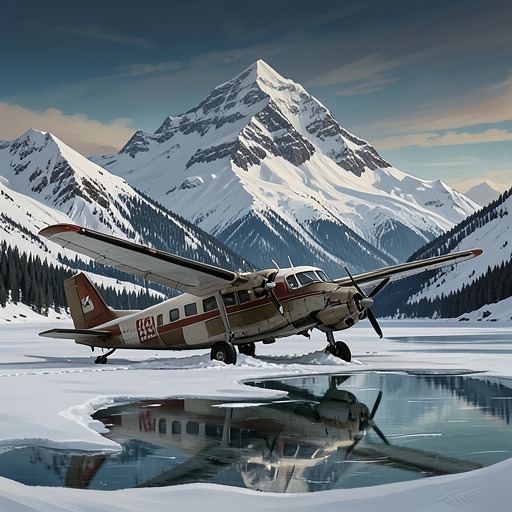
The boat journey to Borne took about five hours, passing rocks, islets, and archipelagos. The island rose from the sea among smaller skerries. Kristín thought its rugged shape resembled the Icelandic island of Drangey, though Borne was lower and at least three times larger. It was an inhospitable rock with some vegetation and no bird life. The fisherman circled it until he found a place where she could climb ashore, then remained in the boat.
A gravel path led from the beach up an easy incline to the plateau. There, in the middle of the island, Kristín found ruins: tumbledown wooden walls, a beaten-earth floor, a doorstep, and what reminded her of an old kitchen hearth. These remains gave physical confirmation to the fragment’s account that the island had once been inhabited. But when she searched among them for evidence connected to her suspicions, she found nothing. The absence did not disappoint her as she expected it might. After walking to the edge of a precipice and looking at waves breaking against the cliffs, she felt, for the first time in years, some of the weight lift from her chest.
The inscription
On her way back across the island, beyond the ruins, Kristín tripped over a partly buried stone in the long grass. At first she was about to continue toward the boat. Its shape made her stop: the thin stone was about half a metre long, square at the bottom and rounded at the top. She struggled to turn it over, then rubbed dirt from its surface and made out the carved words “BLONDI” and “1947.”
The discovery gives Borne a significance the ruins alone had not supplied. Kristín had searched the island for a clue and found nothing in the abandoned settlement; only as she was leaving did an ordinary-looking stone become legible as a deliberate marker. The inscription connects the place to Blondi and a specific year, making the island’s silence newly charged with historical implication. The passage does not explain who placed the stone or what occurred there in 1947. Instead, Borne’s final revelation sharpens the mystery: the remote island is no longer merely a location proposed in a secret document, but a site bearing a surviving trace that Kristín can read and carry back into the unresolved story.