Building 312 intelligence service
Operation NapoleonThe Building 312 intelligence service is a clandestine U.S. military organization whose satellite-imaging mission turns a small change on Vatnajökull into the trigger for a covert military operation. The service combines an immense archive and technical surveillance capacity with a tightly controlled chain of command; its role in the recovery effort shows how those capabilities can make information both a tool of action and something deliberately kept from others.
Origins, remit, and headquarters
Official documents identify the service’s Washington headquarters simply as Building 312. The building, not far from the Capitol, began as a warehouse and was elaborately converted to house one of the capital’s clandestine organizations. Its costly renovation and secured interior accommodate a surveillance operation that works continuously rather than as an occasional intelligence outpost.
Established shortly after 1960, during the Cold War’s most intense period of mutual suspicion, the organization initially analysed spy photographs of the Soviet Union, China, Cuba, and other nations considered enemies of the United States. After the Cold War, its monitoring extended to terrorist bases in the Middle East and conflicts in the Balkans. This change in remit does not alter its central method: distant places are watched through images gathered from orbit and examined for signs of change.
The service controls eight satellites, orbiting between 800 and 1,500 kilometres above Earth. At Building 312, giant computers receive information relayed from space; satellite photographs belonging to U.S. military intelligence are collected, processed, analysed, and catalogued. An alert is raised when something irregular appears. The process turns a vast stream of images into a system for identifying exceptions, with the service’s analysts and leadership deciding what those exceptions require.
Surveillance and the Vatnajökull discovery
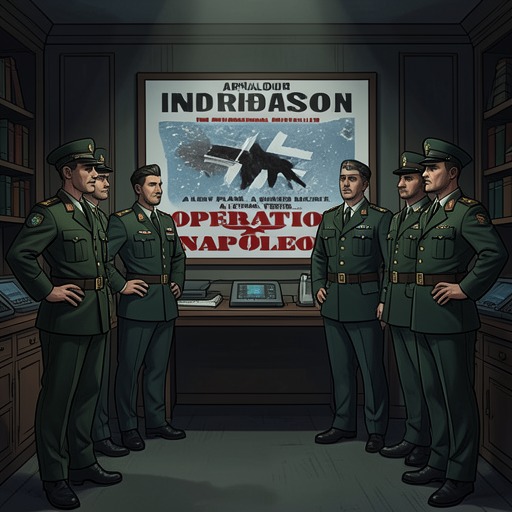
The Washington control room makes that method visible. Twelve powerful computer units hum in a cordoned-off area, while four long banks of screens and control panels divide the room. Two armed guards stand at its doors. General Vytautas Carr, the service’s director, studies a wall-sized monitor displaying archival imagery beside new photographs. The archive holds tens of millions of satellite pictures taken over four decades.
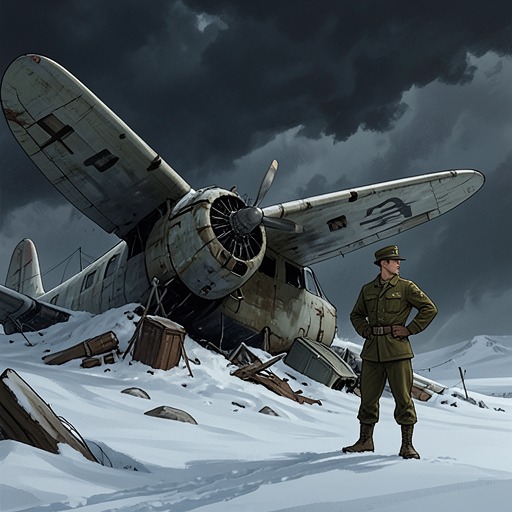
The images that draw Carr’s attention show a small section of south-east Iceland’s Vatnajökull glacier: one photograph from about a year earlier and another taken that day. The older view shows an apparently unremarkable white ice cap broken by belts of crevasses. In the new, coarse and grainy image, a small black mark appears in the lower-left corner. Once enlarged and resolved, the mark fills the screen. The service’s surveillance system has detected not a broad change in the landscape but a single dark interruption in it—and the comparison across time makes that interruption actionable.
Carr asks whether the service has anyone in Keflavík and is told that it does not. He also checks whether others know about the images; they have shown no interest. He orders that their lack of interest be preserved. Rather than alerting local authorities through ordinary channels, he leaves the control room, goes to his office, and contacts Ratoff. The service’s information advantage thus depends not only on seeing the mark but on controlling who is allowed to know that it has been seen.
Command and covert recovery
Carr describes the glacier as returning an object lost there many years earlier and says that a man in Keflavík is needed to direct the operation. He instructs Ratoff to take two special forces squadrons and choose his own equipment, while presenting the deployment as a routine exercise. If Icelandic officials prove uncooperative, they are to be directed to the defense secretary; Carr says he will speak to him and arrange a meeting with the Icelandic government to offer an explanation. Immanuel Wesson is to take over the U.S. Embassy in Reykjavík and act as spokesman. Carr also promises Ratoff further instructions en route. When Ratoff asks whether the operation is covert, Carr confirms that it is.
The plan exposes a layered division of responsibility. Ratoff is given operational discretion over forces and equipment, while Carr retains control of the political explanation, the diplomatic channel, and the flow of instructions. The proposed routine-exercise cover sits beside Carr’s acknowledgment that the military base is a sensitive issue in Iceland. The arrangement is not a transparent joint recovery: it is a military action prepared under an ordinary-sounding pretext, with the Icelandic government offered an explanation after the service has initiated the operation.
Carr’s confidence in his mission director becomes less secure as the operation proceeds. After a conversation about Ratoff and the choice of personnel, Carr puts down the receiver and immediately begins another call, preparing to set the operation’s second phase in motion. The defense secretary has been concerned about Ratoff, and Carr now shares doubts. He knows the alarming details of Ratoff’s army career: the man delivers results, but can be over-zealous. Carr decides that he must fly to Iceland, but first keeps an old promise by calling Miller to say that the plane has turned up and that they need to meet.
Information, risk, and institutional limits
The service’s management of the aircraft’s discovery reaches beyond the initial deployment. Miller recalls the Icelandic brothers who had once acted as his glacier guides: they had welcomed him into their home, helped him, and remained discreet without asking questions. He asks whether Ratoff has been briefed about what the plane contains. Carr’s answer makes clear that the mission director is expected to discover the contents, and that the operation’s leaders accept the risk that he will read any papers he finds. Trucks are already positioned to transport the dismantled plane to Keflavík, and the bodies are to accompany the wreckage. Ratoff has been instructed about the papers, but the plan assumes that physical removal and restricted orders can contain what the documents disclose.
Carr describes the recovery as a way to close a chapter of the war within days, but his assurance is qualified by the unresolved question of Ratoff. When asked what will happen to him, Carr says that the service is keeping its options open. The remark reveals that the chain of command is not a guarantee of shared purpose: the organization needs Ratoff’s effectiveness while remaining alert to the danger that his conduct may create. Carr’s own later confrontation with him confirms that delegation has not settled the question of control. Ratoff presents the briefcase and says he hopes they can come to an agreement about Operation Napoleon. Information has reached the hands of the operative sent to retrieve it, and Carr must now negotiate rather than simply issue orders.
The service’s significance lies in this tension between reach and control. Its satellites can detect a black mark on a remote glacier, its archive can establish that the mark is new, and its command structure can mobilize a covert recovery. Yet the operation depends on people whose actions cannot be made as legible or predictable as the images on a screen. Building 312 can classify an anomaly, withhold it from Iceland, and set forces in motion; it cannot ensure that the information stays within the boundaries its leaders intended.