Icelandic Coast Guard
Operation NapoleonThe Icelandic Coast Guard is the Icelandic emergency service whose helicopter is called upon to evacuate rescue-team members from Vatnajökull. Its brief but consequential role contrasts with the failure of the U.S. military presence to answer an earlier mayday: as the crisis escalates, the Coast Guard becomes a necessary source of rescue support and a point of reference in the dispute between Icelandic and American authorities.
Role and Operational Setting
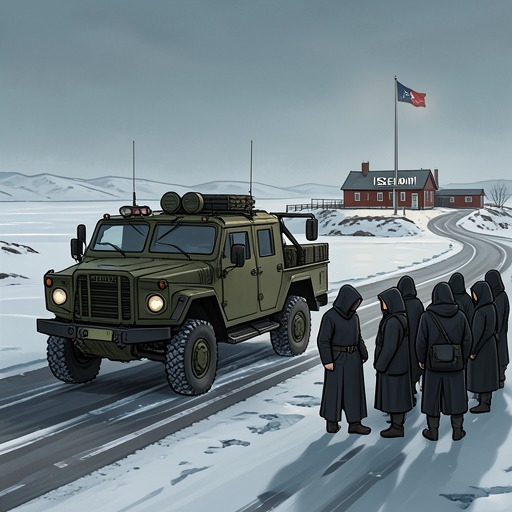
The book identifies the Icelandic Coast Guard through its helicopter rather than describing the organization’s structure or routine work. Its importance emerges during the emergency on Vatnajökull, where an Icelandic rescue team is trying to reach injured people and must contend with severe weather and uncertainty about assistance from the base at Keflavík.
At one stage, the rescue team has seventy members and is waiting for a helicopter from the United States Defense Force at Keflavík. When asked why they do not use the Icelandic Coast Guard helicopter instead, the team’s response is that it is busy. The exchange establishes a practical limitation: the Coast Guard is a possible source of support, but its aircraft is not immediately available at that moment.
The Evacuation Mission
The situation changes as the storm begins to subside. A report to the prime minister states that an Icelandic Coast Guard helicopter is on its way to airlift two rescue-team members found on the glacier. A fragmentary communication from the rescue effort also reports that the Coast Guard helicopter is en route and that Elías is alive, while indicating that a doctor is being dropped with the team. The available account confirms the aircraft’s dispatch and intended evacuation, but does not establish the final outcome of that flight.
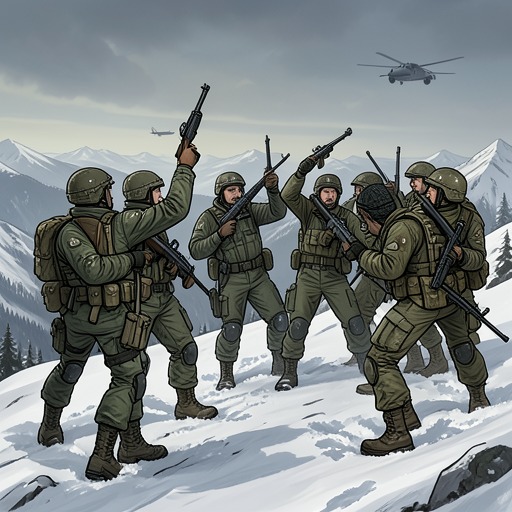
The mission unfolds alongside the rescue team’s effort to locate the soldiers reported in the area. The Coast Guard helicopter’s immediate task is narrower: to carry the two discovered team members away from the glacier. Its arrival therefore addresses an urgent medical and evacuation need without resolving the wider danger or the uncertainty about the missing personnel.
The Mayday and the Political Dispute
The Coast Guard’s deployment gains political significance because it follows the United States Defense Force’s failure to respond to an earlier mayday from the glacier. During a secret meeting between Icelandic and American officials, Iceland’s foreign minister directly challenges the admiral over that failure. The admiral denies knowing of the mayday and says he will have the allegation investigated; the prime minister has meanwhile been informed that the Coast Guard helicopter is going to evacuate the two rescue-team members.
The Coast Guard is not presented as responsible for the confrontation, nor does the text describe it as taking part in the military operation. Instead, its rescue flight makes the distinction between the two institutions visible: Icelandic personnel are being evacuated by an Icelandic aircraft while the conduct of the American force, including its failure to answer the distress call, is being questioned by the Icelandic government.
Narrative Significance
The Coast Guard’s role is limited in scale but crucial in circumstance. The helicopter first being busy and later being dispatched marks the changing conditions of the rescue, while its mission supplies an alternative to the military assistance that did not arrive when requested. In a story where operational secrecy collides with public danger and national sovereignty, the Coast Guard represents concrete emergency response: an aircraft sent toward the glacier to bring injured Icelandic rescuers back.