Icelandic Government
Operation NapoleonThe Icelandic Government occupies an uneasy position between alliance and sovereignty: it must manage the long-standing presence of foreign forces on Icelandic soil, yet it cannot treat that presence as a blank cheque. The secret operation to recover a German aircraft from Vatnajökull Glacier makes that tension concrete. When military authorities conceal the scale and purpose of their mission, the government’s cooperation turns into protest, and a dispute about an aircraft becomes a test of who has authority to act within Iceland’s borders.
Political Setting and Constraints
The government’s caution has a long history. The United States established its air base at Keflavík after World War II, on Midnesheidi’s lava fields southwest of Reykjavík. Iceland’s position in the North Atlantic made the base strategically valuable during the Cold War era in Iceland, particularly for monitoring Soviet submarines, shipping, and aircraft in the Arctic. Britain had occupied Iceland at the beginning of the war and transferred the defence role to the Americans in 1941; the American force later reached about 38,000 troops.
The military presence remained politically divisive after the war. The 1949 defence treaty prompted a riot outside the Icelandic parliament, and left-wing parties continued to oppose the base. Government policy also held that Iceland should derive no profit from the North Atlantic Treaty Organization presence on its shores. The military therefore did not pay directly for its facilities at Keflavík Airport, although civilian contractors and service companies earned substantial sums from military work, and neighbouring villages came to depend on the Iceland Defense Force. When operations were scaled back at the end of the Cold War era in Iceland, local protests exposed the economic costs of reducing that presence. The government thus faces competing pressures: public suspicion of military activity, local dependence on it, and the practical realities of an alliance with a much larger power.
The First Secret Meeting
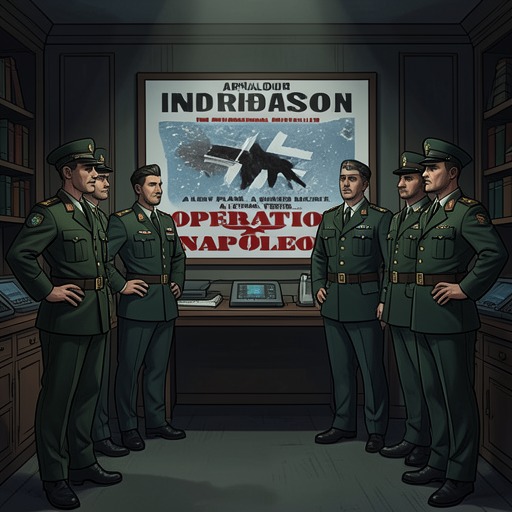
On Friday, 29 January, the Icelandic prime minister and foreign minister were summoned at short notice to a Reykjavík hotel suite for a meeting with the admiral from Keflavík and Immanuel Wesson, temporarily acting as the United States ambassador. The Icelandic ministers had not been told why they were being called in; on the journey, they even considered whether the summons might concern a presidential visit. The foreign minister had selected the discreet hotel setting for unofficial meetings, but the Americans opened by insisting that nothing said there leave the room.
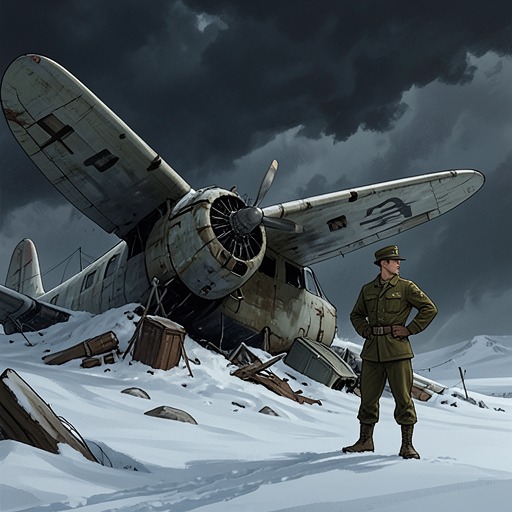
The general explained that military satellite images had shown a German aircraft on Vatnajökull Glacier. The United States planned to excavate it, move it to the base, and eventually return it to the States, a process requiring substantial numbers of personnel and equipment to cross Icelandic territory. The foreign minister recognized the constitutional and diplomatic implication: the operation required the Icelandic Government’s permission. The Americans said they did not wish to act against Iceland’s will and presented the expedition as scientific, with senior scientists accompanying the military personnel. At the same time, they demanded secrecy and offered little explanation of why the aircraft mattered.
The prime minister pressed for a candid account, warning that the United States had not simply requested permission but appeared to have announced a plan already in motion. The general brusquely answered that the matter was not Iceland’s concern. The admiral then tried to restore a conciliatory tone, but his suggestion that the issue should be resolved without outside involvement and then forgotten only sharpened the conflict. For the government, secrecy was not a neutral operational preference: an undisclosed military movement across Icelandic territory threatened both treaty procedures and the government’s ability to answer to the public.
From Concealed Expedition to Public Crisis
By Saturday evening, 30 January, the situation had changed. At the prime minister’s retreat on Lake Thingvallavatn, the government met the admiral and Wesson again, this time with the minister for justice present. Reports from the glacier said armed American soldiers had been seen there and that two rescue-team members had been found after contact with them: one was dead, and the other, Elías, was gravely injured. The prime minister had also learned that Defense Force helicopters were airborne without filed flight plans or permission to use Icelandic airspace, while an Icelandic Coast Guard helicopter was going to evacuate the injured rescuers. The Defense Force had failed to answer an earlier mayday call.
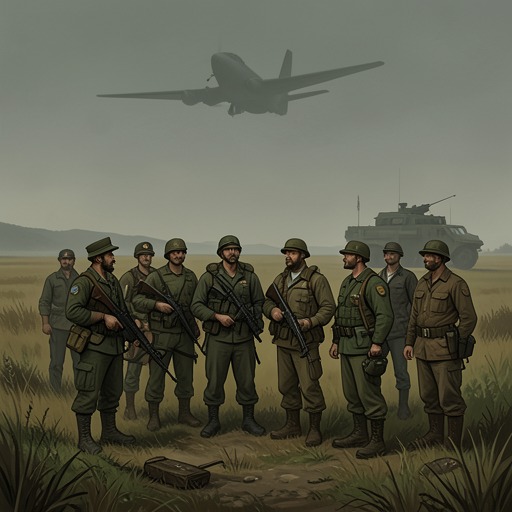
When challenged about the armed troops, the admiral described the presence as a simulation exercise involving about 150 personnel, including visiting NATO forces from the Netherlands and Belgium. He said they carried blank rounds. The prime minister rejected the account as incompatible with what the government had previously been told: a scientific expedition to move an aircraft, not a military exercise. He called the death, the undisclosed weapons, and the handling of the operation a serious strain on relations and a violation of the defence treaty. The foreign minister separately asked about the unanswered mayday; the admiral said he knew of no such failure and would investigate it.
The general then made the demand that exposed the operation’s coercive edge: the Icelandic rescue team had to leave the glacier. The prime minister refused to accept the implication that the injuries were unrelated to the American operation and warned the general against threats. When the general invoked Iceland’s economic dependence on the United States, the prime minister ended the meeting. He announced that the government would lodge a formal protest, seek thorough public investigations in Iceland and the United States, close all roads between the glacier and the base until it received full and accurate disclosure, and inform the media. He also said he would address the nation. The sequence is significant: rather than accept economic leverage as a substitute for an account of events, the government turned to public scrutiny and control of access.
Emergency Claims and the Limits of Control
The general’s final intervention changed the stated grounds for keeping the rescue team away. He said a German bomb was on the glacier, that specialists were trying to remove it, and that the Icelandic rescuers faced danger. This warning offered a possible explanation for the military’s urgency, but it came only after the prime minister had stood up to leave and after the Americans had withheld the aircraft’s significance. The government was therefore asked to act on a new emergency claim from the same officials whose earlier explanations it had found inadequate.
The wider operation continued to produce conflicting accounts. A travel ban for the Vatnajökull area was announced on the basis of a volcanic-eruption alert, accompanied by a declared state of emergency. A detective recognized the official language as a way of fostering positive relations, while Kristín denounced the government for yielding to the Americans. The episode does not establish that the government controls every explanation circulated during the crisis; instead, it shows how official secrecy and emergency language can narrow the space in which it can act.
Significance
The Icelandic Government is not depicted as either a passive extension of the alliance or an authority able to command events without constraint. Its earlier decision to accommodate foreign military interests exists alongside a clear claim to permission, territorial oversight, and public accountability. The first meeting reveals how the United States tries to secure cooperation while withholding the underlying reason for the mission; the second shows the cost of that approach when armed troops, unauthorized flights, and casualties become impossible to keep off the public agenda.
The government’s response—protest, investigation, threatened road closures, and an appeal to the media—makes sovereignty procedural as well as rhetorical. It insists that military activity on Icelandic territory must be explained and governed through agreed channels, even when the other side invokes secrecy, economic dependence, or an immediate physical danger. The continuing crisis leaves that insistence under pressure, but it gives the government a distinct role in the narrative: it is the institution forced to confront the gap between the language of alliance and the consequences of unaccountable action.