Icelandic Ministry of Foreign Affairs
Operation NapoleonThe Icelandic Ministry of Foreign Affairs occupies two sharply different kinds of pressure in the novel: it assists Icelandic businesses abroad, where it cannot guarantee their commercial outcomes, and it becomes part of a national government confronting U.S. military activity on Icelandic territory. Kristín’s work as the ministry’s lawyer brings those pressures into focus, first through a bitter dispute with an exporter and later through the ministry’s participation in an emergency meeting about the secret operation on Vatnajökull Glacier.
Institutional role and everyday responsibilities
The ministry’s trade work is described as supportive but limited. Alongside the Icelandic Trade Council, it had helped Runólfur Zóphaníasson make business contacts in Russia. He sent four mobile freezing plants to Murmansk and Kamchatka on the understanding, which he attributed to advice from a former ministry lawyer, that he could ship the units and seek payment later. The goods, worth more than thirty million krónur, disappeared; his efforts to trace them failed. The ministry’s former lawyer could not remember advising him to proceed and told Kristín that Runólfur had once threatened him.
Kristín explains the boundary of the ministry’s responsibility: it can regret the loss and offer help making contact with Russian buyers through the embassy in Moscow, but the commercial risk belongs to the company. Runólfur wants compensation as well as assistance, but the ministry cannot recover the money or assume responsibility for the unsecured export. The episode gives its practical role a distinctly unglamorous shape: it can facilitate contacts, but its support does not amount to a guarantee of payment.
That limitation is tested in Kristín’s office over repeated meetings. Runólfur returns for a third time, blaming the ministry and threatening legal action. He repeatedly calls its consultants incompetent and accuses it of exposing him to the Russian mafia and taking bribes. Kristín has already explained the risks of doing business in Russia and offered the available assistance. Tired of hearing the same accusations, she finally tells him that his decision to export goods worth tens of millions without security was his own responsibility and orders him to leave. The scene shows a lawyer enforcing an institutional boundary, but also the cost of doing so: Runólfur takes the confrontation beyond the office.
Kristín, the ministry lawyer, and the threat
Runólfur’s anger becomes a public-safety concern when he threatens the chairman of the Icelandic Trade Council by telephone. The call, made late at night, is considered serious enough for the police to be notified; the chairman and the foreign minister’s aide then visit Kristín to tell her what has happened. Runólfur has named her specifically, and his threats follow his angry departure from her office. The ministry’s handling of the dispute has therefore shifted from explaining the limits of its trade assistance to warning a member of staff about a threat connected to her official work.
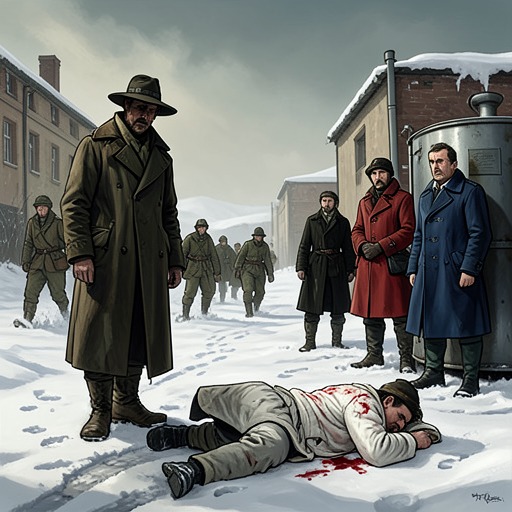
Kristín’s position is complicated by her status as both a ministry lawyer and a potential target. Later, after a man is found dead in her apartment, the police seek to question her. A detective tells her that people at the ministry had thought she might have killed Runólfur and gone into hiding, while also considering that such an act, if it had occurred, could have been self-defence because Runólfur had threatened her. Kristín denies any connection between Runólfur and the larger conspiracy surrounding the glacier, but says she believes he saved her life. The ministry’s information helps explain why the police take the threats seriously, even as Kristín’s own account places the dead man within a different chain of events.
Emergency negotiations over the glacier
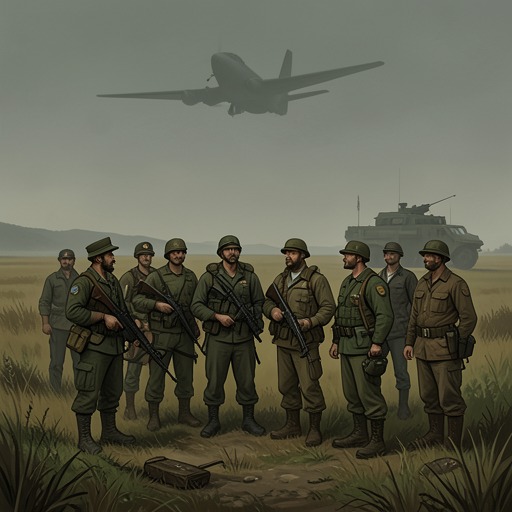
The ministry’s other major function in the story is political. On Friday, 29 January, at 2100 GMT, Iceland’s prime minister and foreign minister meet in central Reykjavík with the admiral from Keflavík Air Base and Immanuel Wesson, a general temporarily serving as U.S. ambassador during the regular ambassador’s unexpected absence. The meeting is convened at the request of the U.S. military authorities and with such little notice that the Icelandic ministers consider whether it might concern an unexpected presidential visit. Instead, they are told that the discussion must remain secret and that U.S. forces have been monitoring an area of Vatnajökull under the terms of the defence treaty between the two countries.
The treaty is presented by the American general as the basis for monitoring activity within and around Iceland’s borders for military purposes, using submarines, reconnaissance aircraft, and satellites. The ministry is thus present in a negotiation where broad claims of military surveillance meet the Icelandic government’s demand to understand what is happening on its territory. The meeting’s insistence on secrecy makes that imbalance visible: Iceland’s ministers have been summoned without being told the subject, while the U.S. representatives arrive prepared to explain a covert operation.
The conflict sharpens when the Icelandic foreign minister asks the admiral about a mayday call from the glacier requesting Defense Force helicopters. The admiral says he is unaware of such a call and promises an investigation. The general then asks for the Icelandic rescue team to be removed from the area. When the prime minister challenges the American position and threatens a formal protest, a public investigation in Iceland and the United States, road closures between the glacier and the base, and a public address to the nation, the general discloses that the German aircraft contains an old bomb. He says that U.S. experts are trying to remove it and that the rescue team is in danger.
The bomb disclosure alters the stakes of the dispute without resolving its central questions. The Americans present the rescue team’s presence as an immediate hazard and ask the Icelandic government to call it home; the Icelandic ministers have already raised the unexplained military activity and the reported failure to respond to the mayday. The ministry is part of a government forced to assess an urgent danger while also confronting its lack of prior information and the possibility that Icelandic personnel have been endangered.
Secrecy, information, and institutional significance
The operation’s hidden cargo adds another dimension to the political secrecy surrounding the glacier. In a separate conversation, Vytautas Carr asks a U.S. secretary whether he knows the story of the Walchensee gold: more than three hundred bags, each holding a gold bar, were sent from the Reichsbank on Adolf Hitler’s orders shortly before Berlin fell. Carr then reveals that most of the gold had been taken from concentration camps. The secretary recognizes the implication that the aircraft under U.S. command may contain plundered Jewish gold. The excerpt does not establish that the ministry was told this during its meeting, but the revelation makes clear to the reader that the military’s explanations do not disclose the full history or political sensitivity of the wreck.
The ministry’s role is consequently defined less by control of the secret operation than by the effort to obtain an account of it. In Kristín’s office, its authority has a clear limit: it can assist businesses but cannot take on their financial risks. In the emergency meeting, the government’s authority is tested by U.S. military action, withheld information, and an appeal to danger on the glacier. These strands connect the institution’s everyday work to the novel’s larger concern with responsibility: who bears the consequences when powerful actors make decisions, and who is allowed to know what those decisions conceal.