Immanuel Wesson
Operation NapoleonImmanuel Wesson is a U.S. general whose temporary appointment as acting ambassador places him at the intersection of military command and diplomacy during the covert operation on Vatnajökull. Sent to Reykjavík with Delta Force operators and charged with helping take control of the embassy, he presents the American case to Iceland’s government while the operation’s explanations shift from a cover story about military movements to revelations about Nazi science and, finally, a German bomb on the glacier.
Identity and Deployment
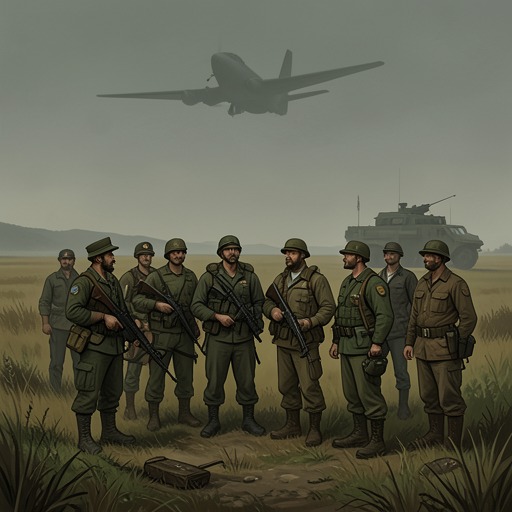
Wesson arrives in Iceland as part of a sudden escalation. A C-17 is held on standby at Keflavík Airport, guarded around the clock by eight armed men; among its passengers are Wesson and ten Delta Force operators under his command. Their orders are to assume control of the U.S. embassy in Reykjavík. The ambassador and his immediate staff are sent on leave without explanation, leaving Wesson temporarily to discharge the ambassador’s office as well as his military responsibilities.
The abrupt removal of the regular ambassador and the arrival of an armed special-operations team make Wesson’s diplomatic role inseparable from the force behind it. He is not simply an officer briefing Icelandic officials: he represents a U.S. presence already arranged to secure the embassy and support the glacier mission. The combination helps explain why an ostensibly diplomatic meeting carries the pressure of an operation already under way.
Appearance and First Impression
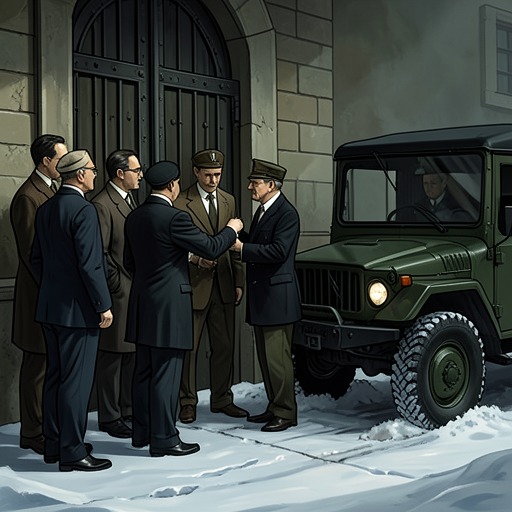
At the emergency meeting in central Reykjavík on Friday, 29 January, Wesson is introduced to the Icelandic prime minister and foreign minister as the general temporarily serving as U.S. ambassador. He is described as short and pugnacious-looking, pudgy and red-faced, with buck teeth. He walks with a slight limp because one leg is shorter than the other.
The prime minister regards him skeptically and wonders whether he has ever served on active duty or spent his career behind a desk and in officers’ messes. This is the prime minister’s impression, not an established account of Wesson’s service. Its narrative function is to register the Icelandic leaders’ distrust before the general has explained the emergency: the Americans have summoned them without telling them why, and the man now representing both military and diplomatic authority does not immediately inspire confidence.
The Emergency Meeting and Its Explanations
The meeting takes place in a hotel suite chosen by Iceland’s foreign minister because unofficial visitors could meet there without drawing press attention. The setting is discreet and expensive, but the Americans’ insistence on secrecy gives the occasion a sharper edge. The admiral opens by apologizing for the short notice and stressing that nothing said should leave the room. Wesson then explains that, under the bilateral defense treaty, the United States monitors activity around Iceland and has been closely watching part of Vatnajökull.
The American account does not begin with the most consequential facts. The Icelanders are first offered a story involving a plane and Belgian troop movements, which the Americans regard as a first line of defence in case the ministers reject it. When the prime minister is ready to end the meeting, Wesson rises and introduces the Manhattan Project. He explains that German scientists involved in Nazi nuclear research were brought to the United States at the end of the war and employed in the U.S. nuclear programme; the recruitment became embarrassing after reports connected some of them to experiments on prisoners in the death camps. The explanation recasts the glacier operation as a matter of wartime history and political exposure, not merely a military incident.
The discussion of the gold and its origins is delivered by Vytautas Carr, not Wesson. Carr explains that much of it was taken from concentration camps, prompting the secretary to recognize the stakes of a plane carrying plundered Jewish gold. Wesson’s place in the meeting is therefore distinct: Carr supplies that disclosure, while the general controls the American briefing and its movement toward the older nuclear secret.
Pressure, Risk, and Contradictory Assurances
When Icelandic officials later threaten a formal protest, a public investigation, road closures, and a national address over the injured rescue-team members, Wesson counters with a grave warning. He says there is a German bomb on the glacier, that American experts are trying to remove it, and that the Icelandic rescue team is in danger. His appeal turns the rescue operation into a potential catastrophe and asks the government to call its team home. The warning makes the American presence appear protective even as Iceland’s leaders are demanding accountability for the harm already done.
At the airlift preparations, a senior officer assures a flight lieutenant that the German aircraft is safe and contains no bomb, while acknowledging that it dates from the Second World War. The pilots are kept in a tent rather than allowed to watch the operation. Set beside the general’s earlier disclosure of a bomb on the glacier, the assurance underscores the operation’s compartmentalized and shifting explanations: the danger is invoked to influence the Icelandic government, while the aircraft crew is told there is no bomb in the plane. Wesson’s narrative significance lies in this unstable boundary between candor and concealment. He makes the secret legible to the Icelandic authorities only when their cooperation is needed, and frames the same secret as a threat when they resist.