Jón
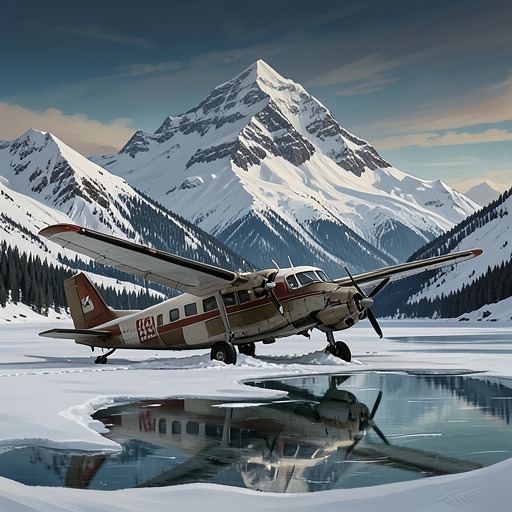
Operation NapoleonJón, an elderly farmer living alone at the foot of Vatnajökull Glacier, is a guide to the American forces searching for a German aircraft—and the keeper of a secret entrusted to him by Colonel Miller. Across decades of expeditions, he sees the military return whenever wreckage threatens to emerge from the ice. His knowledge of the glacier helps the searchers reach it; his silence helps conceal why they are searching at all. Much later, a fragment he found on a dead German officer’s body will give Kristín a clue to Operation Napoleon.
Identity and Background
By the time Ratoff arrives at his farm, Jón is nearly eighty. His brother has been dead for several years, and he has lived alone on the farm since the loss. Yet the description of him resists the assumption that age has made him frail: he remains straight-backed, spry, and mentally and physically robust. In his tidy, warm house, he offers his visitors strong black coffee and snuff, a familiar local habit that Ratoff and the interpreter decline because they do not know what it is.
Jón understands English better than he can speak it, so his conversation with Ratoff depends on an interpreter supplied by the base. He nevertheless takes the initiative in their exchange, recognizing the pattern behind the soldiers’ arrival and asking whether they are making another attempt on the glacier. His manner is neither deference nor open confrontation: he welcomes the visitors indoors, questions them directly, and watches their preparations with the familiarity of someone who has seen this operation, or versions of it, before.
The Expeditions and His Friendship with Colonel Miller
Jón counts three military expeditions to the glacier if Colonel Miller’s wartime search is included. After that first attempt, Miller returned alone every few years, staying with Jón and his brother for two or three weeks at a time and searching the ice with a small metal detector. The brothers and the colonel became friends. Their relationship grew through repeated visits and practical work on the glacier, not through any full explanation of what the aircraft contained.
When a report from Höfn sent Miller to lead the first search, he and two hundred men had to take the difficult northern route around the country. Storms prevented flying, and broad, unbridgeable rivers made the southern coastal road impassable. After reaching Höfn on the fourth day, Miller went straight to the brothers’ farm. They warned him not to expect much, showed him how to approach the ice cap, lent him horses, and accompanied him and his men toward the suspected crash site. Their help made them allies in the search, though it could not make the glacier yield its secret.
The soldiers divided the ice into sections and searched in long lines, probing the snow with slender poles three metres long. They found only the aircraft’s nose wheel; the glacier had swallowed every other trace. On the day the search was abandoned, Miller walked farther out across the ice sheet than the men had searched before, then returned defeated. Jón’s part in this episode establishes both the extent of his local knowledge and the limits of what even a painstaking search could recover.
The Secret and Its Successive Keepers
The brothers promised Miller that they would never tell their neighbours—or anyone else—the true purpose of the expeditions. If locals asked questions, he instructed them to describe the military activity as training exercises, and they followed his advice. The promise matters because the searches were conspicuous: in 1967, soldiers again relied on the brothers as guides, and the operation was the largest Jón had seen. The brothers were told that part of the wreck had appeared in a satellite image. By then, surveillance flights had ceased abruptly after the military adopted the new technology.
Their silence did not mean they had stopped wondering. The brothers privately speculated about why the Americans monitored the glacier from space and repeatedly arrived in force when a dark mark appeared on their images. They imagined that the plane might carry Jewish gold, diamonds, plundered art, a high-ranking general, or a secret weapon. None of these theories is presented as their knowledge of the truth; they are guesses prompted by the military’s urgency and secrecy. Jón is amused by how agitated the authorities become whenever the wreck seems to reappear.
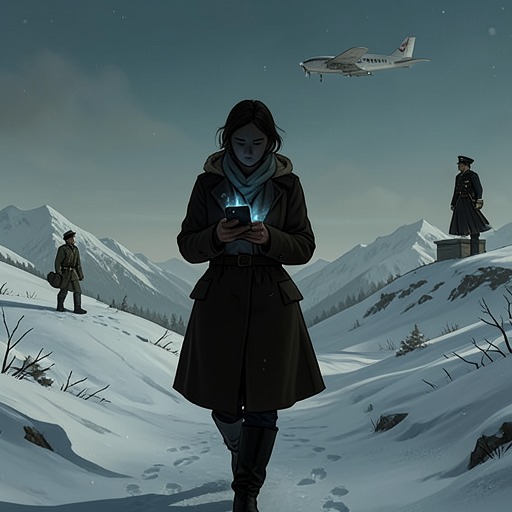
At the later expedition, Ratoff tells Jón through the interpreter that better satellites have finally helped locate the plane. Jón presses him to say what is aboard and why his people are so desperate to reach it, but the exchange offers no answer. Ratoff agrees that the soldiers know the route well enough to proceed without a guide. Jón’s land remains a passage toward the glacier: he lets summer tourist jeep tours cross it too, and remarks that more visitors come each year. The military party leaves without him, following the trail through the snow toward its camp at the foot of the hills.
The Clue That Reaches Kristín
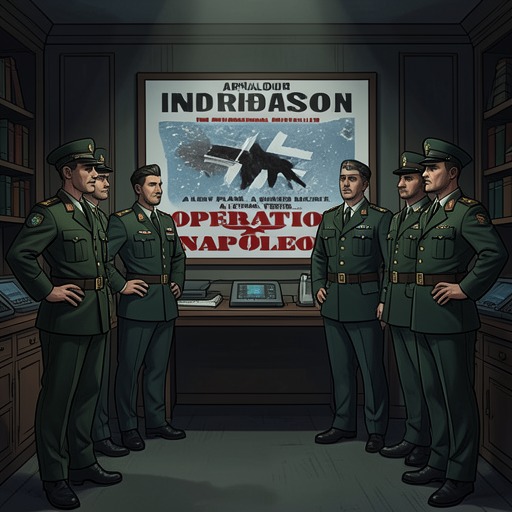
Jón’s influence extends beyond guiding the searches and guarding Miller’s confidence. A piece of paper he finds on the body of a German officer eventually reaches Kristín. After the traumatic events at the glacier, she discovers the folded scrap in a pocket of her overalls, among the belongings she had put away before discarding her bloodstained clothes. It bears the words OPERATION NAPOLEON. Unable to decipher the fragment fully, she copies the letters and words she can make out and asks a friend at the foreign ministry to translate them, without explaining where the text came from or what it belongs to.
The translation offers only part of a reference to a remote island off the southernmost tip of Argentina, but it is enough to unsettle Kristín’s fragile recovery. She tells no one, not even Elías or Júlíus, and locks the paper away. In this chain of discovery, Jón is not the source of a complete explanation: he is the person whose find survives, passes into Kristín’s possession, and makes the concealed operation legible as a question that persists beyond the glacier.
Narrative Role
Jón links three moments in the aircraft’s history: Colonel Miller’s failed wartime search, the later military expeditions, and Kristín’s attempt to understand the document. His farm is both a practical threshold to the ice and a place where the consequences of secrecy are quietly visible. Miller’s trust gives Jón a reason to protect the operation’s purpose, while the recurring return of American forces gives him ample reason to ask what the plane contains. He knows enough to recognize the pattern, but the military keeps the decisive fact out of his reach. The paper found on the German officer’s body carries that concealed history forward—not as a solution, but as the fragment from which Kristín’s next investigation begins.