Junkers Aircraft Wheel
Operation NapoleonThe Junkers Aircraft Wheel is the broken nose-wheel rim found on Vatnajökull Glacier during Colonel Miller’s first expedition in search of a German aircraft. The aircraft itself remained buried, but the wheel’s unfamiliar KRUPPSTAHL inscription and its connection to the plane’s construction made the fragment far more than wreckage: it confirmed the crash, helped identify the aircraft, and gave military intelligence a basis for watching the glacier for decades.
The rim found on the ice
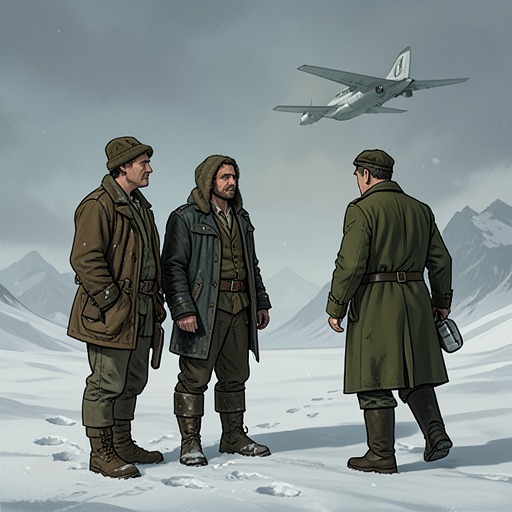
The wheel was discovered by two brothers who lived near the edge of the ice cap and guided Miller’s men across the glacier. The expedition searched for three weeks, dividing its efforts between the foothills and the ice. One group worked from a camp near the brothers’ farm; the other searched the glacier for as long as the short winter daylight allowed. The soldiers, many inexperienced on glaciers, relied on the brothers to guide them past crevasses and gullies. Their glacier camp stood in a depression about 1,100 metres above sea level.
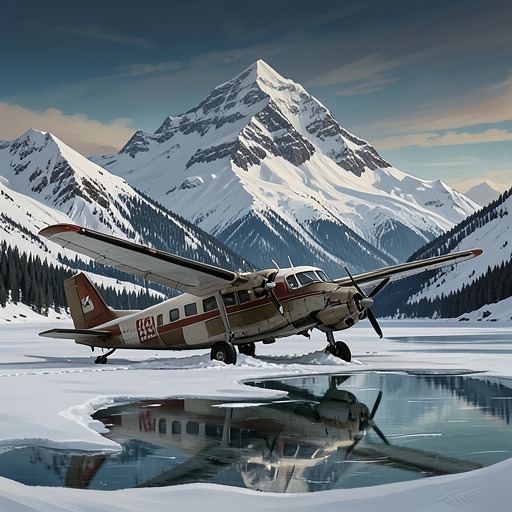
The brothers found the rim about two kilometres onto the ice cap. Its tyre had been torn away, leaving only the bare metal rim attached to broken landing gear. Beyond it, the snow and ice looked smooth in every direction; there was no visible wreckage and no sign that an aircraft had landed there. The brothers suggested that if the plane had come down on that stretch of ice, drifting snow might already have covered it. The wheel was thus both evidence of a crash and a lonely remnant that made the scale of the disappearance more striking.
Miller immediately took charge of the fragment. The brothers had examined it before he found them, but he confiscated it, leaving them to wonder about the letters inscribed on its rim. They could make little sense of the lettering, which was in a language less familiar to them than English. The surviving word, KRUPPSTAHL, would eventually matter more than the small size of the object suggested.
What the wheel established
The first expedition found no other part of the aircraft. Despite an organized search by a two-hundred-man team, the rim remained the only physical trace recovered. Severe weather twice disrupted the work, and the second storm buried tents and equipment in snow; Miller eventually had to abandon the search. The expedition had established where a trace of the aircraft could be found, but not where the plane itself lay beneath the glacier.
For the brothers, the rim’s material and lettering were a puzzle. For Miller, it was something to retain and examine. Years later, Vytautas Carr reread the inscription and understood the wheel’s evidentiary force: its make corresponded with the type and size of aircraft under investigation, as well as its year of manufacture and capacity. Carr regarded the wheel alone as confirmation that the plane had crash-landed and as proof that it remained somewhere on the glacier. In a search otherwise defined by absence, this fragment connected a reported aircraft to a particular wreck and gave the investigators a basis for continuing to look.
A clue that outlasted the search
The wheel also helped constrain the search. Carr explained that it offered a clue to the plane’s position, although it did not reveal the exact location. Military intelligence monitored changes in the relevant part of the ice from the end of the war onward, first through aerial photography from spy planes and later through satellite imagery. The surveillance reflected the peculiar problem posed by Vatnajökull: the moving glacier could bury an object and, decades later, return it to view.
The wheel therefore did not simply identify a past crash; it sustained attention to a wreck that could not be seen. The first expedition had searched shortly after the aircraft went down, and a much larger expedition in 1967 was also driven off the ice by bad weather. When Carr later described the operation as a third expedition, he made clear that the search had not ended with Miller’s retreat. The rim’s evidence endured through the failed searches and the glacier’s long concealment of the plane.
The fragment and the covert recovery
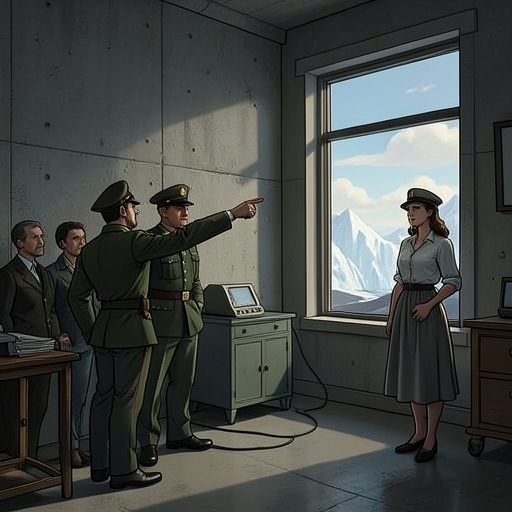
When a clear image suggested that Vatnajökull was revealing the lost aircraft, Carr sent for a mission director and ordered a covert operation. The official explanation was to call it a routine exercise, while uncooperative Icelandic officials were to be directed to the defense secretary. Carr also planned to offer the Icelandic government an explanation and appointed Immanuel Wesson as spokesman at the US Embassy, Reykjavík. The need for concealment showed how the discovery of the plane had grown beyond an ordinary recovery: the military operation on the glacier was a sensitive matter in Iceland.
The wheel itself was not the aircraft that the later expedition set out to dismantle and transport. Its significance lay in the chain of evidence it had made possible. It had confirmed the crash, linked the aircraft to its construction, and helped identify where intelligence should watch the ice. The contrast between the small, exposed rim and the vast hidden wreck gives the object its narrative weight: a piece of landing gear that could be held in one person’s hands became the durable proof on which a secret, decades-long search depended.