Leo Stiller
Operation NapoleonLeo Stiller is a dead American serviceman whose brief, secondhand presence connects routine aerial surveillance over Vatnajökull Glacier to a concealed military operation. As the officer who organized the flights, he reportedly noticed something on the ice in 1967 and photographed it repeatedly; the search that followed became entangled with a much larger movement of troops and equipment. Yet Stiller is remembered just as much for the rumors he circulated as for what he may have seen, leaving his account suggestive but incomplete.
Identity and Background
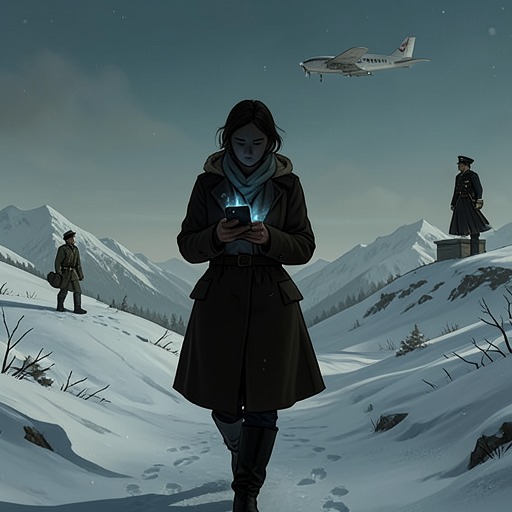
Stiller served at the American base in Iceland and organized recurring surveillance flights over the country and the sea to its north. The flights included monthly passes over the southeastern section of Vatnajökull Glacier, where pilots photographed the ice. One fellow serviceman described the assignments as routine and said Stiller was in command of them for a time in 1967. The account identifies him as a commanding officer, but gives no broader biography or explanation of how he came to the post.
The same former serviceman remembers Stiller warmly, calling him “A good guy.” That uncomplicated praise sits beside a less reassuring recollection of a man who talked freely about theories that others treated as rumor. The novel supplies these contrasting impressions through people who knew him at the base, rather than through a direct account from Stiller himself.
The 1967 Sighting and Search
On one flight, Stiller thought he saw something beneath him on the glacier. He turned back and forth over the area, taking photographs. His fellow serviceman stresses that he was not involved in the flight and learned what happened afterward from Stiller, making the reported sighting a recollection rather than a firsthand observation by the speaker. The account does not establish exactly what Stiller saw or whether the photographs captured an identifiable object.
The search nevertheless escalated. An attempt to land a helicopter failed because it was the middle of winter. A small expeditionary force equipped with a metal detector was then sent onto the glacier; preparations for a major operation followed, conducted in what the serviceman describes as the utmost secrecy. In a small community, secrecy did not prevent rumors from spreading. The chain of events gives Stiller’s uncertain observation real consequences: it prompted attention to the ice, even though the surviving testimony cannot settle what prompted it.
Rumors and the Larger Operation
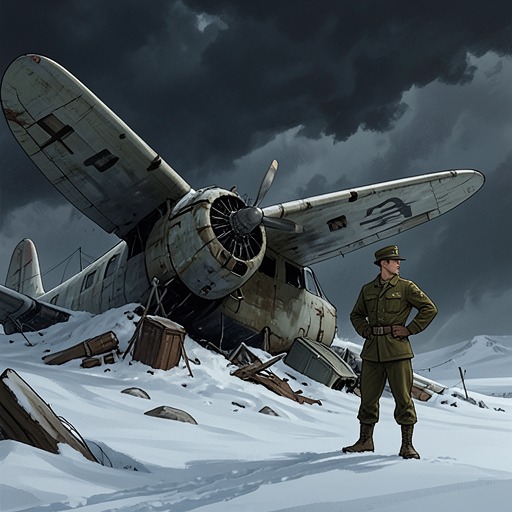
Stiller’s flight was part of an established pattern of surveillance, but the serviceman recalls persistent speculation about what the Americans were seeking. Some believed it might be a plane carrying extremely dangerous cargo. He says he never saw anything himself, and the account does not confirm that Stiller knew the object of the operation or could identify what his photographs showed.
The search was concealed behind the 1967 visit to Iceland by Armstrong and other American astronauts. According to the serviceman, military intelligence anticipated Icelandic sensitivity to troop movements and used astronaut training in the lava fields north of the glacier to divert attention from a major movement of American troops and equipment—the largest in Iceland since the war. The lunar-training explanation was presented as a reason the landscape resembled the Moon; the serviceman later calls that explanation preposterous and describes the training as cover. Stiller’s reported sighting thus stands at the beginning of a search whose public explanation and military purpose diverged, although the evidence does not show that he designed or directed the cover story.
Stiller also helped sustain the atmosphere of uncertainty. A former colleague recalls that he was “into all kinds of conspiracy theories” and “never did know when to shut up.” That description makes him a source of information but not an uncomplicated authority: he could voice suspicions about the secrecy around him without resolving them. The rumors outlived his involvement and still surfaced at the base, while the aircraft and its cargo remained unidentified to the serviceman questioned later.
Death, Relationships, and Narrative Role
Stiller died in a helicopter accident at the base. The available account offers no date, further circumstances, or connection between his death and the glacier operation; it should not be treated as evidence that the search caused the accident. After he died, his wife, Sarah Steinkamp, moved to Reykjavík. Her name gives the story a surviving personal connection to Stiller, but no further detail about their marriage is supplied.
Stiller’s importance is therefore less a matter of a fully narrated life than of the uncertain trail attached to his name: monthly photographs, a winter sighting, a failed helicopter landing, a metal-detector expedition, and a secret operation masked by astronaut training. His own voice is absent, and the crucial sighting reaches the reader through a colleague who was not there. That gap preserves the difference between what the operation did and what its participants or observers could prove. Stiller remains both a witness to the glacier’s mystery and one of the figures through whom the story shows how rumor, surveillance, and official concealment become difficult to separate.