Murder of Runólfur Zóphaníasson
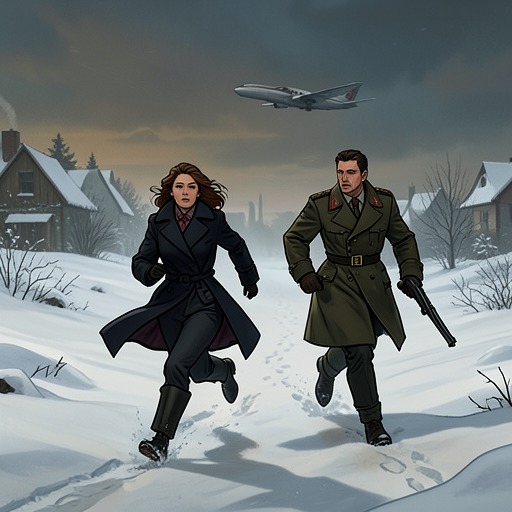
Operation NapoleonThe Murder of Runólfur Zóphaníasson is the discovery of a dead man in Kristín’s flat, initially presented to the police as a possible suicide but rendered doubtful by the physical evidence and later by Kristín’s account. The scene links her flight from a violent episode to an investigation that cannot make the apparent facts fit: a bullet has gone through the door, Runólfur has a gun in his hand, and a note on the computer suggests suicide, yet the detective finds reasons to question that explanation. Kristín eventually tells him that Runólfur was not part of the conspiracy she had encountered and had helped save her life.
Discovery and Police Response
At 4:15 GMT on Saturday, 30 January, a detective surveys Kristín’s flat after the police receive a delayed report about a distressed young woman. Shortly before midnight, she had burst into a nearby family’s home, asked to use their telephone, and spoken incoherently about a murder, apparently at her own house. She borrowed clothes and disappeared. The man who reported the incident waited more than three hours before contacting the police, largely because his wife urged him to do so; he was also ashamed that the episode had unfolded in his family’s home.
The police took his statement and checked the telephone display to identify the number the woman had called. Nobody answered at the address associated with it. Investigators learned that the householder had a daughter whose age and neighbourhood matched the woman’s description, and sent two officers to investigate. They received no answer at the maisonette. The upstairs occupants said they had been out all evening.
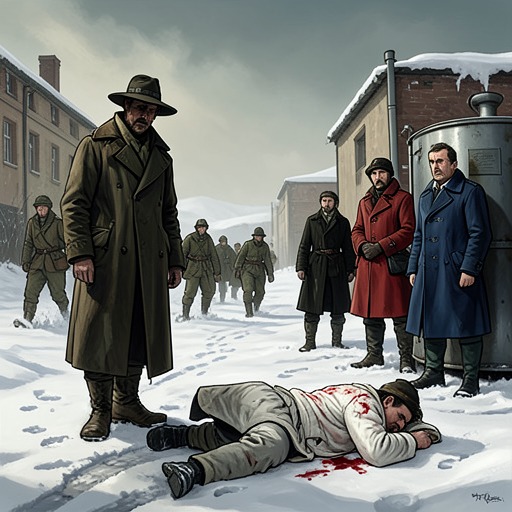
A small hole in Kristín’s door, possibly made by a bullet, changed the nature of the visit. The officers called a locksmith; on entering, they found a body slumped over a desk. The man’s wallet identified him as Runólfur Zóphaníasson, whose business card described his work as Import–Export. It also held a driving licence, money, restaurant receipts, and bank cards. His licence gave his home address as Breidholt, on the other side of town, rather than Kristín’s flat.
The Scene and the Suicide Hypothesis
The room did not look ransacked. Furniture remained in place, pictures hung straight, and nothing on the surfaces appeared disturbed. The detective saw no weapon lying about, although a gun was in Runólfur’s hand. A bullet wound marked his forehead. The apparent neatness of the flat, the gun, and the note on the computer offered a possible suicide narrative, but none explained the scene without difficulty.
The detective pointed to the angle of the wound and asked whether a person intending to shoot himself would aim directly at his forehead. He also questioned the absence of scorching or powder marks, or blowback on the forearm, that might be expected if Runólfur had fired the gun against his head. These are questions raised during the investigation, not a forensic conclusion in themselves; the detective’s point is that the visible evidence does not settle the manner of death.
The bullet hole in the front door supplies a more striking inconsistency. The detective asks his colleague to imagine a suicide in which Runólfur first fired through the door, missed, and then aimed at his forehead. The younger officer offers that reconstruction as a possibility, but the detective presses its implication: it would mean Runólfur shot himself while the flat’s door stood open. The exchange exposes how strained the suicide explanation has become. The gun and computer note point one way, while the door, wound, and unanswered questions point another.
The small size of the gun offers a possible reason why neighbours did not report hearing a shot. The detective notes that there is no sign of a struggle and that the upstairs neighbours say they were away; a small firearm, he observes, would not have made much noise. These details leave open how the death could have gone unnoticed, but do not establish that it was self-inflicted. The first scene therefore functions less as a solved case than as a set of competing clues, with the detective resisting the easiest reading of the note and the weapon.
Kristín’s Account and the Meaning of the Death
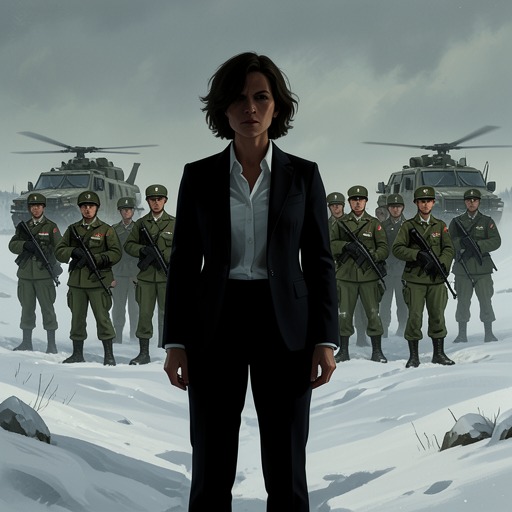
Later, at the foot of Vatnajökull, Kristín tries once more to reach her father and then calls the police. She speaks to the detective investigating the city-centre shooting and gives him a detailed account of the events she has experienced, including why she did not contact the police sooner. She says she is now at the glacier. The conversation brings the flat’s unexplained death into the wider danger she has described, while leaving the detective to assess which parts of her account can be corroborated.
The detective tells Kristín that Runólfur, the man found in her flat, had no connection with the events she has described. She agrees. More significantly, she says that she thinks he saved her life. This changes the emotional and investigative significance of the body: he is not simply a mysterious visitor whose presence might implicate her, but someone she understands as having protected her. Her account also separates him from the men who attacked her and from the conspiracy they invoked.
The authorities had considered a different possibility. The ministry had suggested that Kristín might have killed Runólfur and gone into hiding, perhaps acting in self-defence if he had been threatening her. The detective tells her that this had seemed plausible to them. Kristín’s own explanation does not fit that suspicion: she says Runólfur had no connection to the affair and that the men who attacked her had murdered a man in her flat. She explains that this, along with the attackers’ talk of a conspiracy, left her desperate and unsure where to turn.
The detective listens without dismissing her as irrational. He indicates that her account accords with what he has learned so far and that he sees no reason to disbelieve her; he also recognizes how difficult her situation is. His response does not resolve the method or perpetrator of Runólfur’s death, but it marks a consequential shift from treating Kristín as a possible suspect to taking her account seriously. The murder remains bound to the unresolved violence around her, while Runólfur’s last known role in her story is that of a man who, in her judgment, saved her life.