Nazi Gold
Operation NapoleonNazi Gold is both a tangible cargo aboard the wrecked Junkers Ju 52 on Vatnajökull and the much larger treasure imagined around it. The discovery of two crates confirms that gold was loaded onto the aircraft in Berlin; their limited quantity, however, leaves unresolved why the plane has attracted such prolonged and secretive attention.
Origins and Rumors
The stories about the aircraft reach Kristín through Michael Thompson, who relays accounts he heard from his wife, Sarah Steinkamp, and others. One version has the plane crashing shortly after the end of World War II, after it left Berlin carrying the Third Reich’s last gold reserve. In that telling, American soldiers had taken the gold from the Germans and intended to fly it across the Atlantic. Another rumor gives the aircraft a different kind of loot: art treasures plundered by the Germans from across Europe. These claims circulate as uncertain stories rather than established facts, and the rumored cargo is far more extensive than the gold later found.
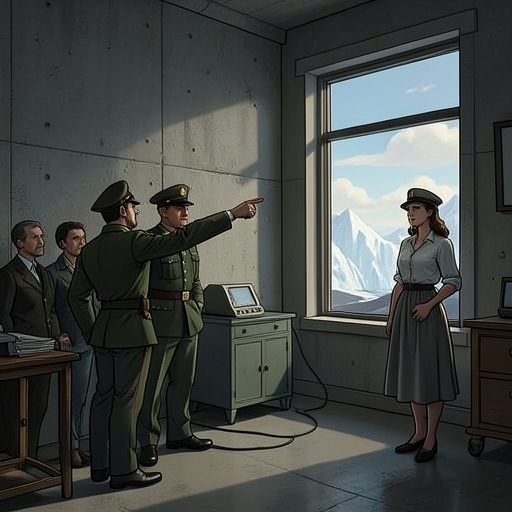
A surviving participant’s account supplies a more specific point of origin. The speaker describes himself as a driver, excluded from a long meeting at a Berlin aerodrome attended by Nazi leaders, German generals, a Swedish count, and a representative from the other side. While the meeting continued, soldiers loaded two crates of gold bars and provisions onto the aircraft. The Junkers was painted in American camouflage colors. The account links the two-crate cargo to the secret gathering, but its narrator does not know what the participants discussed; he notes their talk of the Russians, the Ardennes, and Argentina, and wonders whether they were negotiating about the war’s end. Thus the cargo is documented, while the purpose of the flight and the negotiations remains obscure.
The Crates in the Wreck
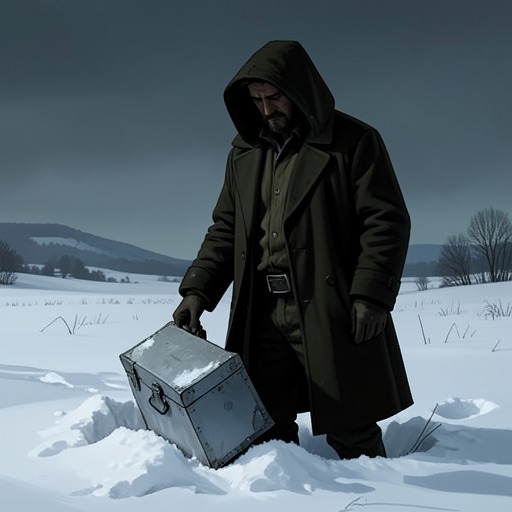
When Ratoff searches the aircraft, he finds two wooden boxes about the size of beer crates in the innermost part of its tail. He drags one toward better light. Its lid is nailed shut, so he uses a severed piece of iron stanchion as a lever; the nails screech as they come loose. Inside are rows of small white bags, about twenty by his estimate, each tied at one end. The bags are soft velvet, and one feels heavy in his hand.
Ratoff opens a bag and finds an ice-cold gold bar stamped with a swastika, the emblem of the Third Reich. The physical object turns a rumor into evidence: the bar and the crates establish that Nazi gold really was aboard the plane. Yet the find does not match the hoard Ratoff expected. He had anticipated several tons and a plane packed with bars; instead, there are only two crates. After examining the bar, he returns it to its bag, replaces it in the crate, closes the lid, and hammers the nails back in. His careful resealing preserves the cargo even as the discovery frustrates his expectation of a vast treasure.
A Confirmed Cargo, an Unsolved Motive
Ratoff searches the wreck for more boxes and finds none. He considers whether the rest of the gold might have been moved and buried in the ice, nearby or farther away, but recognizes that the aircraft was scarcely large enough to carry the several tons he had imagined. The absence of a larger cache changes the meaning of the gold: it can explain part of the aircraft’s story, but does not explain the scale of the interest in it.
That gap matters because the organization’s superiors, in Ratoff’s understanding, have monitored the frozen region for half a century and react with alarm whenever the plane seems to be emerging from the ice. Two crates of gold, he reasons, would hardly be enough to trigger a third world war. He therefore begins to suspect that the gold is not the principal secret carried by the wreck. His question is not whether the bars exist, but what else aboard the aircraft could account for the secrecy.
The discovery also unsettles the earlier stories without fully disproving them. The two crates accord with the driver’s account of what was loaded at Berlin, while falling well short of the rumored last reserve of the Third Reich. The alternative tale of plundered art receives no confirmation in the search described here. Gold remains both a historical clue and a misleadingly visible answer: its stamped bar can be held and counted, but its small quantity directs attention toward whatever remains unexplained. When Ratoff tells Vytautas Carr that he has found only two crates, Carr suggests the rest may have been buried in the ice. Ratoff instead raises the possibility that the gold was never the real reason for the operation.