Operation Napoleon documents
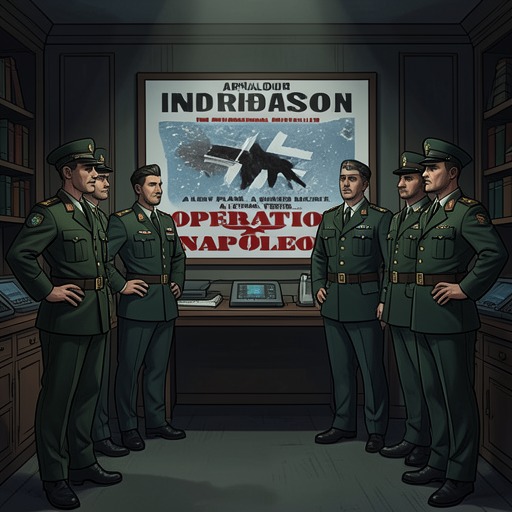
Operation NapoleonThe Operation Napoleon documents are a scattered cache of wartime papers recovered from a German aircraft on Vatnajökull. Their contents expose the political dangers hidden inside the plane’s recovery: one yellowing sheet describes a proposed Allied war against Stalin, while other fragments point toward a secret plan involving a remote island near Argentina. As the military tries to retrieve, contain, or deny the papers, they become evidence over which control of the past is fought in the present.
Discovery and physical form
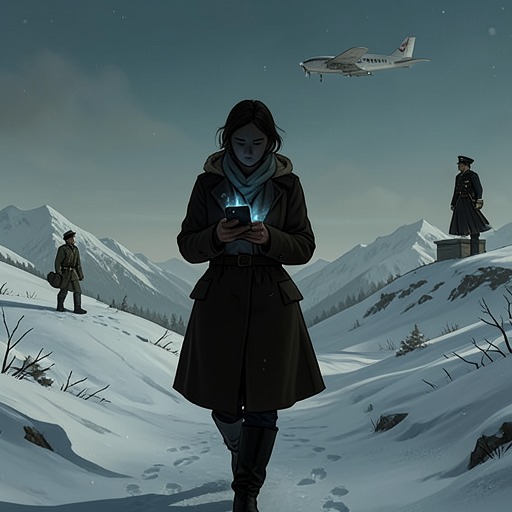
The documents enter the story as the reason for an ostensibly routine military operation. After a clear image of Vatnajökull suggests that the glacier is returning an object lost there years earlier, Vytautas Carr is ordered to direct the recovery from Keflavík. He is told to use two special forces squadrons, to describe the mission as an exercise, and to refer uncooperative Icelandic officials to the defense secretary. The operation is covert; the papers are not yet explained to Carr’s Icelandic hosts, and even its participants are not all given the same information.
The cache is found among the contents of the German aircraft. Colonel Miller expects Ratoff to retrieve the documents and transport them with the dismantled wreckage to Keflavík; the bodies are to travel with it. He has given Ratoff instructions about any papers he finds, while acknowledging that Ratoff will probably read them. Their recovery is therefore more than an archaeological detail: the documents are being moved as part of a military operation, under instructions intended to limit what their discoverers can do with them.
The papers are not a single, cleanly preserved account. Ratoff recalls a yellowing, typewritten sheet bearing a British War Cabinet Office letterhead, and separately remembers an almost illegible pilot’s diary whose writing breaks down into fragments. Years later, Kristín finds a folded scrap bearing the words Operation Napoleon among the pieces she had emptied from the pockets of her bloodstained overalls. It is part of a document Jón had found on the body of the German officer. The surviving text is damaged enough that she can decipher only scattered words and letters.
What the papers disclose
The British War Cabinet sheet describes Operation Unthinkable, a plan drafted after the Yalta meeting for an Allied attack on Stalin’s government in Moscow. It proposes ending the war in Europe through a treaty with Nazi Germany and deploying roughly one hundred thousand German soldiers with the Allies in the invasion’s first wave. The projected attack would advance east from northern Germany near Dresden, with a possible second assault from the Baltic; the document anticipates Russian counter-moves into Turkey, Greece, Norway, and the oil regions of Iraq and Iran.
The memorandum records arguments on both sides rather than presenting the plan as settled policy. Its proponents fear Stalin’s power in Eastern Europe and doubt that he will honour the Yalta agreements; they argue that an attack might shorten the war and reduce further loss of life. Opponents see negotiation with Germany as an alliance with the Nazis, particularly in light of discoveries confirming the organized extermination of Jews, and point to the enormous Soviet contribution to Allied victory. The document also records private concern about the future of Europe and the possibility of an iron curtain. Vytautas Carr later characterizes the proposed operation as an idea never carried out, an extreme proposal among many in the war’s final days—not an active plan with present-day relevance.
A different fragment points toward the name’s other mystery. When Kristín reconstructs the damaged text with help from a friend at the foreign ministry, a former diplomat in Germany, the translation describes a possible landing on a remote island off Argentina’s southernmost tip. It identifies a small, uninhabited archipelago and names Borne as the final option, while referring to two other proposed locations whose details are missing. The surviving passage does not supply the whole plan. Its partial state is itself consequential: it names a destination but leaves the purpose and the wider design uncertain.
Custody, concealment, and bargaining
The documents pass through a chain of people whose access to them is unequal. Colonel Miller expects Ratoff to bring them back, but says that the chapter of the war they contain will be closed within days. When asked about Ratoff’s future, he says the military is keeping its options open. The papers therefore serve as both a historical record and a liability within the operation: their contents may compromise the people managing the recovery, even as those people try to control the evidence.
Ratoff turns that liability into leverage. He tells Vytautas Carr that he knows about the operation and holds the information in a briefcase, but claims not to know whether the plan described in the files was ever carried out. He points to the satellite images, glacier expeditions, and rumours of gold, a virus, a bomb, and German scientists as distractions from the papers. He says he understood from reading them that he was in danger and had prepared an insurance policy, though he does not disclose what that safeguard is. His stated aim is to leave alive and richer; his threat rests partly on the papers naming the island and the prospect of a live broadcast from there.
Carr attempts to reduce the documents’ importance by calling Operation Unthinkable an unrealized idea that can be dismissed as rumour or conspiracy theory. Ratoff’s possession of the papers makes that denial harder to guarantee. A search finds nothing on him, but the exchange still turns on mutual distrust: Carr asks what assurance there is that Ratoff has not concealed copies, while Ratoff asks what assurance he has that Carr will not later hunt him down. The documents have become currency in a negotiation over survival as much as a record of wartime policy.
Their political force is also visible in the present-day confrontation between American and Icelandic authorities. After the foreign minister raises the allegation that a glacier mayday went unanswered, a general bluntly demands that the rescue team be removed. The papers belong to the same contested recovery that has brought military secrecy into conflict with Icelandic sovereignty; their contents help explain why the operation is treated as something to contain rather than an ordinary search.
Kristín’s fragment and the unresolved history
Kristín first sees papers Ratoff has on the glacier and later asks Miller what Napoleon means. She does not tell him the full circumstances: she claims she merely caught sight of documents and assumed they had come from the German aircraft. Miller says he never saw the Operation Napoleon papers and never saw the final plan. His account of Jewish gold intended to support negotiations with the government in Buenos Aires adds context to the aircraft’s mission, but he cannot settle what the surviving documents finally specified.
About six months after the traumatic events on the glacier, Kristín returns to the scrap in her kitchen drawer. She copies every legible word and letter, asks the diplomat to translate them without disclosing the paper’s origin or subject, and takes the translation home. She tells neither Elías nor Júlíus what she has found. Unable to decide what to do with the information, she locks the fragment away. The paper thus survives not in an archive or an official inquiry, but among discarded objects in her home, where it renews memories she had been trying to put aside.
The Operation Napoleon documents never yield a complete, publicly verified account of the plan. Ratoff has the larger dossier and uses it to bargain; Miller admits that he never saw its final form; Kristín has only a damaged scrap and an incomplete translation. Their uneven knowledge makes the papers’ survival a source of continuing uncertainty. They reveal that powerful institutions can treat historical records as operational threats, while the fragment left in Kristín’s drawer keeps open the possibility that the buried story is not finished.