Operation Napoleon secrecy policy
Operation NapoleonOperation Napoleon secrecy policy governs what each participant is permitted to know—and what the authorities intend the public to believe—about a mission that began in the final phase of the Second World War and resurfaces decades later on Vatnajökull Glacier. Its defining method is layered concealment: personnel receive partial instructions, local witnesses learn fragments without the purpose, and later military action is presented as routine while officials prepare a public explanation and circulate misinformation.
Compartmentalized Knowledge
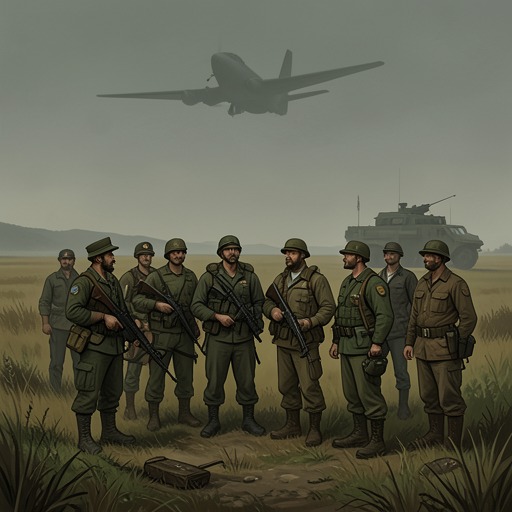
During the wartime operation, the plan was known in full to only a handful of senior officers. Colonel Miller was given a specific assignment but not told who had originated the plan, which army division had formulated it, or the purpose of the Allied–German talks in Paris. He did not know the meeting’s participants or agenda. His brother, the pilot assigned to fly the German delegation, was similarly treated as an instrument of the mission rather than a partner in its design. Only afterward did Miller learn that the Germans had painted a Junkers Ju 52 in Allied colours for the flight.
Miller later described himself and his brother as pawns, given only the information needed to perform their respective tasks. Even after the war, he did not know exactly what Operation Napoleon entailed or what the documents contained; some of what he knew came only through hearsay. The policy therefore outlasted the immediate operation. It protected not just a plan but the identities, purposes, and records connected to it, leaving participants with partial memories rather than a complete account.
Secrecy on the Glacier
The secrecy extended to Iceland, where the aircraft disappeared beneath the ice. During the 1945 search, Colonel Miller relied on local brothers as guides but did not disclose the mission’s full purpose. They found the rim of the nose wheel about two kilometres onto the ice cap; otherwise, the glacier’s smooth surface gave no sign of a crash. Miller took charge of the fragment, and the brothers suspected the wreck might already have been buried by snow. Their discretion and practical help made them trusted witnesses, but not informed participants.
The brothers also saw a private moment that complicated the image of the young, forceful colonel: Miller alone in a stable, weeping as he cradled a horse’s head. They did not question him about it. Their silence became part of a longer pattern of discretion around his search. Years later, Jón remembered that Miller and his companions had never explained what they were looking for. Rumours suggested a plane with dangerous cargo, and regular monitoring flights photographed the glacier’s southeastern surface, but the observers did not know what the searches meant. Leo Stiller eventually told his wife, Sarah Steinkamp, that the aircraft belonged to the Nazis; even this disclosure identified its origin, not the full story of its cargo or mission.
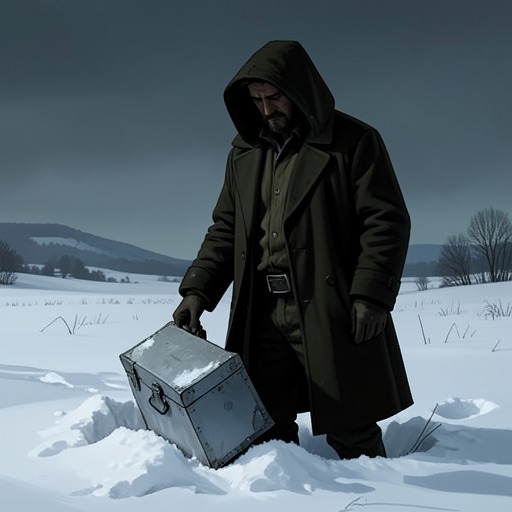
Jón kept the promise he and his brother had made to Miller, saying nothing about what he knew even after Karl died. That silence held until Kristín confronted Jón about the Americans’ actions against her brother. The evidence she later found in a battered metal case—a few weather-damaged German papers, with the words Operation Napoleon still legible—offered a name without an explanation. The secrecy had left physical traces, but time and exposure to the elements had made them fragmentary too.
The Recovery Operation and Its Cover
When a clear image showed that the glacier was returning an object lost there years earlier, Carr ordered a covert recovery. The operation was to be described as a routine exercise; two special-forces squadrons would be sent, and local officials who resisted were to be directed to the defence secretary. Carr promised to speak with the Icelandic government and arranged for Immanuel Wesson to act as spokesman at the U.S. Embassy in Reykjavík. The need for an explanation was acknowledged even as the mission was organized to conceal its actual purpose, a tension sharpened by the sensitivity of the U.S. military base in Iceland.
Information remained restricted inside the command structure. Ratoff was not initially briefed on what the plane contained, although Carr expected him to find the papers and had instructed him how to handle them. Carr planned to use the documents to close what he called a chapter of the war, while recognizing that Ratoff might read them. His reassurance rested partly on the assumption that Ratoff was trapped on an island and had nowhere to go; when asked about Ratoff’s future, Carr said the authorities were keeping their options open. The policy thus relied not only on secrecy but on control over the people who might come to know too much.
The recovery also brought the cover story into conflict with Icelandic authority. At an emergency meeting, the American general brusquely demanded that the rescue team be removed from the glacier, while the Icelandic side raised the allegation that Defense Force helicopters had failed to answer a mayday call. Carr had already considered Ratoff’s over-zealousness a risk, especially because the Icelanders were allies. The mission’s secrecy did not prevent its conduct from becoming politically visible; it instead created pressure to manage witnesses, explain the operation, and limit the consequences of its exposure.
What the Secrecy Protects
Carr connected the aircraft’s cargo to the Walchensee gold: more than three hundred small bags, each containing a gold bar, had been sent from the Reichsbank on Adolf Hitler’s orders shortly before the fall of Berlin. He then disclosed the politically explosive origin of most of the gold: it had been taken from concentration camps. The secretary understood the implication as plundered Jewish gold aboard an aircraft that had crashed under U.S. command. This revelation gives the concealment a moral and political dimension beyond protecting an old military plan: disclosure would expose the history of the cargo as well as the actions taken to recover it.
The surviving papers did not settle what Operation Napoleon had been intended to accomplish. Kristín later reasoned that the authorities would want to know whether the documents had emerged from the ice and to remove the aircraft and its contents before the story attracted media attention, regardless of whether the plan recorded in the papers had ever been carried out. Her conclusion distinguishes the continuing recovery-and-suppression effort from the uncertain outcome of the wartime scheme itself.
Misinformation and the Limits of Control
By the time Kristín and Steve were in American custody, Carr said that misinformation about the mission’s purpose was already being disseminated. He promised that they would eventually be sent home and could speak to the authorities, press, family, and friends, but warned that few would believe them. He also said that Júlíus would be returned safely and that Elías had survived and was in a Reykjavík hospital. These assurances offered a limited release from the operation’s immediate control, not public vindication: the planned misinformation was meant to make truthful testimony sound implausible.
The policy never produces perfect silence. Local witnesses retain suspicions; Leo’s disclosure identifies the Nazi aircraft; Jón’s old promise preserves a fragment of the history; and the damaged papers yield the operation’s name. Yet those fragments do not amount to a readily provable account. The secrecy surrounding Operation Napoleon works by separating evidence from explanation and then exploiting the gap: people may possess a rumour, a name, or a ruined document without being able to establish what happened. By the end, Kristín expects that taking the story to the press would make her and her companions a laughing stock. The cover-up’s strongest resource is therefore not the erasure of every clue, but the prospect that the surviving clues will not be believed.