Ratoff
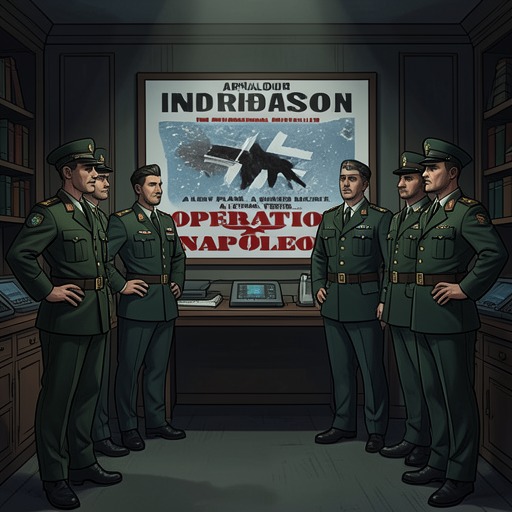
Operation NapoleonRatoff is the director of a secret military operation on Vatnajökull, where the recovery of a German aircraft turns him into the story’s chief human threat. His command depends on concealment and control: civilian-looking transport carries the expedition’s equipment south, while anyone who sees too much becomes a danger to be contained. His later violence against Elías, Jóhann, Kristín, and Steve exposes the brutality beneath that discipline, and his own final helplessness reverses the power he has wielded.
Identity and Command
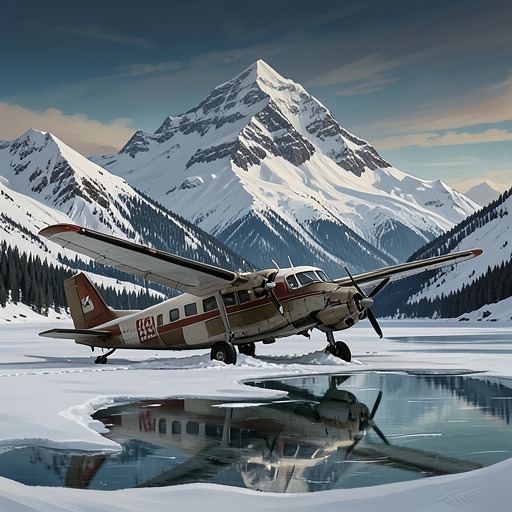
Ratoff first enters the action through an abrupt call from Vytautas Carr, who asks how quickly he can reach Keflavík. Ratoff’s arrival makes clear that he is not simply joining the expedition: he directs it. A C-17 has brought snowmobiles, tracked vehicles, skiing equipment, and other gear for work on the glacier. Four trucks leave Keflavík Airport at half-hour intervals, blending into ordinary traffic; Ratoff rides in the last. The commander of the U.S. base on Midnesheidi has been instructed to provide vehicles without asking questions, and an admiral who recognizes the signs of another glacier mission nonetheless receives no explanation.
The portrait of Ratoff emphasizes a mismatch between his slight physical presence and the force he commands. In his fifties, greying at the temples, short and lean, with small, almost black eyes and Slavonic features, he wears white cold-weather overalls and mountaineering boots. When the admiral offers four new Pave Hawks, Ratoff does not even look at him. His silence, like the unmarked trucks, helps make the operation’s secrecy part of its method: authority is exercised without explanation, and those around him are expected to comply.
Secrecy, Interrogation, and Violence
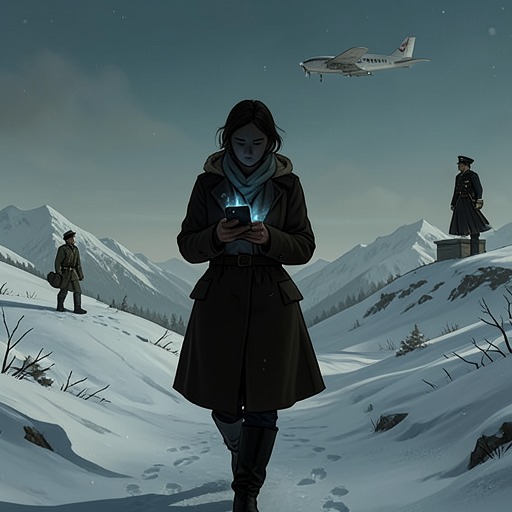
The operation’s secrecy becomes personal when Ratoff takes possession of Elías’s phone. At the aircraft, he checks its only recent call and judges that it lasted long enough for Elías to have described the area and what the rescue team was doing. He orders the chief communications officer to have the embassy trace the number and asks to speak with Vytautas Carr. The phone is a small but consequential breach in the operation’s control: Ratoff treats a single call as a possible disclosure that must be traced before it can lead others back to the glacier.
Elías and Jóhann have reached the aircraft after separating from the main Icelandic rescue party. Delta Force has detected their snowmobiles on its small radar screen and watched them travel directly toward the wreck; after a brief pursuit, soldiers intercept the two young rescuers. They have seen the swastika beneath the cockpit, the aircraft being dug from the ice, and more than a hundred armed soldiers moving around it. Ratoff knows they cannot understand the operation, but that ignorance does not make them safe witnesses. He must question them quickly and prevent the larger rescue team, about forty-five miles away, from searching in the same sector.
Ratoff brings the boys to his tent under armed guard. The need for discretion shapes his stated approach: the interrogation must leave no visible signs of violence, yet it must not take long. Elías and Jóhann are frightened, speak English too well to pretend otherwise, and do not realize how much they have stumbled upon. Ratoff begins with Kristín, asking Elías whether she is his sister. The question narrows the investigation from the boys’ discovery of the wreck to the possibility that Elías has told someone about it.
When Elías says he ended the call as soldiers approached and insists that he told Kristín nothing, Ratoff turns to Jóhann. Two guards help the injured young man to his feet; Ratoff steps close and looks into his good eye. He uses an awl, and Jóhann’s screams carry out of the tent across the ice cap. The men digging at the aircraft pause briefly, look up, and resume their work without comment. In one abrupt scene, Ratoff’s demand for an interrogation without visible violence collapses into torture, while the expedition around him continues as if the sound were merely another part of the glacier operation.
Ratoff emerges with blood spattered on his face and goes to the communications tent, where two messages are waiting. Before speaking with Ripley, he wipes his face deliberately with a cloth, then asks whether the death can be treated as a suicide. The question links the assault inside the tent to the operation’s wider machinery of concealment: violence is not only a means of extracting information, but something Ratoff expects to disguise afterward. His calm attention to the appearance of his face and his proposed account of the death make the contrast stark—he manages the evidence of brutality as carefully as he manages the expedition’s movements.
The Hostages and the Reversal of Power
When Kristín and Steve are brought before him, Ratoff makes the glacier’s isolation part of his threat. He tells Kristín that the rescue team has been intercepted, that the government is under his influence, and that once the soldiers leave the glacier no one will know what happened. He treats her attempts to delay him as pointless, presenting the operation’s secrecy as an accomplished fact and her effort to expose it as absurd. Kristín, with Ratoff’s awl moving along her throat, chin, and cheek, understands the terror her brother Elías must have felt in his hands; she has become the witness he is trying to silence.
Ratoff demands to know who else knows about Napoleon. When Kristín says he is lying, he thrusts the awl through her snowsuit and clothes into her side, holding it in the wound and twisting it as she cries out. Steve struggles against the guards while Ratoff watches Kristín’s response with clinical detachment. The assault turns his earlier preference for an interrogation without visible violence into a direct attack: once secrecy is at stake, the appearance of restraint no longer matters.
He then uses Steve’s death to make the threat intimate. After telling Kristín that she could have saved Steve and should blame herself, Ratoff turns and shoots him once in the face. Kristín sees Steve fall onto the ice, his eyes open, and the blood mark the tent wall and ground. She retches and blacks out; the last image she carries into unconsciousness is Steve’s empty eyes, while Ratoff’s voice is the last sound she hears. The killing is not merely an effort to remove another witness. Ratoff deliberately makes Kristín watch, binding the operation’s violence to her personal loss.
Ratoff’s authority later proves less secure than his threats suggest. When Carr orders him searched, the soldiers find nothing, and Ratoff explains that he has prepared an insurance policy. He says he does not know whether the operation described in the files was actually carried out, but believes that knowing of it puts him in danger. He identifies the satellite images, glacier expeditions, and rumours of gold, a virus, a bomb, or German scientists as distractions from old papers, and says he took precautions after reading them. His immediate demand is to get out alive and, if possible, richer: beneath the commander’s control lies a man bargaining for his own survival.
Capture and Final Reversal
Ratoff’s last appearance in the supplied narrative strips away the command he once exercised over the glacier. Aboard the aircraft carrying the Junkers wreckage, Kristín hears the engines change as the plane begins to descend. She crawls through the fuselage to a gap Miller has cut in the sheeting, then slips into the cargo hold as its aft ramp slowly lowers. The moonlit opening reveals three unfamiliar men—and, emerging on a pallet, Ratoff, bound flat on his back with his arms spread and legs tied together.
He is stripped to the waist, his torso smeared with blood and his face crosshatched by cuts. As the pallet inches toward the open ramp, Ratoff strains against his bonds and cries out, but the engine roar and violent wind swallow his voice. The three men treat him as freight, ignoring him and taking shelter farther inside the hold as the opening yawns wider. The scene inverts the glacier interrogations: the man who had controlled other people’s bodies and silenced their pleas is now helpless, while the machinery of his own removal proceeds without regard for him.
Kristín watches the pallet approach the rollers at the ramp’s edge. The sight draws together the injuries and losses Ratoff has inflicted: she feels the ache in her punctured side, remembers Elías begging for mercy in his hands, and sees again Steve collapsing after Ratoff shot him. Hatred surges, and she leaves her hiding place to walk toward the pallet, unable to look away. The account ends with her moving toward him; it does not establish what she does next or what ultimately happens to Ratoff.