Secret Meeting at Lake Þingvallavatn
Operation NapoleonThe Secret Meeting at Lake Þingvallavatn brings Iceland’s dispute with American military authorities to a crisis point: a covert recovery operation, initially presented as scientific and later defended as a training exercise, is exposed as an attempt to secure a live German nuclear weapon. Held on Saturday 30 January at the Prime Minister’s lakeside retreat, the meeting forces the Americans to respond to reports of armed troops, a dead Icelandic rescuer, and an injured survivor. Its decisive turn comes when the Americans reveal the danger they had withheld: a primitive hydrogen bomb lies aboard the aircraft on Vatnajökull Glacier.
Causes and Background
The meeting follows an earlier, also secret discussion in which American officials described military surveillance of Vatnajökull and the discovery of a German aircraft in satellite images. They proposed an expedition to excavate the plane and transfer it to the base before repatriating it to the United States, a plan that would move substantial numbers of personnel and equipment through Iceland. The Icelandic Foreign Minister understood that the operation required the government’s permission. The Americans, however, insisted that the matter should be resolved without outside involvement and then forgotten, while refusing to explain what made the aircraft so sensitive.
That refusal carried particular weight in Iceland. The American military presence had provoked political friction since the war; the 1949 defence treaty had prompted a riot outside the Icelandic parliament, and opposition to the base remained a domestic issue. Government policy also prohibited profiting from NATO’s presence, even as civilian contractors and nearby communities benefited economically from military activity. Against this background, a large, concealed deployment across Icelandic territory was not simply a technical recovery mission. It raised questions of sovereignty, public accountability, and whether treaty cooperation could be treated as permission to act without Icelandic consent.
The Meeting and the Reports from the Glacier
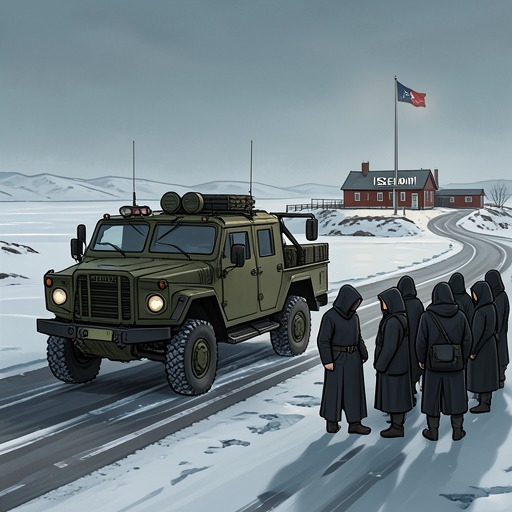
The second meeting took place in a four-bedroom holiday house equipped with modern amenities, including a sauna and hot tub, and overlooking Lake Thingvallavatn. The Minister for Justice joined the Icelandic delegation. Opposite them sat the admiral representing the United States Defense Force at Keflavík and Immanuel Wesson, the provisional head of the US Embassy, while a general also attended. The secluded setting and secrecy did not keep the crisis contained: the Prime Minister had already been told that a rescue team on Vatnajökull had sighted armed American soldiers and that two rescuers who apparently encountered them had been found, one dead and the other gravely injured.
Other reports sharpened the Icelandic government’s alarm. Two Defense Force helicopters had taken off and headed east without filing a flight plan or requesting permission to cross Icelandic airspace. The Icelandic Coast Guard was preparing to evacuate the rescuers after the Defense Force had failed to respond to an earlier mayday call. As the storm over the glacier eased, members of the rescue team were moving toward the area where the troops had been reported. News was already reaching the public through a radio bulletin, making the Americans’ preference for secrecy increasingly difficult to sustain.
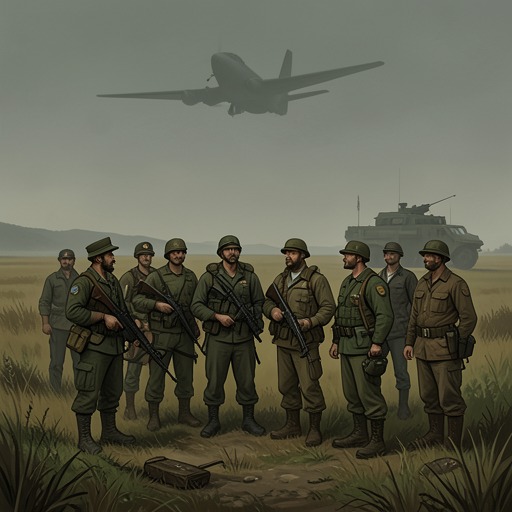
The admiral described the glacier deployment as a simulation exercise involving visiting NATO forces from the Netherlands and Belgium, built around a staged plane crash. He claimed that approximately 150 personnel were carrying blank, non-lethal rounds. The Prime Minister countered that the Americans had previously described a discreet operation to move the aircraft, not a war game with armed troops. A man had died; another was critically injured. In the Icelandic government’s view, the concealment had not merely breached trust but put a severe strain on relations between the two countries.
Confrontation and the Demand for Control
The Americans denied responsibility for the rescuers’ injuries. The admiral said the exercise would end before noon the next day, after which the troops would leave no trace of their presence, and urged the Icelanders to preserve the agreed explanation of a two-day exercise. Asked whether the rescuers had interfered with American activity, he said the Americans had no information to suggest that they had. He also denied that the shooting in Reykjavík earlier that day was connected to the glacier operation, despite the Prime Minister’s concern that Icelandic citizens had become targets in the Americans’ supposed war games.
The general’s interventions made the power imbalance more explicit. He demanded that the rescue team be removed from the glacier and suggested that the Prime Minister could call them home. The Prime Minister replied that the government had no authority to order the team to stop, and that earlier notice from the Americans might have allowed Iceland to close the area to other traffic. The general then warned that the Americans could not be held accountable for the rescuers’ welfare. When he invoked the share of Iceland’s national income derived directly or indirectly from the United States, the Prime Minister rejected the implication that economic dependence settled the question of responsibility.
The Prime Minister rose to end the meeting, announcing a formal protest and demanding a thorough public investigation in Iceland and the United States into what had happened to the two rescuers. He also threatened to close every road between the glacier and the base until the Icelandic government received a full and accurate account, and to inform the media and address the nation personally. These were concrete assertions of authority in response to an operation the Icelanders believed had proceeded without their meaningful consent.
The Bomb and the Meaning of the Disclosure
As the Icelandic delegation prepared to leave, the general disclosed that there was a bomb on the glacier. He described it as old and German, said that experts were trying to remove it, and warned that the rescue team faced danger. Under further questioning, he said that German scientists had brought it with them and that the Americans believed it was a primitive hydrogen bomb. The admiral identified it as their first broken arrow, the military term for a nuclear weapon lost through an air crash or another accident. Wesson added that it remained live and extremely dangerous.
The disclosure abruptly changed the scale of the dispute without erasing the earlier deception. The Americans had first presented the expedition as a scientific undertaking, then called it a simulation exercise, while resisting Icelandic questions about the plane and demanding that the rescue team withdraw. Now the stated danger gave their urgency a concrete basis, but also revealed why the operation had been kept secret. Elsewhere in the same recovery operation, a pilot was assured that there was no bomb aboard and that the aircraft was completely safe, reinforcing the contrast between the information given to personnel and the danger disclosed to Iceland’s leaders.
The meeting ends with the threat identified, not resolved. The government has demanded an investigation and asserted control over roads and public disclosure; the American officials have revealed a live weapon but have not, in this exchange, secured agreement to remove the rescue team or settled responsibility for the casualties. The retreat’s secluded setting therefore frames a confrontation that secrecy can no longer contain: the aircraft is not only a military recovery target but the center of a dangerous collision between American operational control and Icelandic sovereignty.