United States Air Force
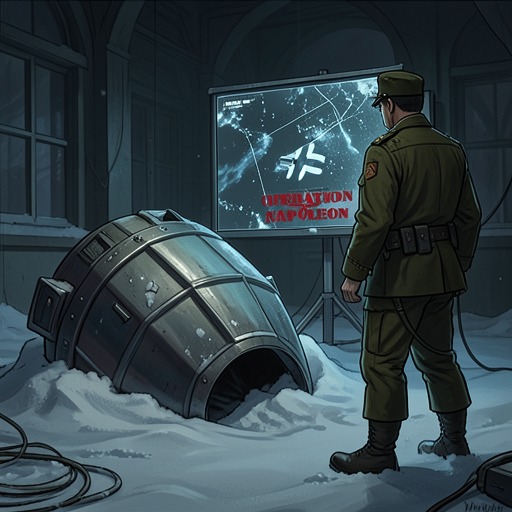
Operation NapoleonThe United States Air Force is represented in the operation on Vatnajökull by the crews of two Pave Hawk helicopters, whose intended role is to carry the wrecked plane from the glacier to Keflavík Airport. The pilots arrive with little information about the mission, then discover that their own side will not permit them to observe the work. Their episode shows how the operation uses the Air Force’s aircraft while withholding its purpose even from the personnel asked to fly them.
Assignment and Arrival
The helicopters are summoned to the glacier in the middle of the night. Their crews have been told only to airlift heavy equipment from the ice cap, ask no questions, and proceed to a C-17 transport plane waiting at Keflavík Airport. That aircraft has already been on standby for three nights. The limited briefing makes the aircrew useful to the operation without making them informed participants in it.
Four United States Air Force men arrive, two for each helicopter. They are between twenty-five and fifty years old and wear grey-green uniforms; on entering Ratoff’s tent, they have removed the thickly lined leather jackets and helmets worn over them. They do not recognize Ratoff, the operation director, and their puzzled glances make plain that they have not been told what is happening on the glacier.
The Proposed Airlift
Ratoff tells the pilots that they are to transport an old plane from the glacier to Keflavík Airport. The wreck has been cut in half so that each helicopter can carry one section. He calls it a souvenir, but gives no account of the aircraft or the recovery effort. The contrast between the casual label and the scale of the task leaves the pilots with a mission description that is technically useful but deliberately incomplete.
The airlift is part of a broader attempt to remove the wreckage from Vatnajökull. It is not, however, shown as completed by the evidence of the episode: the United States Air Force crews have arrived, but the account turns to the confrontation over their access before their helicopters carry either section away.
Secrecy and Coercion
One pilot asks what plane they have been sent to move. Another asks why the crews must remain in the tent instead of watching the operation. Ratoff refuses to explain, saying that he owes them no explanation, and orders three soldiers to shoot anyone who tries to leave. The pilots are thus not merely kept uninformed; they are held in place by armed force from their own side.
The treatment exposes the operation’s layered secrecy. The crews are trusted with the aircraft needed for the recovery but denied the context that would let them understand it, while the threat of violence is used to preserve their ignorance. The United States Air Force’s role is consequently narrow but consequential: its helicopters are intended to move the plane, even as its pilots become witnesses whom Ratoff seeks to contain.