United States Defense Force at Keflavík
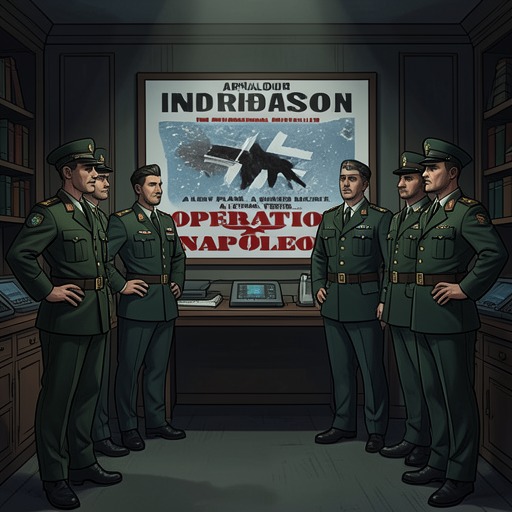
Operation NapoleonThe United States Defense Force at Keflavík is the American military presence centered on the base southwest of Reykjavík, a strategic outpost whose role in monitoring the North Atlantic is shadowed by persistent disputes over Icelandic sovereignty. In the novel, its authority is visible both in the troops and aircraft assembled at the base and in the political pressure exerted when a secret operation on Vatnajökull Glacier threatens to become public.
Strategic Presence and Political Costs
The American base at Keflavík was established after the Second World War on Midnesheidi, amid exposed lava fields about an hour’s drive southwest of the capital. Iceland’s position in the middle of the North Atlantic made it a valuable vantage point during the Cold War, allowing a military superpower to monitor Soviet submarines, shipping, and aircraft in the Arctic region. British forces had occupied Iceland at the beginning of the war, and the Americans assumed responsibility for its defence in 1941. The American headquarters was initially in Reykjavík; the force was later reinforced by the 5th Infantry Division, and the occupying contingent eventually reached about 38,000 troops.
That strategic role did not settle the question of whether the American presence was welcome. The signing of the 1949 defence treaty prompted a riot outside the Icelandic parliament, and left-wing parties continued to oppose the base. Government policy held that Iceland should not profit from the North Atlantic Treaty Organization presence on its shores, so the military did not pay directly for its facilities at Keflavík Airport. Yet civilian contractors and service companies received tens of millions of dollars for military work, and nearby villages came to depend on the Iceland Defense Force. When operations on Midnesheidi were scaled back at the end of the Cold War, local protests showed how deeply the base had become entangled in the surrounding economy.
The Base and the Glacier Operation
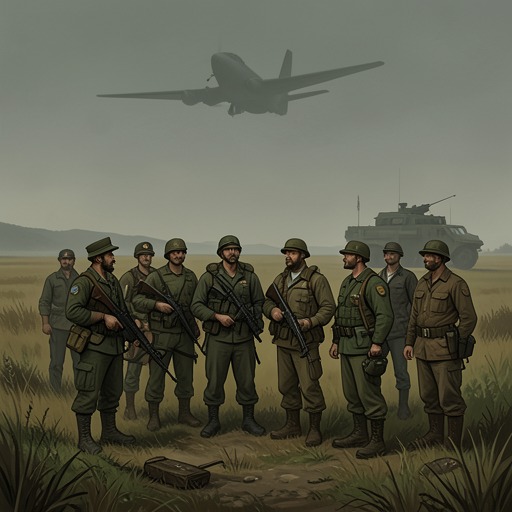
The operation on Vatnajökull brought the base’s military capacity into view. A C-17 transport plane, on loan from the Air Transport Division in Charleston, stood idle in Iceland, while Delta Force personnel were present. At the base, an employee responsible for the hangars told Steve that the aircraft was on standby on a runway, guarded by its own men, and that no one else was allowed near it. The troops who had arrived aboard it were believed to be the men Elías had seen on the glacier. Their destination, however, remained unknown even to the source of the report; the movement was surrounded by secrecy.
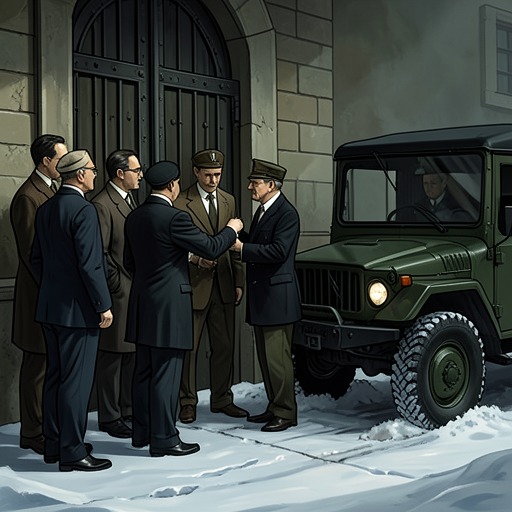
American officials told Icelandic ministers that military intelligence had detected the aircraft on satellite images of Vatnajökull and that an expedition would excavate it, move it to the base, and eventually repatriate it to the United States. The work would require considerable numbers of personnel and equipment to cross Icelandic territory, so the foreign minister recognized that the Icelandic Government’s permission was required. The Americans proposed travelling inconspicuously and presented the operation as a scientific expedition accompanied by senior scientists. When Iceland’s prime minister asked why the aircraft was sensitive, the general replied that it was not Iceland’s concern, intensifying the dispute over whether the Americans were seeking consent or merely announcing a decision already in motion.
Secrecy, Competing Accounts, and Confrontation
As the operation became more dangerous, explanations for it shifted. At a meeting with the prime minister, the admiral described the armed force on the glacier as a simulation exercise involving about 150 personnel, including visiting NATO forces from the Netherlands and Belgium. He said the exercise revolved around a staged plane crash and that troops carried blank rounds. The Icelandic prime minister objected that the government had previously been told only about removing the aircraft, not about weapons or a military exercise. After a rescue-team member had died and another had been critically injured, the admiral denied responsibility and urged the Icelanders to retain the account of a two-day exercise.
The prime minister refused to accept that account as sufficient. He said the Icelandic Government would issue a formal protest, seek a thorough public investigation in Iceland and the United States, close the roads between the glacier and the base until it received full disclosure, and inform the media. When the general warned that a German bomb was on the glacier and urged the government to call the rescue team home, the warning revealed the stakes of the operation even as the Americans had withheld its purpose. The meeting thus exposed the force’s central political predicament: its strategic importance and Iceland’s economic dependence could provide leverage, but they could not erase the government’s claim to authority over movement and military activity on Icelandic soil.