
The Oslo Accords And Their Aftermath
OsloThis flow traces the signing’s immediate hope through the deaths, violence, and political reversals that complicate its legacy.
increasing Bearing strength in each event
 decreasing
Bearing strength in each eventdecreasingThe Public Handshake
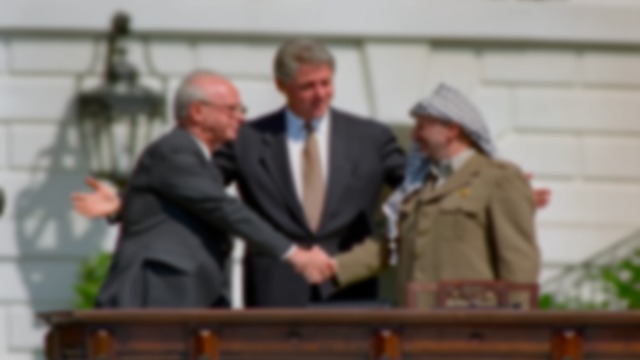
The Public Handshake
An image of possibility
Yitzhak Rabin and Yasser Arafat shake hands as Bill Clinton stands between them. The ceremony makes visible a relationship that had been created through concealed meetings and painstaking negotiation.
A beginning, not an ending
The play places the celebrated image against what follows. The handshake signifies a breakthrough, but it cannot by itself settle the conflict or protect the people who have risked political and personal safety.
Holst's Death
Holst's Death
A brief aftermath
Johan Jorgen Holst dies of a heart attack four months after the signing. The loss comes before the channel’s long-term promises have been tested by history.
A life inside the process
His death gives urgency to the play’s account of political work as a human undertaking. The agreement’s future cannot be separated from the lives and vulnerabilities of those who helped create it.
Hebron's Violence
Hebron's Violence
A devastating attack
An Israeli settler kills twenty-nine Palestinians as they pray at the Cave of the Patriarchs in Hebron. The massacre starkly contradicts the hope associated with the signing.
The peace process exposed
The attack shows how political agreement remains vulnerable to violence committed beyond the negotiating room. The play refuses to treat the ceremony as proof that fear and hatred have disappeared.
Rabin's Assassination
Rabin's Assassination
Violence from within
Yitzhak Rabin is assassinated by an Israeli extremist who opposes the Accords. The killing makes clear that resistance to peace exists inside the societies represented at the negotiating table.
A political rupture
The death removes a central Israeli leader and deepens uncertainty about the agreement’s future. In the play’s retrospective sequence, the assassination becomes one of the sharpest reversals of the original hope.
Renewed Uprising And Loss
Renewed Uprising And Loss
Violence returns
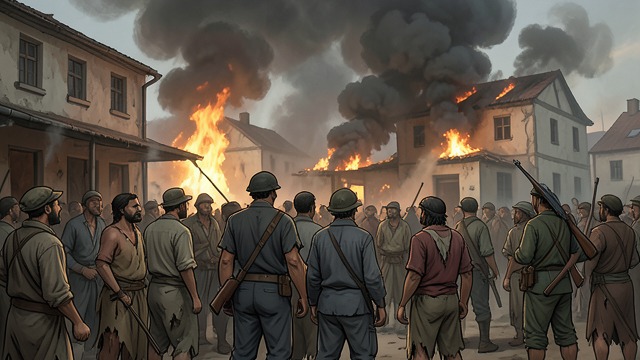
Seven years after the signing, violence erupts again in the occupied territories and the Second Intifada begins. The formal agreement has not ended the conflict.
A mixed legacy
The play recounts later deaths, political defeat, and retirement from public life, while noting that some personal ties endured. Its conclusion leaves the Accords neither a simple success nor an empty failure.
13 September 1993, at the White House Rose Garden
January 1994, four months after the ceremony
One month after Holst's death
November 1995, during a pro-Accords demonstration
September 2000 and the years that follow
