
The Palestinian Delegation's Burden
OsloThis flow follows the Palestinian negotiators as they balance representation, personal danger, and the need to secure meaningful political recognition.
increasing Bearing strength in each event
 decreasing
Bearing strength in each eventdecreasingA Leader In Exile

A Leader In Exile
Political and financial strain
Ahmed Qurie represents a PLO weakened by financial crisis and separation from the territories it claims to represent. The organization’s precarious position makes each diplomatic opening both necessary and dangerous.
Negotiating under constraint
He cannot treat a meeting as private conversation alone: any contact must serve a people whose political future is under discussion without them at the table. His caution establishes the weight he carries into Oslo.
Asfour's Suspicion

Asfour's Suspicion
Doubt about the hosts
Hassan Asfour questions the Norwegian setting and Terje Rød-Larsen’s neutrality. He fears that the Palestinians are being drawn into a process designed on someone else’s terms.
A harder voice at the table
His suspicion forces the group to confront unequal power and the risk of trusting an intermediary. Hassan Asfour remains a counterweight to easy optimism even when the meetings begin to produce results.
The Demand For Reciprocity

The Demand For Reciprocity
Rejection of one-sided terms
Hassan Asfour challenges Israeli demands about violence and security, arguing that power cannot be treated as though it were evenly distributed. He asks whether Israel is a powerful state or a helpless victim.
A conflict in the room
His confrontations sharpen the debate over whose security matters and who may define the terms of Palestinian self-rule. The anger makes compromise harder, but reveals what a superficial agreement would leave unresolved.
The Dignity Argument

The Dignity Argument
A document under dispute
Hassan Asfour objects that the rewritten draft dictates how Palestinian authorities must respond to their own people. He rejects language that appears to preserve Israeli control under the name of joint procedure.
Political standing at stake
His protest insists that self-government must mean more than administrative responsibility. The disagreement exposes the gap between transferring duties and granting meaningful authority.
The Cost After Oslo
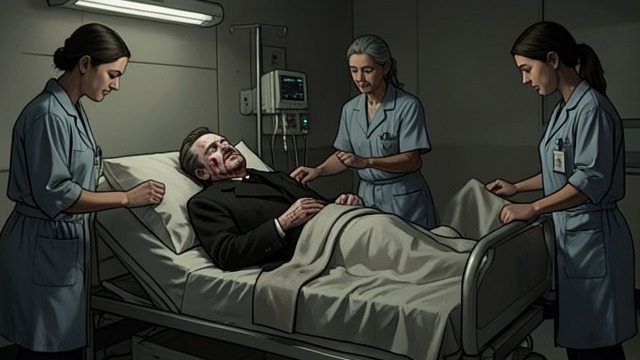
The Cost After Oslo
Continued vulnerability
The closing chronology reports that Hassan Asfour is beaten nearly to death in Gaza and later retires from public life. The agreement does not shield its participants from violence.
A private consequence
His fate gives the political story an intimate aftermath. The people who carried the negotiations remain exposed even when their work has been signed and recognized.
Before the first Oslo meeting
At the first Borregaard gathering
During the early negotiations with Uri Savir
During the rewritten-draft crisis
After the Accords, through the play's retrospective ending
