
The Conflict Outside The Castle
OsloThis flow follows the violence and social crisis surrounding the negotiations, which repeatedly threaten to overwhelm the private channel.
increasing Bearing strength in each event
 decreasing
Bearing strength in each eventdecreasingThe Intifada's Pressure

The Intifada's Pressure
A worsening reality
Yossi Beilin describes the First Intifada, deaths, and international condemnation as evidence that the existing approach is failing. Palestinian and Israeli civilians remain caught in a cycle of violence.
A political opening
The pressure does not make agreement inevitable. It helps convince some participants that continuing the same process carries its own unacceptable risks.
Deportation To Lebanon
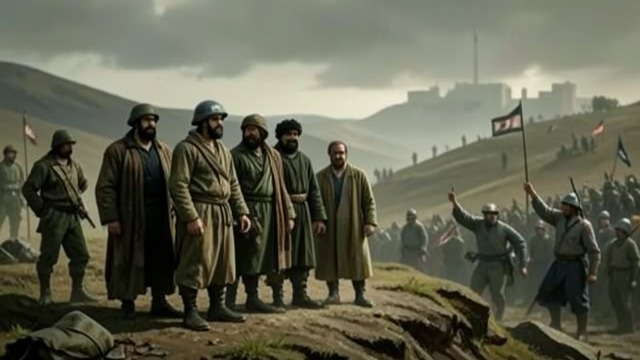
Deportation To Lebanon
A sudden escalation
After an Israeli border guard is murdered, Israel deports four hundred Palestinians accused of terrorist links to a freezing hillside in Southern Lebanon. The images provoke anger and public condemnation.
The meeting nearly ends
Mona Juul urges Terje Rød-Larsen to call off the talks. He argues that desperation may make progress possible, forcing the couple to confront the risk of treating human suffering as political leverage.
The Sealed Gaza Border
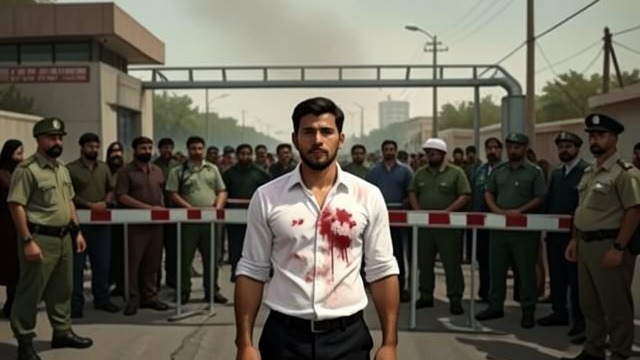
The Sealed Gaza Border
Retaliation and hardship
After a Palestinian youth kills two Israelis in Tel Aviv, Yitzhak Rabin seals Gaza. Tens of thousands of Palestinian workers lose access to employment.
Violence feeds itself
Further killings intensify public demands for retaliation on both sides. Terje Rød-Larsen becomes an intermediary between people who cannot speak directly, while the talks are exposed to events far beyond the estate.
Operation Accountability
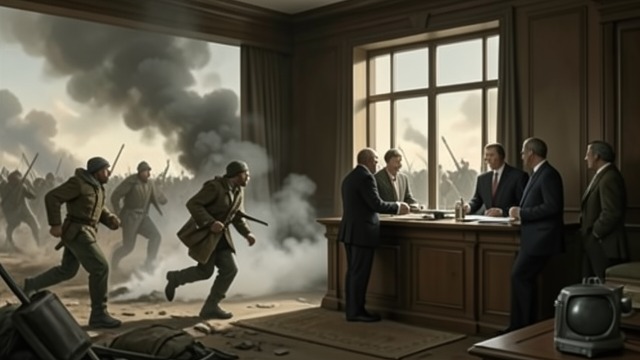
Operation Accountability
War interrupts diplomacy
Israel launches a major assault against Hezbollah in Southern Lebanon, producing casualties and sending refugees toward Beirut. Reprisal rockets kill Israeli civilians.
The talks continue
Despite the new violence, the negotiators do not mention the crisis as they work through the draft. The contrast shows both the focus required to negotiate and the danger of separating a diplomatic room from the world outside it.
The Second Intifada

The Second Intifada
Violence returns
The play reports that violence erupts again in the occupied territories and the Second Intifada begins. The agreement has not ended the conflict or prevented renewed resistance.
A hopeful account under strain
This later crisis tests Terje Rød-Larsen’s claim that the channel created a reusable process. The play leaves that claim open to judgment rather than presenting the signing as a final resolution.
During the early 1990s, before the first Oslo meeting
The night before the first Oslo round
During the March 1993 escalation
During the final negotiations in July 1993
September 2000, seven years after the signing
