
The Narrator’s Pursuit
Other PeopleThis flow traces the narrator’s changing stance from controlling storyteller to a figure who promises to respect Amy’s consent.
increasing Bearing strength in each event
 decreasing
Bearing strength in each eventdecreasingA Confession Begins

A Confession Begins
An Unnamed Decision
The narrator opens by confessing that he has done something to a woman and insists that she asked for it. He frames the act as necessary to make life lifelike.
Control in the Storytelling
The confident voice claims control over events while anticipating objections. Its unease suggests that the narrator’s authority may be part of the problem the novel will expose.
Mary as a Project
Mary as a Project
The Narrator Intervenes
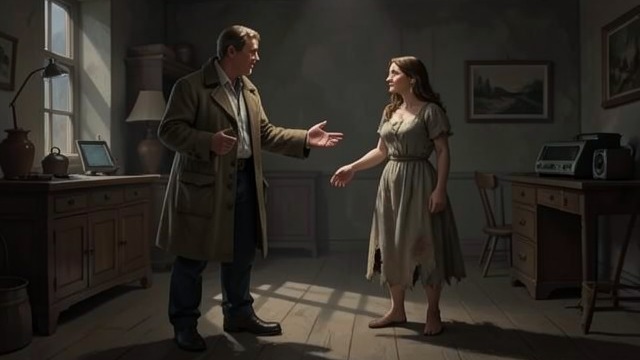
The narrator comments on Mary’s experiences, explains the types of people she meets, and predicts dangers ahead. He treats her life as a story he can organize and manage.
Protection and Possession
His assurances that Mary remains under his control and protection sit uneasily beside the harm she suffers. The narration’s helpfulness carries the same paternal certainty that Mary repeatedly encounters in the world.
The Voice Turns Inward

The Voice Turns Inward
Personal Admissions
The narrator begins speaking of fear, pain, loneliness, and thoughts of suicide as if the story were pressing on him personally. His distance from Mary becomes harder to maintain.
A Shared Breaking Line
He describes himself as walking a breaking line, alone among other people. The narration starts to reveal not only Mary’s vulnerability but the narrator’s own damage and dependence on her story.
Control Becomes Unstable

Control Becomes Unstable
The Narrator’s Role Shifts
As Amy approaches Mr Wrong, the narrator’s voice no longer appears fully outside the events. The policeman and murderer are revealed as closely connected figures within the same cycle.
Repetition Threatens the Narrator
The story’s return to childhood suggests that the narrator may be caught in a pattern he cannot simply direct. His earlier mastery gives way to uncertainty about what will happen next.
A Promise of Consent

A Promise of Consent
A Watchful Figure
The narrator waits across the street as young Amy approaches, recognizing a scene that feels familiar. He says he will do nothing unless she asks for it.
The Promise Tested
His words acknowledge consent, but his continued watching leaves the power imbalance unresolved. The ending turns the reader’s attention toward whether restraint can interrupt repetition or merely rename it.
The prologue
During Mary’s early days
During the middle sections
During the final journey to Mr Wrong
The epilogue
