Church Army young women's hostel
Other PeopleThe Church Army young women's hostel is both a place of shelter and a setting shaped by strict routine, limited means, and the residents’ histories of hardship. Mary Lamb begins living by its rules, but the hostel also becomes the place where a letter links her to Amy Hide and turns her uncertain identity into an urgent question.
Residents and Circumstances
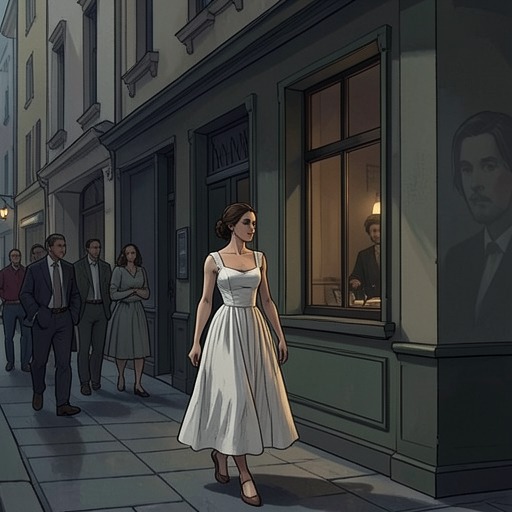
The hostel’s residents are described as women who have recently suffered serious setbacks. Some are young and some are not; all are said to have gone too far into life and used up resources on the outside, including money, friends, opportunities, and luck. The account presents their arrival not as an isolated misfortune but as the consequence of accumulated experience and diminishing options. Some are trying to turn back from the direction their lives have taken, while others have stopped trying.
The description confronts the judgment attached to women in this position without treating shame as an adequate account of their feelings. It asks who brought about their circumstances and invites the reader to consider how such a setback might be experienced. The hostel therefore stands within a larger social contrast: outside, the women have run short of support and chances; inside, they share a residence whose rules offer order, though not ease or abundance.
Routine and Management
Mary Lamb’s days acquire a precise timetable. She wakes in the basement at half past six to a bell, frightened and hurriedly gathering her scattered senses. She dresses alongside her two roommates, then joins the queue for the bathroom with Trudy, a sharp-faced, chain-smoking divorcee. Honey, a young Swedish woman described as apathetic, initially remains in bed, moaning, and rejoins them later for breakfast upstairs.
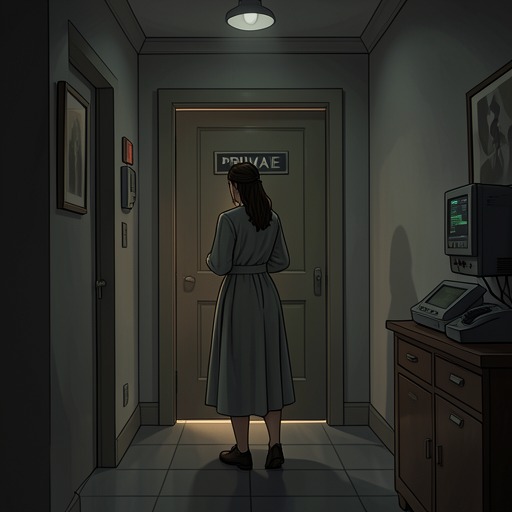
Breakfast takes place in the dining room among the other residents. Mrs Pilkington, the Sri Lankan co-superintendent, watches the girls with cursory severity and eats alone at a separate table. Her husband, the other co-superintendent, is already working through the day’s paperwork in an office near the front door. The arrangement makes the hostel’s supervision visible in its ordinary spaces: residents assemble and eat under the management’s attention, and trouble means they may be put out. The routine is not simply a schedule for Mary; it is a condition of remaining there.
Money shapes even this small daily ritual. Breakfast costs sixty pence, so Mary drinks tea instead of eating. That detail places her poverty within the hostel’s everyday order rather than treating it as background. Trudy teases her about going blind, and Honey replies that she is not blind. Their brief exchange gives the shared room a social life of its own, distinct from the administrators’ oversight and the residents’ formal routine.
Mary’s Stay and Uncertain Past
The hostel offers Mary a pattern she can follow at a time when she has little access to her own past. Alone in the bedroom, she looks through Honey’s pamphlets, whose subjects include self-love, womanhood, and erotic fantasies. She realizes that the exercises depend on memory, which she cannot use. The pamphlets thus make the gap in her recollection concrete: their proposed route to self-understanding is unavailable to her.
Mary also cannot determine whether she has previously had the experiences the pamphlets bring to mind. She cannot remember who else may have been present or what she herself wanted. Trev had told her she had done it before, and she believes that he meant what he said; even so, the claim remains difficult for her to accept. The hostel is therefore not a place where her past is recovered through its routines. Instead, its ordinary private spaces sharpen her awareness that memory is missing and that other people’s accounts cannot fully replace it.
The Letter and the Hostel’s Narrative Role
On Mary’s seventh day at the hostel, a letter arrives. Trudy recognizes it as intended for her, and Mary confirms this by looking at the name and address on the envelope. The letter is from John Prince. Mary reads it several times without understanding it, then notices that the pink sheet has more writing on its reverse side.
Those additional words describe Amy Hide, aged twenty-six, five feet seven inches tall, dark-haired, British, and with no distinguishing marks recorded, as a recently missing person. The police suspect that Amy has been murdered but are not certain. When Mary turns the upper half of the letter over, she finds a photograph of a girl who is herself. The hostel’s significance consequently shifts: alongside its role as a tightly supervised residence for women with few resources, it is the setting where Mary first receives direct evidence connecting her present appearance to a missing woman’s identity. The letter does not resolve the mystery; it establishes the disturbing possibility that Mary and Amy Hide are the same person.