Confront the past to begin a new life
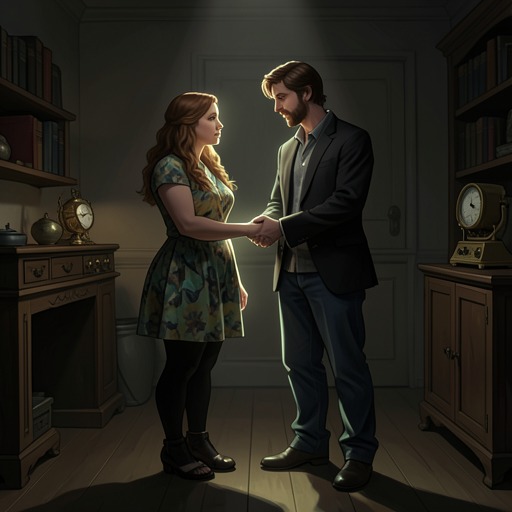
Other PeopleThe rule that a new life requires confronting the past takes shape as a journey toward Mr Wrong, not as a promise that the past can be erased. Prince tells Amy Hide that they have one last thing to do and that they must go and see someone; Amy names Mr Wrong before Prince confirms it. Their exchange makes the meeting’s importance clear while withholding its outcome. The scene presents facing the past as a condition of beginning again, but stops before showing whether that encounter will deliver release, recognition, or anything else.
The Rule and Its Unfinished Form
Prince states the governing idea only as a broken sentence: “You can’t have a new life without …” Amy answers that she knows, adding that she never really thought a person could have a new life without it. The pause matters. The characters do not spell out a complete doctrine or describe a procedure for starting over. Instead, the interrupted sentence leaves the necessary condition to be understood through what they are about to do: see Mr Wrong. Amy’s response shows that she already accepts the premise, even as the prospect of acting on it remains difficult.
The rule therefore distinguishes a new life from simple escape. Leaving a former identity behind, or wanting a different future, is not presented as sufficient on its own. Prince’s insistence on one last task makes the past an active obligation in the present: before they can move forward, Amy must approach the person she identifies as Mr Wrong. This is a reading supported by the sequence and their exchange, rather than a fully explained formula supplied by either character. Its force comes partly from what remains unsaid.
The Journey Toward Mr Wrong
The visit is Prince’s plan, but Amy is not unaware of its purpose. When she asks why he is doing this to her, he answers by connecting her former liking for Mr Wrong with her liking for him. He describes both the policeman and the murderer as being outside. That comparison places Prince and Mr Wrong in a shared position in Amy’s understanding, despite their different roles. It also makes the proposed meeting more than a practical errand: Prince frames it through Amy’s attachments and through the relationship she has had to people marked as outsiders.
The drive through London gives the journey an unsettled, suspended atmosphere. Amy feels like a child being taken somewhere at an impossible hour, submitting to the grown-up machines. Mist lies low over the city, at first thin and then dense; the river briefly comes into view, shining like scratched armour. These details accompany a trip whose destination Amy already knows but whose emotional meaning she is still testing. When Prince asks whether she knows why they are doing this, she says that she thinks she does. Her answer is neither a denial nor a confident explanation: recognition is beginning, but the scene preserves her uncertainty.
The Changed Landscape and the Threshold
The route returns them to the river, though Amy wonders whether it is the same river. Earlier, its water had appeared taut; now it writhes beneath the mist. Prince stops in the same place, but the human presence has vanished. There are no people there, only rats and threadbare dogs. This contrast makes the return feel altered rather than restorative: retracing a location has not returned Amy to an unchanged past. The landscape offers no reassuring sign that the difficult task will be safe or that recognition will restore what was lost.
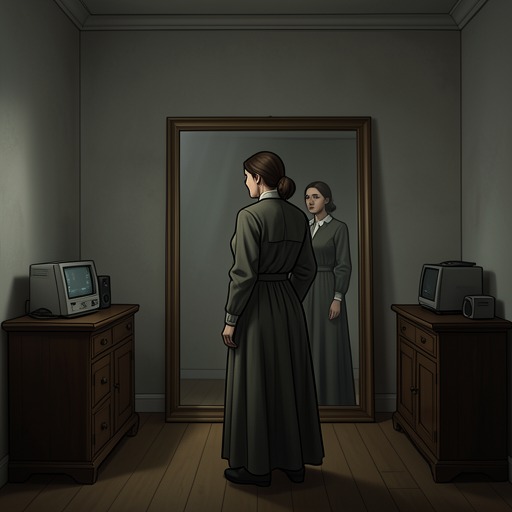
Prince lights a bare purple bulb and guides Amy across damp boards into deeper shadows, toward a door. He announces that they are going behind it. Amy says she is tired, and Prince acknowledges this without turning her reluctance into a reason to abandon the journey. The scene thus brings the rule down to a physical threshold. Confronting the past is not an abstract decision made at a distance; here it means continuing with Prince toward the person Amy has named, even when she feels exhausted.
Significance and Limits
The passage gives the rule its shape through a movement from intention to approach: Prince proposes the final task, Amy recognizes Mr Wrong, and they travel to the door. That sequence makes the past something that must be met, rather than merely remembered or denied. At the same time, the text does not show Amy entering into a conversation with Mr Wrong or reveal what happens after the door. It therefore establishes confrontation as necessary without claiming that confrontation alone guarantees a new life.
The ending at the threshold preserves that distinction. Amy’s knowledge that a new life cannot come without the omitted condition does not remove her tiredness, and Prince’s guidance does not supply an easy resolution. The rule is powerful precisely because it joins hope to difficulty: the possibility of beginning again is tied to an encounter still ahead. The scene leaves its consequences open, but makes avoidance no longer appear to be the route forward.