Jamie’s Mental Breakdown and Convalescence
Other PeopleJamie’s mental breakdown and convalescence are presented through a series of altered states: a drunken outburst, a morning of depression and painful laughter, a later admission that he feels lost, and finally news that he is receiving care at The Hermitage. The account does not offer a diagnosis or a full explanation of his collapse. Instead, it shows how alcohol, strained intimacy, and remorse accompany a crisis that separates him from Mary, while leaving open the possibility that both recovery and reconciliation may follow.
The Crisis Takes Shape
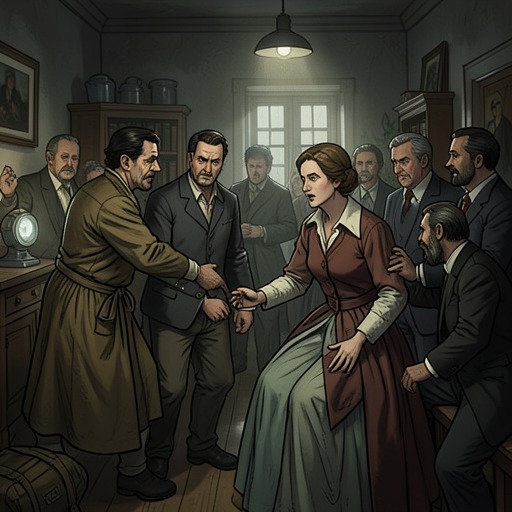
At a gathering, Jamie struggles to withdraw from a conversation and begins an awkward attempt to explain why he thinks women do not laugh. He singles Mary out, tying his claim to what he sees as her lack of reading and activity, and to her tendency to laugh only when she likes someone or feels well. Augusta dismisses his remarks as boring. Jamie reacts angrily, says he is leaving, and stumbles out. The exchange shows him trying to make a point but turning it into a personal judgment; the scene supplies evidence of conflict and intoxication, not a definitive cause of his later breakdown.
The next morning, Jamie says he is depressed, and Mary believes him. He is also suffering from a hangover after drinking heavily the previous night. He picks up a book and begins to read; after a few minutes, he laughs, then rereads the passage and laughs again, each burst accompanied by pain. The contrast is striking: reading brings him real amusement, but even that brief response is difficult to sustain physically. The episode conveys distress through the small, uneasy alternation of laughter and discomfort rather than through an explanation of what is wrong.
Drinking and Disorientation
Jamie’s drinking belongs to a wider pattern in the novel, where the narrator describes alcohol as a way people may flee the difficulty of being themselves. That broad account is framed as the narrator’s theory, not a clinical explanation for Jamie. Other characters give alcoholism its own language: Mrs Botham insists that a person remains an alcoholic even after sobriety, recalls her own past drinking, and values sobriety as much more than simply not being drunk. Her account and the Al-Anon pamphlets in the Botham home make recovery a contested identity, shaped by repeated habits and by the words people use to understand them.
Against that background, Jamie’s statements indicate how unsteady he feels. He tells Mary that he is out of it and no longer belongs in the world of futures; he also describes himself as unable to manage her intensity. His speech is not a clear account of his condition, and the narrative does not convert it into a diagnosis. Mary responds by interrupting the course of his remarks rather than pressing him to explain. The scene presents their intimacy as strained and difficult to translate: Jamie speaks from confusion, while Mary’s response changes the immediate exchange without resolving what lies beneath it.
Mary’s Encounter with His Remorse
When Mary wakes, a memory of the ease of waking as a schoolgirl briefly comes to her before she opens her eyes. She then recognizes a change in her own feelings: the earlier eagerness and rending have passed, leaving generosity and relief. Beside her, Jamie is naked under his trenchcoat, smoking an early cigarette and staring at the neutral window, his face marked by remorse. The scene places his distress beside Mary’s altered response. Her relief does not erase what has happened between them, but it signals that the intensity of the moment has shifted.
This juxtaposition matters to the account of Jamie’s crisis because his remorse is visible without being made into a full confession or an explanation. The narrative gives the reader his posture and expression, while Mary’s experience registers the change in her own emotional state. Their encounter therefore remains consequential but unresolved: it does not show Jamie recovering in that room, nor does it establish that Mary can repair his condition. Instead, it marks a point at which closeness gives way to recognition of the distance and difficulty between them.
Treatment and an Unfinished Future
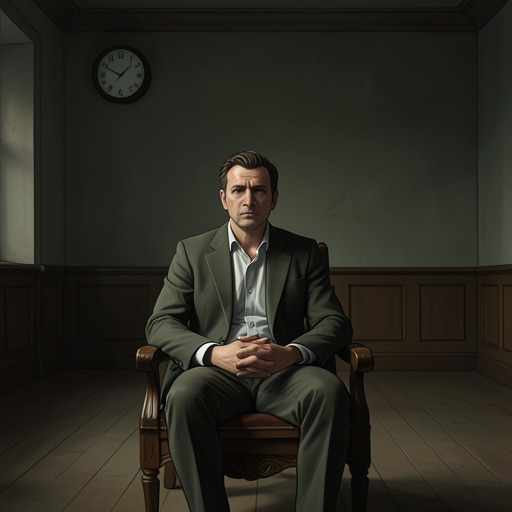
By the time Amy is living with Prince, Jamie is at The Hermitage, an expensive clinic. Amy wants to see him, but the people around her do not think a visit is wise. The narrative does not describe his treatment or specify how long he has been there; the clinic is the concrete sign that his crisis has moved beyond the private space of his relationship with Mary and into a period of care. Amy believes he will be all right, a hopeful expectation rather than a report that recovery is complete.
Amy also imagines seeing him one day and apologizing without fear. The future meeting is not shown, and her wish to apologize does not establish the details of what Jamie may need from her. It does, however, leave their story open to a less fearful encounter. His convalescence is thus defined by both separation and possibility: Jamie is receiving care away from Amy, while she acknowledges that she wants contact and expects a time when she can approach him differently. The account offers no triumphant recovery scene; its hope rests instead on his continued treatment and on the prospect of an apology still to come.
Narrative Significance
Jamie’s breakdown is conveyed indirectly, through fragments of behavior and speech rather than a single explanatory episode. A failed attempt at conversation, drinking and depression, laughter that hurts, disoriented remarks, and visible remorse form a sequence without settling into a simple causal account. That restraint keeps the reader from treating his drunkenness as a complete explanation or his clinic stay as an instant cure.
The contrast between the surrounding discourse on alcoholism and Jamie’s individual crisis also matters. Mrs Botham speaks with certainty about the lasting identity of an alcoholic and the value of sobriety; Jamie’s own condition is less neatly named. His story intersects with the novel’s attention to drink as escape, but it remains particular: he is a person in distress, not merely an illustration of a general theory. The clinic, Amy’s concern, and her imagined apology provide a provisional horizon of recovery without claiming that the damage has already been repaired.