Mary Lamb and John Prince
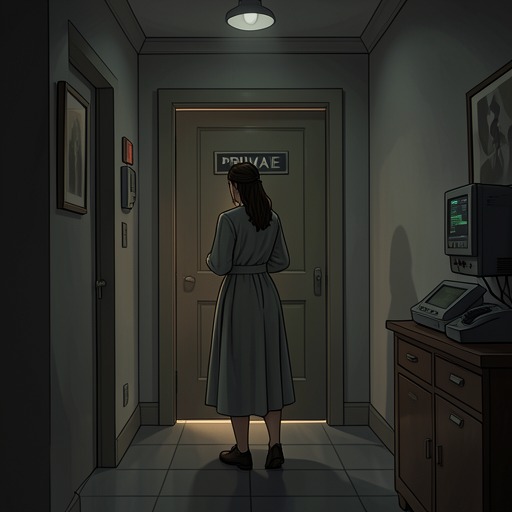
Other PeopleMary Lamb and John Prince are joined by a relationship that begins in danger and deepens through a mystery neither can resolve alone. Prince recognizes Mary when she has no reliable account of herself; he uses his authority first to release and protect her, then to investigate whether she is Amy Hide. His help offers Mary a foothold, but his knowledge of her possible past also makes him a persistent, unsettling presence.
Recognition in Custody
Before Mary knows his name, Prince appears in the aftermath of her contact with Jock and Trev. Sharon has turned against Mary, and the men have treated her as an object they can use. Their approach is not merely threatening in private: they are criminals whose schemes revolve around money, and the narrator warns that police are close behind them. In that setting, Mary is at risk both from the men and from the authorities drawn into their world.
Prince encounters her in custody and asks for her name. When she answers, he addresses her as Mary Lamb and asks what has brought her among people he regards as unlike her. Mary agrees that they cannot be her kind. Prince tells her to stay away from them and warns that he will make trouble if he sees her there again. The warning is severe, but it is also a form of recognition: he distinguishes Mary from the company she has fallen into rather than simply treating her as one of them. He then orders that she be let go, ending this first encounter with an act of release.
The contrast with Sharon sharpens the significance of Prince’s intervention. Sharon has brought Mary into the dangerous group and declared that Mary will not mind what Trev does to her. Prince, by contrast, draws a boundary around Mary’s exposure to that group. His intervention does not erase the danger or restore Mary’s memory; it gives her a chance to leave before the encounter becomes still more damaging.
Practical Protection and a Second Meeting
Prince’s later help is more explicit. He tells Mary that, in the eyes of the law, she has not yet done anything serious. Although his eyes frighten her because they seem to know too much, he does not treat her as irredeemably criminal. He says she has started badly and needs to cut herself off from that life and those people, who will repeatedly reject her. His advice is concrete: she will need work and somewhere to live.
He does more than offer general sympathy. Prince writes quickly, tells Mary that she can stay there for a while, and promises to call the relevant people. He gives her his name and says she can find him if she needs help. The offer creates a practical connection at a point when Mary has little to rely on. Yet even as he makes room for her, he is trying to place her in his mind. Mary notices the effort and is afraid of what it might mean; Prince’s kindness is inseparable from his suspicion that he has encountered her before.
His later remark that Mary has not gone far enough shows that he continues to monitor the direction of her life. When they meet again, he is seated with his newspaper, coffee, and cigarette, appearing controlled and alert among the people around him. His brief statement implies that her attempt to distance herself from danger has not resolved the underlying problem. The relationship therefore does not settle into a single rescue scene: Prince keeps returning as a figure who both offers assistance and judges whether Mary has really escaped the circumstances threatening her.
The Identity Question
Prince’s interest in Mary is driven by a specific uncertainty. In a pink letter addressed to Miss Lamb, he asks whether the name is accurate and recalls that he had said he had seen her before. He allows that he may be mistaken, but asks her to stay while he looks into the matter and promises to contact her. The letter makes explicit what his earlier attempts to place her had suggested: his concern is not only about Mary’s immediate safety but also about who she may have been before her amnesia.
When Prince later speaks with Mary about Amy Hide, he frames the question cautiously. Some people, he says, have assumed that Amy came to a violent end. He does not claim that the case is settled. Instead, he describes what is known about the kind of things Amy did and the people she associated with, then says that something happened on a night when she went too far, although the details are uncertain. He asks Mary how much she knows and hears that a photograph has been enough to make an impression. Their exchange places Mary’s possible identity at the centre of their connection: Prince has a case to investigate, while Mary faces evidence that her present self may be linked to a woman presumed dead.
The resulting imbalance is intimate without being romanticized. Prince can supply a name and a history that Mary lacks, but he cannot simply make her remember. Mary, meanwhile, has to decide how much weight to give the recognition of someone who seems certain that her story began before her own conscious recollection. His letter’s admission that he could be wrong keeps the mystery open even as his persistence binds them to it.
A Watchful, Uneasy Alliance
Prince’s support includes bringing Mary into situations from which she can observe the world around her. In one scene, he points across a street from beside a car and directs her attention to a violent struggle at a doorway: a man emerges, a woman leaps onto him, another woman intervenes, and the women embrace after he escapes. Prince calls the place full of strange things and moves on with Mary. The scene does not explain their relationship, but it shows its method: he directs her attention, shares his interpretations, and makes the city into evidence rather than a neutral backdrop.
That guidance has a double edge. Prince is attentive and capable of securing Mary’s release and temporary shelter, but he also speaks from a position of authority and knowledge she cannot match. His warnings about the people around her may protect her; his questions about Amy Hide repeatedly return her to a past she cannot confirm. The bond is therefore built not on complete trust but on an ongoing negotiation between dependence and uncertainty.
As a relationship in the novel, Mary and Prince’s connection links immediate survival to the larger identity mystery. His first decisive act is to separate her from Jock and Trev; his later acts provide a place to stay, a continuing point of contact, and a route into the Amy Hide case. Each form of help carries the same unresolved question: whether Prince is recognizing Mary accurately, and what that recognition will mean for the life she is trying to make without a usable memory of her own.