Mary·Amy’s State on the Boundary Between Life and Death
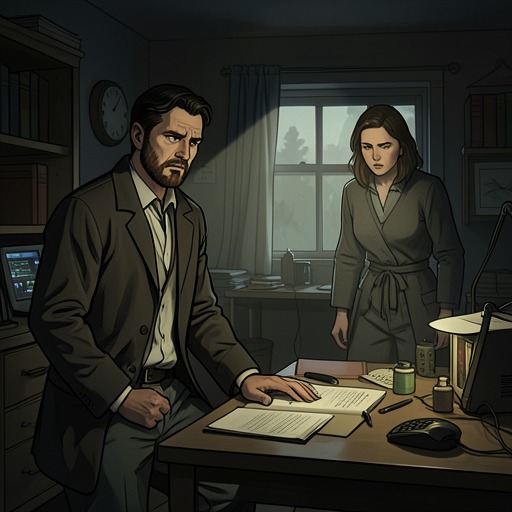
Other PeopleMary Lamb / Amy Hide’s state on the boundary between life and death is the novel’s most radical form of identity crisis: a condition in which memory, selfhood, and the distinction between living and dying no longer hold steady. It takes shape in stages, from Mary’s sense of having crossed back from an inaccessible other side to her later conviction that she has lived long enough, and finally to an encounter that ends with her awakening as Amy in childhood. The narrative does not settle whether these passages are literal death, vision, or a psychic structure through which Mary’s recovered identity becomes intelligible. Their force comes from holding those possibilities together.
A Threshold Without a Secure Afterlife
The novel first frames the problem as a question about what, if anything, follows death. Its reflections do not promise consolation: an afterlife might resemble hell, and each person might suffer a version particular to them. The reasoning is not that death is simply the opposite of life. Because life contains variety, the imagined afterlife would also require many different forms of suffering. This makes the boundary between the two states disturbingly permeable: death may be different, yet still resemble the life it follows.
That uncertainty matters for Mary because her experience is not presented as a clear, continuous account of dying and returning. Instead, the narrative gives the reader changes in perception and self-understanding whose status remains unsettled. The threshold is therefore at once a plot condition and a problem of knowledge. Neither Mary’s sense of having crossed over nor the novel’s language about death supplies a stable external explanation; the account asks readers to stay with the possibility that her experience is real to her without resolving what kind of reality it possesses.
Altered Selves and the Loss of Memory
The novel sets Mary’s instability beside other states in which a person’s relation to the self has been altered. Its narrator describes drink as a way of escaping the difficulty of being oneself, while also insisting that drinkers are not thereby made uniquely understandable or exceptional. That broad, deliberately generalizing account becomes concrete in Sharon, who denies that she is alcoholic even as her conduct and circumstances suggest otherwise. The contrast between her denial and the narrator’s certainty shows how a person’s account of the self may diverge from the condition others perceive.
The Botham household offers another, more intimate version of that conflict. Mrs Botham describes a woman from the clinic who, after a blow to the head, could remember almost nothing and recognize neither her husband nor her children. Gavin dismisses the story as drunkenness, while his mother insists that it was amnesia; their disagreement reveals how readily memory loss can be interpreted through existing beliefs about alcohol. Mrs Botham also recounts her own history of consuming dangerous household substances and presents sobriety as something she must continually value. These episodes do not establish Mary’s condition as equivalent to addiction or to the clinic patient’s amnesia. They establish a world in which memory, sobriety, and personal identity are repeatedly contested, making Mary’s more extreme uncertainty legible without explaining it away.
Recognition in the Mirror
A decisive turn comes when Mary tells Jamie the story she has assembled about herself: her death, her new life, the person who murdered her, and the redeemer she expects to come for her. Jamie does not respond by eating the meal she has prepared; the scene gives Mary no confirming explanation from him. Later, alone before a mirror in darkness, she hears laughter and sees a face when she switches on the light. She understands the moment as having broken through the glass and returned from the other side, and as having found herself again.
The mirror makes recognition visible but does not make it simple. It is both an ordinary reflective surface and the apparent boundary through which Mary imagines her return. Her regained selfhood is expressed not as a recovered factual record alone, but as a change in her relation to herself: she is herself at last. The scene thus joins the novel’s material images of crossing with its central uncertainty about what can count as proof. The face in the glass confirms recognition for Mary, while leaving open whether the crossing is supernatural, psychological, or both in the terms the narrative permits.
The Park and the Wish to Be Collected
Later, in a park, the threshold takes a quieter form. Mary sits on a bench as the day changes, and the familiar landscape seems to press upon her attention while remaining separate from her. The distinction brings relief: the trees, rooftops, and sky belong to a world that does not depend on her. She feels dead, not because the scene establishes that she has died, but because her relation to life has become one of distance and completion.
Mary’s thought that life is too long rather than too short gives this moment its particular weight. She believes she has lived enough and that he can come for her now. Prince arrives and sits beside her, breathing rapidly, before apologizing. His appearance answers her expectation in the immediate scene, but the passage does not turn that expectation into a straightforward account of death. Instead, it places the wish to be taken away beside an encounter with a living person who has come to her. The state is a threshold between exhaustion and reunion, between Mary’s sense that her life has reached its limit and the continuing presence of another person.
The Final Encounter and Return as Amy
In the final encounter, the figure before Mary joins identities that should be opposites: he says he is both policeman and murderer. When she asks whether he will kill her, he answers that she is already dead, while also describing life as hell and murder and death as lifelike. The claim intensifies rather than resolves the uncertainty. If Mary is already dead, the encounter still proceeds as a meeting; if it is an image or vision, it speaks with the authority of a final reckoning. The figure’s double role makes him at once an agent of pursuit and of harm, binding the forces of protection and violence into one presence.
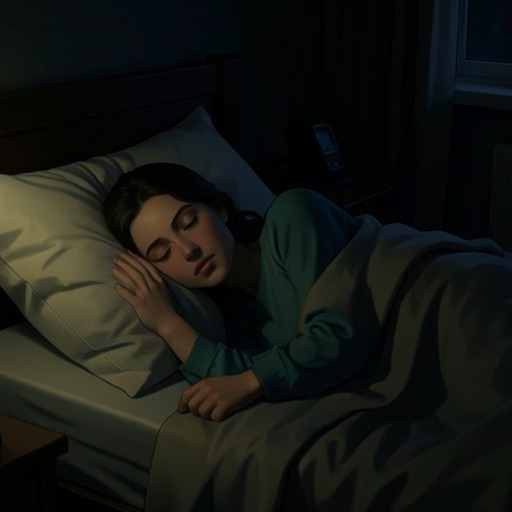
He embraces her, and Mary experiences a brief passage marked by a red shore before the sensation stops. Then comes a change in time: she smells the air, thinks she is all right, and senses that time is starting again. She opens her eyes on her bed as Amy, with her mother asking whether she is herself again. Amy apologizes, and her mother lets her go. The ending therefore does not merely return Mary to ordinary life; it returns her to an earlier identity and setting, making the awakening a reversal across both selfhood and time.
Narrative Significance
The boundary state links the novel’s questions about memory to its refusal to treat identity as secure or singular. Mary’s recovery is not a simple movement from confusion to a stable biography: it passes through the conviction of having died, the recognition of a self in the mirror, and a final transition into Amy’s childhood. The novel keeps the distinction between death and life unsettled even as it makes the shift in identity unmistakable.
The changing forms of the threshold also shape its emotional meaning. In the mirror, crossing produces recognition; in the park, distance from the world produces a sense of completion; in the final encounter, death becomes nearly indistinguishable from a return to life. These are not interchangeable episodes, but successive changes in what Mary can know about herself and her future. The ending offers a renewed beginning, not an explanation that closes the mystery: time starts again, and Amy is herself once more.