Mr Wrong
Other PeopleMr Wrong is the man whose confession makes him appear to be Amy Hide’s murderer, though he later retracts it and is released after serving his time. His place in the story is defined by that reversal: the confession offers an explanation for Amy’s fate, its withdrawal unsettles that explanation, and his eventual meeting with her carries the unresolved past into the novel’s final movement.
Identity and Confession
Prince identifies Mr Wrong as the man who confessed to murdering Mary Lamb, the identity through which Amy Hide’s story is being recovered. The confession was not merely an admission of having killed her: Mr Wrong said that Mary had asked him to do it, making her supposed request part of his account. That detail gives the confession an unsettling shape, since it assigns agency to the person presented as the victim as well as to the man who claims to have killed her.
The confession initially seemed persistent. Prince says that Mr Wrong held to his account for a long time before being persuaded to withdraw it. His eventual recantation therefore does not arrive as a simple correction immediately following an unreliable statement; it follows an interval in which he continued to maintain that he had done it. The evidence establishes both positions, but does not explain why he changed his account or which version is true. Mr Wrong remains at once the apparent author of the murder and the person whose admission can no longer be treated as settled fact.
Recantation and Release
When Prince tells Mary Lamb that Mr Wrong has recanted, the news is delivered quietly, but its consequences are stark. The man who had confessed now denies committing the murder. Mary’s tears register the force of hearing this reversal, though the account does not specify a single meaning for her reaction. The revelation alters the status of the confession without resolving what happened to Amy Hide.
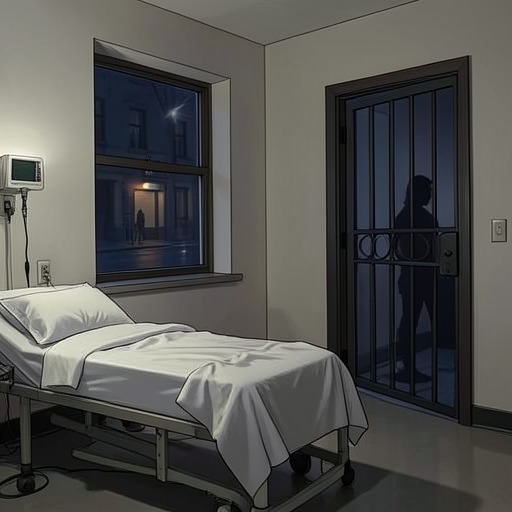
At the time Prince gives Mary the news, Mr Wrong is still imprisoned and has time left to serve. Prince says that they waited, hoping to get him on other offenses. This distinguishes the withdrawn confession from the immediate fact of Mr Wrong’s confinement: although the murder account has changed, he has not yet been released. Later Prince informs Mary that Mr Wrong has completed his sentence and is out. The story thus tracks a change from confession, to recantation while imprisoned, to release, without supplying a final legal or evidentiary resolution of the murder.
The Warning and Its Effect
After Mr Wrong’s release, Prince tells Mary that Mr Wrong has said something about coming to get her. The warning is indirect and imprecise; Prince himself qualifies what it means rather than describing a definite plan. He says that those around Mary will keep watch over Mr Wrong, offering reassurance while confirming that the threat is taken seriously enough to warrant attention.
Mary, however, does not respond as Prince expects. She treats the news as uninteresting and not frightening, and Prince observes that she does not seem gripped by it. The contrast matters: Mr Wrong’s return carries the threat of renewed danger, yet Mary’s response withholds the suspense that the warning might ordinarily create. The exchange also leaves the threat unresolved at this point. Prince reports the words attributed to Mr Wrong, but the passage does not establish that he has acted on them.
The Final Encounter
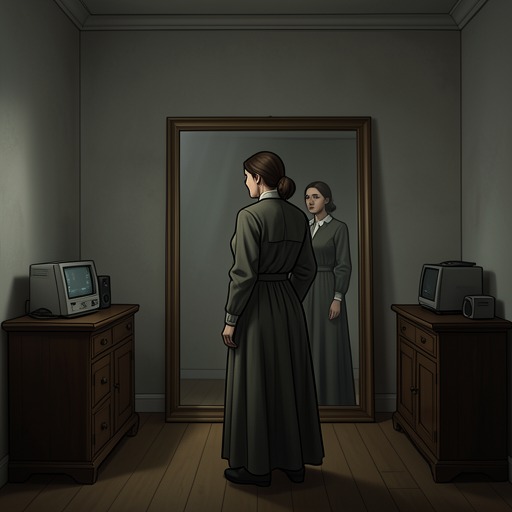
Near the close of the narrative, Amy Hide herself names Mr Wrong as the person she and Prince must go to see. Prince agrees, and the encounter follows. Amy enters a long, narrow room after Prince has left her alone; when Mr Wrong calls to her, he addresses her as Amy and asks her to come closer. His recognition gives the meeting an intimate history, while the scene offers no ordinary explanation for how the two have reached this point together.
Amy asks whether he will kill her. Mr Wrong answers by insisting that she is already dead, and speaks of life and death as closely entangled rather than cleanly separated. He also claims that he can never leave her and identifies himself as both policeman and murderer. These declarations belong to the charged, unstable encounter itself; they do not settle his actual status as a policeman or provide a new account of the crime. Amy says that she knows who he is. The recognition is mutual in a way the earlier confession and recantation were not: whatever uncertainty surrounds the history, neither figure treats the other as a stranger.
Mr Wrong embraces Amy. The narrative then passes into a rapid, disorienting sensation and an image of a red landscape beneath an unstable sun, before the experience ends in nothing. The account does not clarify whether this is literal death, a vision, or a final transformation in Amy’s perception. It does, however, end their meeting without reconciliation or an explanatory verdict.
Narrative Role and Significance
Mr Wrong’s appearances connect the question of Amy’s murder to the novel’s shifting identities and uncertain boundary between life and death. His confession seems to supply a culprit and an account of the killing; his recantation removes the certainty that account appeared to offer; his release brings him back into Mary’s present as a possible danger. The final encounter then makes him present to Amy directly, but replaces legal clarification with a confrontation in which both characters speak from within the unresolved past.
The distinction between his earlier account and his later declarations is crucial. The confession makes a claim about what happened, including the claim that Mary asked for her own murder. The final scene does not verify that story. Instead, Mr Wrong describes himself through opposed roles, policeman and murderer, and insists on a bond from which he cannot depart. His function is therefore not simply to identify a killer. He embodies the persistence of an accusation whose truth has been withdrawn but whose emotional and narrative force remains, carrying the story toward an ending in which recognition occurs without certainty or escape.