Poor ghost
Other PeoplePoor ghost is a recurring expression of pity in the novel, moving between Mary Lamb / Amy Hide and Alan. Its changing referent joins Mary’s sense of living as a remnant of the past to Alan’s physical vulnerability and, finally, the aftermath of his suicide.
Occurrences and Changing Referents
Prince applies the phrase to Mary after she says that she feels a certain way all the time. He then tells her that there is one more thing she must see that night. The words accompany a transition: after their silent drive, the scene opens onto water, misty doorways, and hungry dogs, while Mary remains watchful and uncertain of her surroundings.
Later, Mary thinks of Alan as a poor ghost during an intimate encounter. The thought arises from her perception of his bodily fragility and their shared sadness, not from any supernatural event. After Alan’s death, the narration repeats the phrase in the immediate aftermath of Mary’s discovery of his body, shifting pity toward the man who has died.
Alan, Vulnerability, and Death
The phrase’s use during the encounter is grounded in sharply observed physical details. Alan’s chest is damp while his mouth is dry; his scalp is moist, his hands shimmer, and his body seems to Mary to be failing. She lies motionless as he kisses her, and interprets the encounter through sadness and the thought that he is dying or melting away. The language makes the ghostly image a measure of perceived depletion, not a claim that Alan is literally dead.
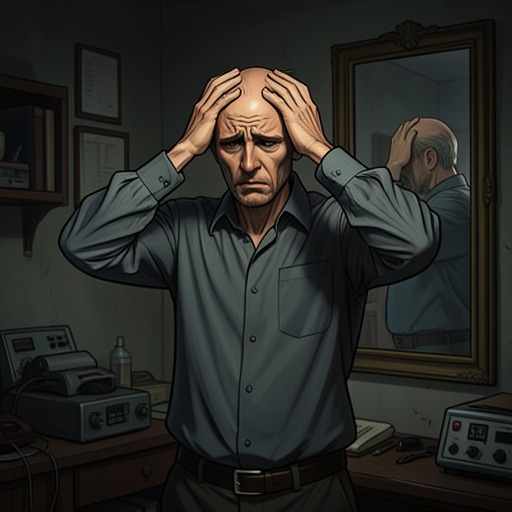
The repetition after Mary finds Alan hanging by the cord of his dressing-gown intensifies that earlier image. His note concerns his hair, a detail that connects the discovery to the bodily insecurity already present in the scene. The narration then reflects on how young people imagine suicide in relation to age and time, setting Alan’s death against the expectation that growing old will happen to other people. The phrase thus carries both intimate pity and the weight of retrospective loss.
Narrative Function
Across these moments, poor ghost changes from Prince’s description of Mary to Mary’s private understanding of Alan and then to the narration’s lament for Alan. That movement creates a link between Mary’s estrangement from her past and Alan’s struggle to live among other people, while keeping their circumstances distinct. The expression gathers the book’s recurring ghost imagery into a compact refrain: it names not an apparition, but a person made to seem diminished, isolated, or already partly lost.