
Kintsukuroi and the Limits of Repair
Our Chemical HeartsThis thread follows the image of repaired pottery as Henry’s hopeful metaphor for Grace, and the realization that people cannot be repaired into his preferred shape.
increasing Bearing strength in each event
 decreasing
Bearing strength in each eventdecreasingAn Image of Beauty
An Image of Beauty
Broken pottery, joined again
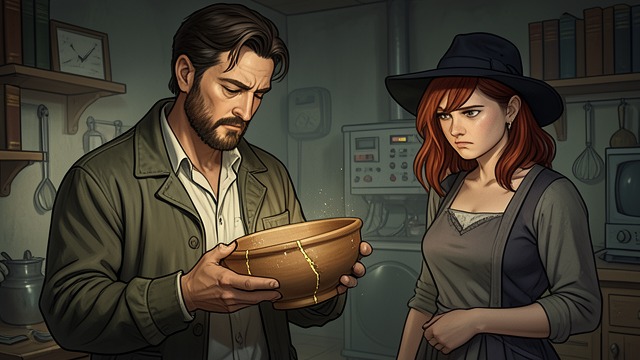
Henry shows Grace his repaired bowls and explains the Japanese practice of joining broken pottery with visible seams. He sees the scars as evidence that damage can become part of beauty.
A metaphor offered too soon
Grace responds that people cannot be mended with gold seams. Henry hears the comment but continues to hope that her wounds can become a story of recovery shaped by love.
The Dream of Healing
The Dream of Healing
Henry’s imagined future
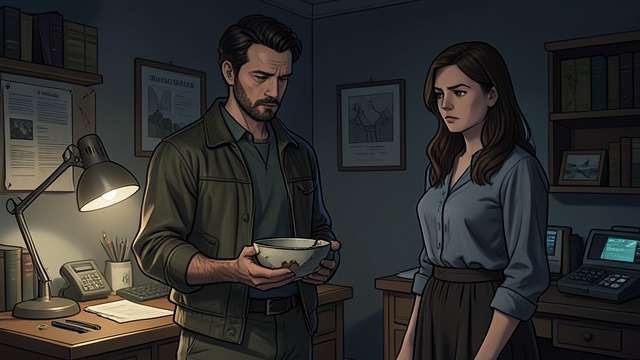
Henry imagines a healthier, happier Grace emerging from grief, as though love could help assemble a better version of her. Grace recognizes that he sometimes values this future self more than the person he is actually beside.
A flaw in the metaphor
The bowl metaphor makes visible damage look beautiful, but it risks turning Grace’s suffering into something Henry needs to interpret. Her objection insists that compassion must not become a demand that she recover on his schedule.
Scars Without a Promise

Scars Without a Promise
A relationship breaks
Henry and Grace separate despite their affection and despite his wish to frame their pain as a meaningful repair. Their relationship cannot be restored simply by finding a poetic explanation for its damage.
Change remains possible
Grace gradually improves, but not as a reward for Henry’s love or proof that his fantasy was right. The visible seams of a life are not a guarantee that two people can be made whole together.
the evening Grace visits Henry’s basement
during the relationship’s decline
after the Thanksgiving fair
