
Death, Rest, and Survival
Our Chemical HeartsThis thread traces the changing meaning of death in Grace’s philosophy, Henry’s fears, and the story’s insistence on staying alive through grief.
increasing Bearing strength in each event
 decreasing
Bearing strength in each eventdecreasingA Philosophical Refuge

A Philosophical Refuge
Smallness against sorrow
Grace tells Henry that human lives are brief arrangements of atoms and that oblivion can feel like absolution. She finds comfort in the eventual end of pain and embarrassment.
A troubling formulation
Henry is fascinated but also unsettled by how calmly she describes disappearance. Her ideas are philosophical, yet her grief makes them difficult for him to separate from the danger of despair.
Fear at the Missing Place

Fear at the Missing Place
Imagined death
When Grace cannot be found, Henry imagines her dead in a dramatic, literary scene. His thoughts turn her abstract reflections into a real and immediate fear that she may have taken her own life.
The living person matters
Finding Grace in the station’s water forces Henry to confront the difference between discussing death and facing a person in danger. He focuses first on warming and bringing her home, not on winning an argument about the universe.
Survival After Loss
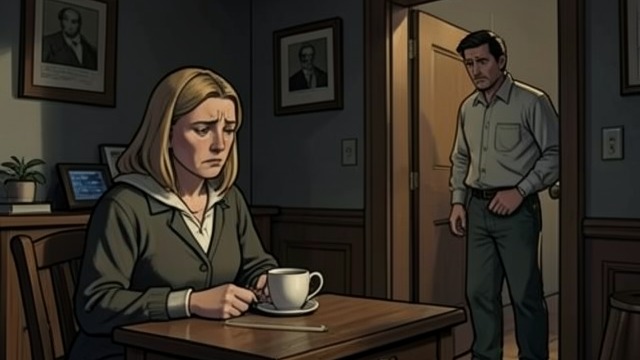
Survival After Loss
Staying present
Grace says she is angry rather than depressed and describes the exhaustion of living with loss. Henry asks her not to speak of death in ways that frighten him, showing that affection sometimes means challenging a cherished idea.
A continuing life
The story offers no cosmic resolution to grief. Instead, Grace and Henry continue living separately, and Henry recognizes that he can survive the loss without treating it as proof that his love was meaningless.
early in the relationship
the night Grace disappears
from the station rescue through the semester’s end
