Dominic Sawyer
Our Chemical HeartsDominic Sawyer, whom Grace Town calls Dom, is the seventeen-year-old student killed in the car crash that also severely injured Grace. The story presents him largely through what survives him: an inscription Grace made as a child, the reported facts of the crash, and the grief and misapprehension those traces create. His absence shapes Grace’s bond with the past and forces Henry Page to recognize how much of her life he has not understood.
Identity and Background
Dominic was a junior at East River High School. A news report about the crash identifies him as its seventeen-year-old driver and says he died on impact. In a fragment of the same report, a teacher describes him as “one of the kindest students I’d ever taught. Brilliant at everything and—” The sentence is cut off in the article Henry reads, leaving the praise vivid but incomplete. It nevertheless gives the public account of Dominic a character distinct from the bare fact of his death: he was remembered at school as kind and exceptionally capable.
Grace’s connection to Dominic began before their relationship as teenagers. When she was about ten, she scratched “G + D 4evr” into the metal of a spiral staircase. She explained that the D stood for a boy she had had a crush on, and Henry learned that the childhood inscription had outlasted the innocence of its promise. Grace traced the letters as she explained that forever had proved shorter than she expected. The engraving preserves an early version of their bond, while her reaction makes clear that it has become inseparable from loss.
Relationship with Grace Town
By the time Henry asks about the initials, Dominic had been Grace’s boyfriend. The staircase scene initially gives Henry only a partial account: Grace calls him a childhood crush, and the inscription seems to belong to a past she can revisit but not fully explain. Her quiet attention to the letters, and her admission that the place is not the same alone, register the emotional weight attached to Dominic without yet revealing the full circumstances of his death.
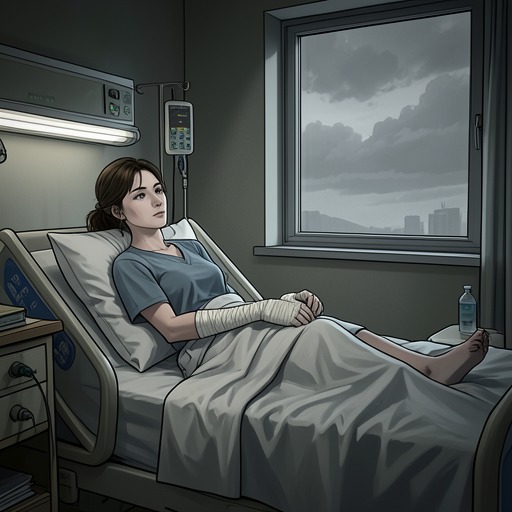
That withheld history comes into focus when Grace tells Henry that Dominic was driving. She manages to say that she injured her leg, but cannot complete what happened to Dominic; Henry understands that he died. The later news report supplies the details missing from her broken account: the car skidded off the road, rolled several times, and struck a tree; Dominic died on impact, while the passenger, a seventeen-year-old girl believed to be the driver’s girlfriend, was left in critical condition with major injuries. The report does not name Grace, but its description lets Henry connect her injuries to the crash and to Dominic.
Death and Its Aftermath
Dominic’s death is both a concrete event and a continuing pressure on Grace. The crash left her with a severely injured leg, and Henry retrospectively connects her grief to the places and objects he had encountered: the graveyard, the clothes, the car, the track, and the abandoned train station. Each had seemed like an isolated detail. Once he understands that Dominic was driving and died, those details form a history organized around the accident and its aftermath.
The accident also revises Henry’s understanding of the music he associated with Grace. He had treated The Strokes as part of a shared romantic language between them, only to realize that the songs belonged to Grace and Dominic’s history. His discovery is painful because it exposes how easily he had mistaken a memory he wanted to share for one that was already hers and Dominic’s. Dominic’s presence in the scene is therefore indirect but consequential: the meaning of the music changes as Henry recognizes the relationship that preceded his own.
Narrative Role
Dominic is characterized through contrast between the permanence promised by the childhood carving and the abrupt finality of the crash. The inscription’s “4evr” survives physically, but Grace’s later words expose the limits of what it can promise. The staircase holds the mark of a childhood attachment; the newspaper records the precise violence of its ending. Together, these traces let the reader encounter Dominic as both a remembered first love and a young person whose death changed the course of Grace’s life.
The partial newspaper quotation and Grace’s inability to finish her account also shape how the truth reaches Henry. At first, he can only interpret clues from outside her experience; once she reveals that Dominic was driving, those clues acquire a painful coherence. Dominic matters not because the narrative supplies an extended account of his life, but because the surviving evidence of that life repeatedly alters what Grace’s past means to Henry—and what he understands about the limits of his place in it.