Grace's cane
Our Chemical HeartsGrace's cane is both a practical support for her injured leg and a recurring object through which the story makes her changing relationship to her body visible. It marks the effort and limits involved in ordinary movement, but it is not simply a sign of helplessness: Grace carries it into daring acts, casts it aside when attempting to run, and turns it into an instrument of punishment. After Christmas, as her limp lessens, she stops using it altogether.## Appearance and First Significance The cane is part of Grace Town’s introduction at Westland High. She arrives late to drama class in oversized clothes, sits at the back with the cane resting across her thighs, and says nothing to anyone. The object immediately distinguishes her from the other students, but it also gives the reader a concrete first indication that her difference is physical as well as social. Henry Page initially knows nothing about the extent or history of her injury; watching her move will make that uncertainty part of their early encounters.
In Alistair Hink’s office, the cane reveals the care walking requires. Grace rises slowly from a bench, distributing her weight between the cane and her good leg. Henry deliberately slows his pace in the hallway, hoping she can walk beside him, but she remains behind, hobbling two steps back. His attempted kindness does not make the distance disappear. The scene shows mobility as a negotiation between her body, the support she uses, and the pace another person sets—not an abstract condition that a sympathetic gesture can resolve.
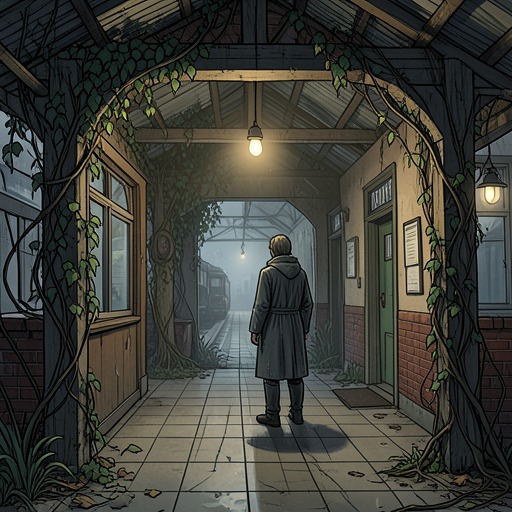
That practical role is also present when Henry catches up with Grace outside school. She walks quickly, the end of the cane clicking against the road; when a car beeps behind them, she points forcefully at the cane and waves the driver around. The movement is emphatic rather than passive. Here the cane helps make her circumstances legible to a stranger, while Grace herself directs what the driver should do.## An Object Wielded and Cast Aside At the abandoned steam train station, Grace handles the cane in a wholly different way. She places a loaf of bread at her feet, holds the cane in her right hand like a javelin, and launches it over a hedge. She then steps onto the fence with her good leg and hauls herself up. The cane is no longer resting against her body or helping her keep pace; for this moment, she deliberately sends it away and tackles the obstacle herself. The action complicates its meaning as a marker of dependence: Grace can use it, but she is not reducible to its use.
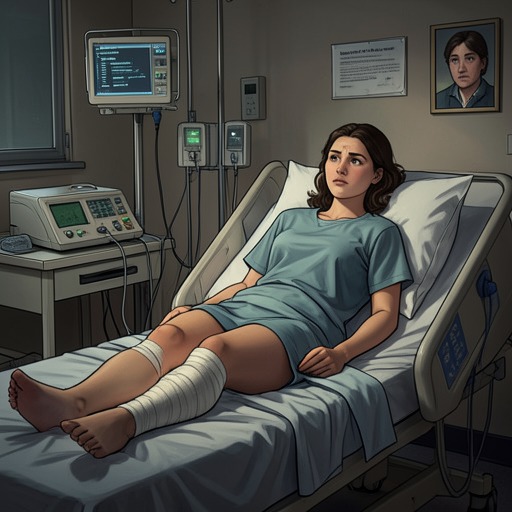
The most painful reversal occurs at East River’s track. Grace arrives without the cane and tries to run, returning limping to the starting line before kneeling and setting off again. After about one hundred feet, she stops, screams, pulls at her hair, retrieves the cane from trackside, and strikes her injured leg repeatedly with it before collapsing in tears. The same object that supports her movement becomes the means by which she hurts herself. The cane’s presence at the edge of the track, followed by its use as a weapon, makes visible the collision between her wish to run and the injury that interrupts that effort. Her subsequent pronounced limp is connected in the scene to this repeated assault, not merely to the original injury.## Injury and Bodily Experience The story later gives the cane’s practical significance a physical context. When Henry sees the scarring on Grace’s legs, she explains that large areas on her upper thighs are where doctors harvested skin grafts; the first graft did not take well, so they had to return for more. The worst damage is on her calf, where skin and muscle were removed and the resulting flesh is much smaller than that of her other leg. Fresh bruises and welts from her latest attempt at the track mark further injury. Henry recognizes how remarkable it is that she can walk at all.
Grace also describes the pins in her leg: they have already been changed once and may perhaps be removed in a few years. Her uncertain comparison to Humpty Dumpty presents repair as incomplete and unresolved. The cane should therefore be understood alongside a substantial injury and ongoing medical treatment, not as a decorative emblem that stands in for an uncomplicated recovery. At the same time, the track episode shows that her relation to the injured body includes choices that intensify its pain. The object participates in that conflict without explaining it away.## Disuse and Changing Meaning After Christmas, Grace’s limp becomes less noticeable, and eventually she stops walking with the cane altogether. She begins driving to school. The change is gradual rather than a single dramatic cure: the cane’s disappearance accompanies reduced reliance on it, while her injury’s history remains part of her body and her life. Its eventual absence registers a genuine change in mobility without establishing that every consequence of the injury has vanished.
Grace sometimes continues to wear Dominic Sawyer’s clothing, including a knit cap, necklace, or jacket, but increasingly wears her own things. The account places that shift alongside her gradual release from the imagined debt she has been paying through grief and self-punishment. The cane is not identified as a token of that debt, yet its changing place in her daily life forms a concrete counterpoint to her earlier acts of punishment: first it supports her, then she uses it to injure herself, and later she no longer needs to carry it to school. That progression makes the object significant precisely because it remains practical. It records bodily effort and changing capacity while exposing the limits of treating visible recovery as proof that grief has been resolved.