Grace’s self-punishment through pain
Our Chemical HeartsGrace Town’s self-punishment through pain turns grief over Dom into a private bodily penance. Her injured leg is not only a lasting consequence of the past but, for a time, something she deliberately keeps from healing as quickly as it might; later, that pattern loosens, and recovery becomes part of her movement toward self-forgiveness.
The Practice and Its Physical Expression
When Grace first appears at school, she walks with a cane. Later, at East River’s track, she attempts to run without it, but stops after roughly one hundred feet. She then strikes her injured leg with the cane and collapses in tears. The episode makes visible a pattern that others had not seen: running is not simply an attempt to regain physical ability, but is bound up with her distress and her effort to keep the injury from healing too quickly. The account presents her pain as deliberate self-punishment, not as proof that the injury itself is a moral failing.
Penance and the Gradual Release of Guilt
The narrative links Grace’s self-inflicted pain to an imagined debt to Dom: she treats suffering as the only justice she can offer him and as a possible route to redeeming herself. After Christmas break, that private accounting begins to change. Her limp becomes less noticeable, she stops using the cane, and she starts driving to school. Although she sometimes still wears one of Dom’s belongings, she mostly returns to her own clothes. The shift does not erase her loss or make recovery immediate; it marks a gradual loosening of the belief that she must keep paying for the past through pain.
The Injury Beneath the Penance
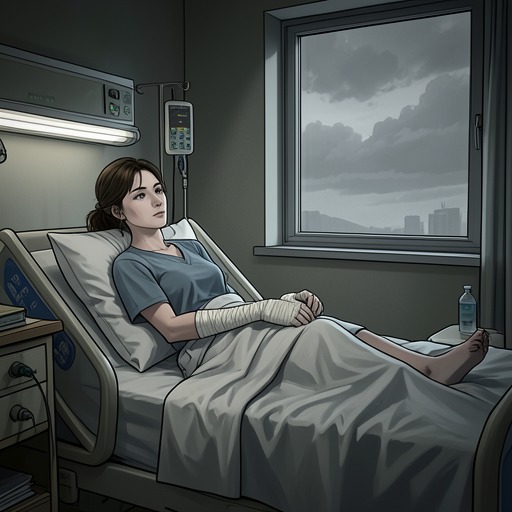
Grace’s self-punishment takes place in a body already marked by serious injuries. Her leg required skin grafts from her thighs, had internal pins that had been changed once, and remained sufficiently damaged that walking was itself difficult. The narrative distinguishes this lasting physical consequence from the later punishment she chooses to inflict: her pain is not simply an emotional metaphor, and her impaired mobility is not evidence of guilt. By placing the attempted run and its aftermath beside the practical details of her treatment, the account shows how the injury shapes daily life while also becoming entangled with Grace’s private belief that she owes Dom a debt.
The Multiple Figures of Grace
By the end, Henry’s understanding of Grace rests on the difference between the person living with grief and the polished figure assembled from memory and imagination. He recognizes her as a changing, flesh-and-blood person, still bound to Dom through the clothes and sheets she has not yet let go of, alongside the ethereal Grace preserved in photographs and recollection. A third image, the Kintsukuroi dream girl, is clean, whole, and dressed in florals, a figure Henry has helped piece together. These versions make the danger of turning Grace’s pain into a simple story of repair visible: the imagined debt and the leg injury are real parts of her experience, but neither exhausts who she is. Her gradual recovery marks a loosening of self-punishment, not the replacement of a damaged person with an idealized one.