Henry finds and rescues the missing Grace
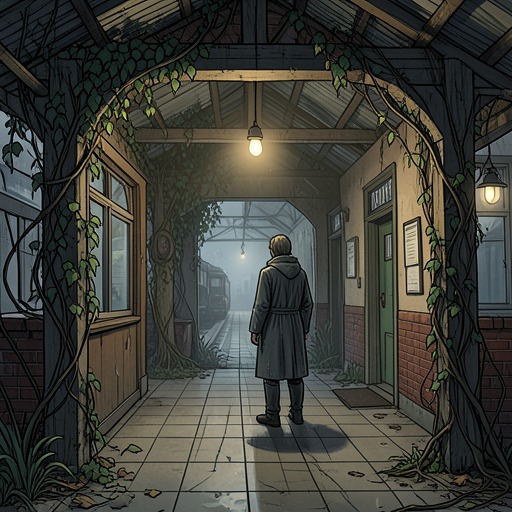
Our Chemical HeartsHenry finds and rescues the missing Grace at the Abandoned train station on Dominic Sawyer’s birthday, turning a night of fearful uncertainty into a moment of shared grief and a first step toward relinquishing Dominic’s keepsakes. The rescue does not resolve Grace’s mourning or define her relationship with Henry; instead, it brings her out of immediate danger and allows a painful truth about her past to be spoken.
The Disappearance and the Search
Henry is at school trying to get the failing Westland Post finished when two messages redirect the day. His mother says she is at Grace’s house and tells him to come there, but the message makes little sense to him. Then a voice message from Martin Sawyer identifies its urgency: Martin is panicked and crying, and says that it is Dominic’s first birthday since his death and that something has happened to Grace. Henry cannot hear the rest. The fragments—the birthday, Martin’s distress, Grace’s unexplained absence—leave him fearing the worst before he knows what has occurred.
That fear becomes certainty in Henry’s mind when he learns Grace is missing. He believes she is dead, though no one has confirmed it. At school, Principal Valentine says that Grace is unaccounted for and that her family and the police are handling the situation. Even the threat that leaving will cost Henry his editor position cannot keep him there. He runs from the office, with Lola Leung calling after him, and tries to reach Grace before he can fully articulate what he fears.
The search stretches through a succession of waits. People are assigned places to look; more police arrive, asking questions that suggest they suspect Grace may have killed herself. Henry and the others drive slowly through suburban streets, watching for anyone who might be a teenage girl. After dark, police tell them to rest and say Grace will turn up one way or another. At home, Henry remains dressed in bed, unable to stop imagining possible deaths. His thoughts turn to literary images of suicide, a sign that he is projecting a story onto Grace precisely because he cannot reach her or know what she is experiencing.
The remembered fishpond at the Abandoned train station breaks that paralysis. Henry recognizes it as the place Grace might be and leaves without waking his parents. He takes the car keys from the dining-room table, drives into the city, climbs the cast-iron fence, sprains his ankle falling from a hedge, picks the lock, and hurries down the spiral staircase into the basement. The physical obstacles make the search urgent and costly, but he keeps going because the possibility that Grace is there matters more than the injury or the danger of being caught.
Finding Grace in the Water
Henry finds Grace alive, standing waist-deep in the still water. Relief nearly overwhelms him: after imagining her dead, he experiences her survival as an almost unbelievable reprieve. In the moonlight, he sees tears on her face and short, sharp breaths. She wears white, with pale flowers woven into her hair, and her appearance calls up the image of Ophelia. The allusion reflects the frightening picture Henry has formed during the search, but the scene before him is not a death: Grace is alive, and he has reached her.
He runs and then wades through the water until he can go no farther. He takes off his coat and drapes it around her shoulders because she is shaking. Grace does not move when he urges her out of the water. Then she collapses against him and sobs violently, asking why Dominic had to die and why she could not have died instead. Her grief, described as something that seems to radiate from her and pass into Henry’s breathing, changes the encounter from a rescue into an intimate witness to her mourning. He does not answer the question or make her stop crying; he holds her while the sobs continue.
When the crying ends, Grace pulls away and returns to the stairs without looking at him. Henry follows. She sits on a rung with her feet still in the icy water, and he sits beside her, trying not to show how cold he is. His wish to remain alone with her exists alongside the responsibility to take her home. He calls Martin, who answers immediately and asks if she is alive. Henry confirms that he has found her, that she is safe, and that he will bring her back. He also asks Martin to tell Henry’s parents that both Grace and Henry are safe.
Grief, Anger, and Dominic’s Keepsakes
Beside Grace, Henry learns that she had been placed on suicide watch during the first month after Dominic died. People repeatedly checked on her, including by banging on the bathroom door, because they feared she would harm herself. Grace says that this surveillance kept her from mourning in peace and that Dominic would not have mistaken her for someone who intended to die. She insists that she was not depressed and is not depressed now; what she feels is anger. The distinction complicates the fears that shaped the search: Henry and the others were right to be concerned about her safety, but their assumption that they understood her state of mind was not the same as knowing her.
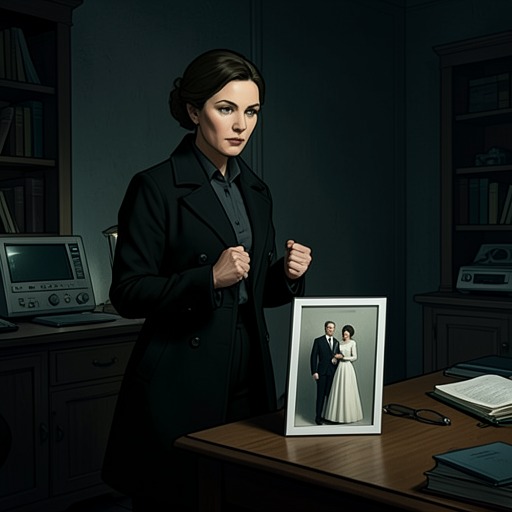
Grace says that Henry deserves to hear the truth about Dominic, acknowledging that she has been unfair to him. She recalls meeting Dominic when she was nine. Her father had died; her mother had been away for three days, and there was no food in the house. Her uncle took her from home and left her with his co-worker Mary, whose son was about her age. Grace remembers arriving shy and wary of boys, then seeing Dominic jumping on a backyard trampoline. He invited her to play Mario Kart, patiently taught her a game she had never played, and let her win. Later, they held hands while watching cartoons on a laptop in his tree house. By the end of that day, Grace had decided she would marry him. This childhood memory places their bond well before the car accident and helps explain why Dominic’s death is bound up with her earliest experience of being welcomed into a loving family.
Grace speaks about death as an end to pain and exhaustion, but clarifies that she does not mean this as a suicidal wish. Henry responds that they need to get her home, and this time she agrees. Before leaving, however, she retrieves a small metal box from the steps. It contains objects from Dominic’s shrine: the anchor necklace she wore on the first day Henry saw her, the Strokes keychain, and the Ramones shirt she had not been able to wash. Grace takes Henry’s hand and leads him back into the water. Together they release the keepsakes one by one into the depths. The last object is the box itself, marked DOM GRADE 10; they watch it sink among the fish to the debris-covered floor.
Aftermath and Significance
The disposal of the keepsakes is a concrete act, not proof that Grace’s grief has ended. Henry wonders whether it resembles redemption or absolution, but the question remains uncertain even to him. Grace answers with the thought that stories with happy endings may simply be stories that have not finished yet. Her words resist treating the night as a neat cure: she has been found, has spoken about Dominic, and has let go of the objects, but neither those actions nor the rescue can establish what comes next.
Grace leaves the station wearing Henry’s jacket over her white dress. She climbs out barefoot, and at the car she strips down to her underwear and throws the dress into the gutter. The gesture closes the night’s striking image of the flower-crowned figure in the water, returning the scene to the practical journey home while leaving the experience unresolved. Henry has brought Grace back alive, but he has also had to confront how little he knew of her grief and of the history she shared with Dominic.
The rescue’s consequences extend beyond that night. A week later, Henry wakes to find that Grace is no longer the first thing he thinks of; she is the second. His thoughts no longer cut through him with the same force, and he recognizes the change as the beginning of healing. He knows then that he will survive, and the narrative confirms that he does. The event therefore marks two different movements: Grace’s outward release of Dominic’s tangible belongings, and Henry’s gradual recovery from the emotional wound of loving her amid her unresolved loss.