Thanksgiving fair
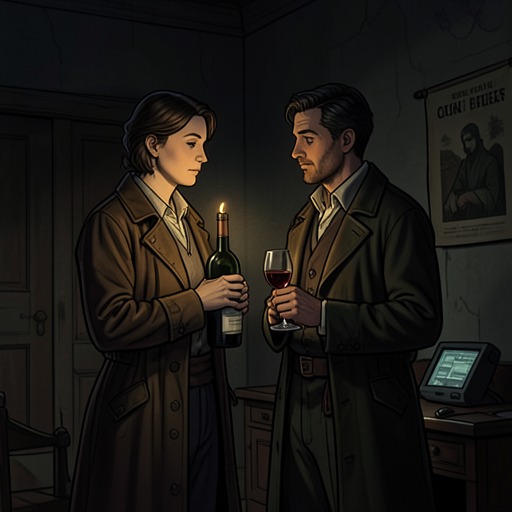
Our Chemical HeartsThe Thanksgiving fair is an annual city gathering whose bright, crowded amusements become the setting for one of Henry Isaac Page and Grace Town’s most hopeful—and most painful—encounters. On Grace’s birthday, Henry finds her transformed among the fairgoers, spends the evening at her side, and mistakes a lively shared performance for the beginning of a lasting change. The fair’s shift from apparent romantic reunion to confrontation makes its public, festive atmosphere a sharp contrast to the private disappointment that follows.
Origins and Setting
The fair began as a craft exhibition intended to showcase livestock and fall produce. By the time of the story, it has been a favorite annual social event for teenagers across the city for roughly seventy years. Its appeal lies not only in what it exhibits but in its atmosphere: crisp autumn air, twinkling carnival lights, and the smell of deep-fried food make it a place associated with youthful recklessness and possibility.
The particular fair attended by Henry takes place on a cold, dark Saturday, on Grace’s birthday, as a storm approaches. The weather gives the event a foreboding edge even before anything goes wrong. Yet the fairground is also vivid and inviting: multicolored Ferris-wheel baskets shine above the crowds, while an antique carousel plays Glenn Miller’s Moonlight Serenade. A couple dancing in line at a food truck adds an image of ordinary intimacy to the scene, against which Henry’s hopes acquire an almost cinematic quality.
Henry’s Preparation and the Reunion
Henry spends much of the day preparing for the evening because he wants Grace to find him attractive. He cuts his hair short, buys a gray-marl jacket, black skinny jeans, and a black scarf, shines his shoes, and carefully styles his hair. Instead of wearing his father’s old clothes, he puts on an expensive wool coat his parents had given him early for Christmas. By evening, he feels he looks like an older, almost anachronistic version of himself. The effort registers how much the meeting matters to him before he even knows whether Grace will be there.
He also brings a birthday present: Elin Kelsey’s children’s book You Are Stardust. Henry does not intend the book as a coded metaphor for the fragility of life or for their relationship; he simply thinks Grace might like it. That plainness contrasts with the significance he will later attach to her appearance and behavior. With Lola Leung and their friends, he moves through the crowds toward the Ferris wheel, uncertain where Grace is and expecting, at most, to exchange a brief conversation with her.
Then he sees her. Grace wears a red coat and lipstick, with washed, curled honey-blond hair and color in her cheeks. Her polished appearance differs sharply from the version of her Henry has known. The crowd seems to part around them, and his view of her becomes intensely romantic: he sees a radiant figure whose beauty appears almost otherworldly. Grace takes his hand and leads him away from the group, changing the encounter from distant observation to physical closeness.
A Night of Apparent Possibility
For hours, Henry and Grace move through the fair together. He puts an arm around her waist, and she appears unconcerned that other people may see them. They compete in bumper cars, feed each other cotton candy, and drink vodka from her flask at the top of the Ferris wheel. From there, the city looks small and toy-like below them. Henry wins her a prize at the laughing clowns. Each activity adds to his conviction that the evening is not merely a birthday reunion but a sign that their relationship may become something more settled.
The sequence has the feeling of a film montage: the fair’s lights and music, their shared games, and their ease with one another create a heightened version of romance. Grace seems lighthearted and effervescent, almost a character from a book. That impression is central to the scene’s tension. Henry experiences her changed presentation as evidence of a new relationship, while the evening’s theatrical quality leaves open whether he is responding to Grace as she is or to a role he hopes she will continue to play.
The Confrontation and Its Aftermath
Grace eventually leads Henry away from the crowds to a quieter field beside the Ferris wheel and tells him she has changed her mind. Their closeness gives way to an argument about what Henry wants from her and whether he has mistaken his hopes for knowledge of her. Grace tears a poem into smaller and smaller pieces and lets them fall onto the damp sidewalk. She challenges him for projecting his fantasies onto people and expecting them to perform the parts he has imagined.
Lola steps between them and tries to take care of Grace, inviting her to get food and rest. Grace explains that she had wanted to see how Henry would react if she forced herself to be the person he seemed to desire. She calls that constructed version Kintsukuroi Grace, stitched together with gold seams, and tells him that he has feelings for someone who does not exist. The earlier image of Grace as dazzling and newly transformed is thus recast: what Henry took as the revelation of a truer, happier self was, in part, a test of his capacity to love an idealized version of her.
The confrontation ends in physical distress rather than reconciliation. Grace vomits on the sidewalk, collapses, and needs help getting to her feet. The group takes several minutes to persuade an Uber driver that she can be driven home. As she gets into the car, Grace thanks them for looking after her. The fair’s festive setting has carried the pair from public intimacy to a difficult disclosure, but it does not resolve their underlying conflict.
Narrative Significance
The Thanksgiving fair brings two contrasting versions of the same encounter into close succession: Henry’s vision of a romantic turning point and Grace’s account of a performance designed to reveal what he expects from her. Its carnival pleasures—games, lights, food, a Ferris-wheel ride—make the hope feel credible before the scene exposes its instability. The contrast is not simply between a happy evening and a bad ending; it is between Henry’s appetite for a story in which Grace becomes the person he longs for and Grace’s insistence that she cannot be filled out by his daydreams.
The fair’s significance continues through the aftermath of the rupture. Later, Grace tells Henry that she is angry rather than depressed and begins to explain her history with Dominic Sawyer, while Henry comes to recognize how little he had understood about her grief. The book then describes his recovery not as an instant release but as a gradual change: a week after receiving a letter from Grace, she is no longer the first thing he thinks of when he wakes, and the wound has begun to heal. The fair is therefore a decisive episode in the movement from romantic projection toward a more difficult recognition of Grace as a person beyond Henry’s imagined role for her.