Westland Post’s last-minute rescue effort
Our Chemical HeartsWestland Post’s last-minute rescue effort is a hurried student campaign to produce the school newspaper after its editor, Henry Page, lets the issue fall dangerously behind. What begins as a disciplinary ultimatum becomes a collective experiment in redemption: a small crew must replace three months of missing work in two days, and an empty newspaper office becomes a place where students trade stories and confess their regrets.
The deadline and the failure
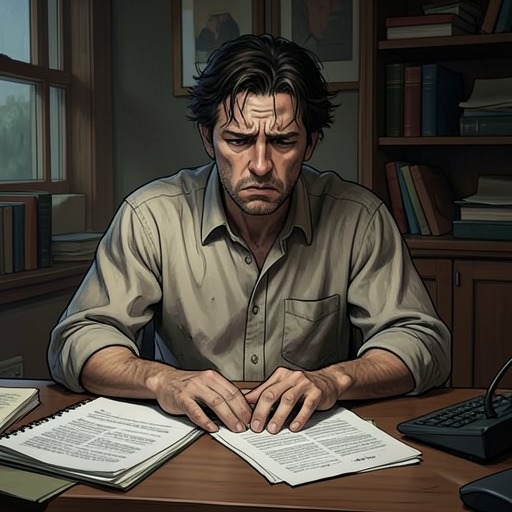
On the first Friday in December, Alistair Hink pulls Henry out of math class and takes him to Principal Valentine’s office. Lola Leung is already there, facing thirty tabloid-sized pages, half of them blank. Asked to explain the unfinished issue, Henry can offer only that it looks like an unpolished printout. His flippancy masks a more serious failure: Grace Town has been absent all week after Thanksgiving, and Henry has not even managed to enter the newspaper office. Lola has warned that she will take the problem to Valentine, but he has remained too depleted to act.
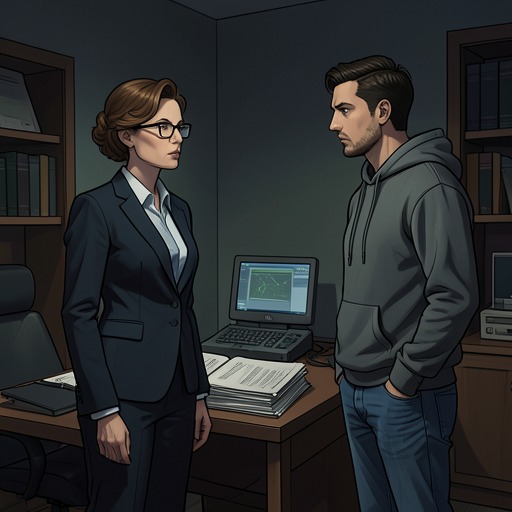
Valentine makes the stakes concrete. The paper is due to go to print on Monday, the printing has already been paid for, and in thirty-five years Westland Post has never failed to publish. She would remove Henry as editor if the decision were hers, but Hink still believes he can assemble something. Henry is excused from class for the rest of the day and ordered to gather his writers and finish the issue. The rescue effort therefore starts not with an editorial plan but with a fixed deadline, an almost empty layout, and a reluctant editor who has let personal distress interfere with his responsibility.
An appeal for help
By the weekend, Henry, Lola, Sadie Page, and Ryan are at school after hours, approaching Hink’s office across grounds that feel eerily deserted. Henry expects someone to come, though Lola doubts anyone will. A large party at Heslin’s house is already drawing attention: a Facebook event lists roughly three hundred students, while Henry, Lola, and Murray Finch are excluded from it. Madison Carlson’s absence from the guest list is also a surprise. Henry has a competing appeal to make. His post on the event page asks people seeking redemption to help save Westland Post, and twenty-five people have liked it.
Getting into the building proves less straightforward than the group expects. Sadie has experience breaking into the English department, but the locks have been upgraded since her delinquent days, and the school now has video surveillance. As she tries to pick a lock, the others fail to notice a security guard jogging toward them. The contrast is characteristic of the operation: the students are attempting an improvised rescue in a place made newly difficult to enter, with little certainty that either the paper or their plan will hold together.
Fifteen minutes after the break-in, volunteers begin arriving. The response is modest rather than universal: seven people show up, more than Henry expected, and several preface their help by saying they cannot write. Murray and Madison are among those Henry anticipated; Suki Perkins-Mugnai, Buck, Chance Osenberg, Billy Costa, and Heslin are additional arrivals. With Galaxy and three other juniors, the group becomes a motley crew of fourteen facing three months of work in two days. Sadie lays out the snacks promised in Henry’s post, while Lola and Henry begin organizing the work in the office.
Making redemption the issue
Henry announces redemption as the theme and treats it as broad enough to include ordinary, embarrassing, and painful admissions. Rather than demand polished prose, he tells the volunteers that anyone can contribute a story, whether as an acrostic poem, a cartoon, or a musical score. His examples connect the theme to people in the room: a bad touch-football game, Lola’s guilt about Ricky Martin Knupps II, and the awkward history of Chance and Billy’s group. The issue’s organizing idea is thus also a practical solution: it gives the contributors different ways to fill the pages without requiring every one of them to be a conventional writer.
The participants produce work drawn from specific regrets. Heslin stays about three hours before leaving to oversee his party, but first writes a soliloquy about redeeming himself in his parents’ eyes after the earlier party. Suki writes an article about the Gutcrushers and a poem about not calling her grandfather before he died; she had assumed she had more time, while he spent his final breaths asking for her. Chance declines to preserve the Trichomoniasis Trio in print and instead writes a short story about asking his father for a new phone just after his parents’ divorce, despite knowing the family could not afford it. These pieces give the theme substance: redemption is not abstract moral language but an attempt to name a particular failure, loss, or selfish choice.
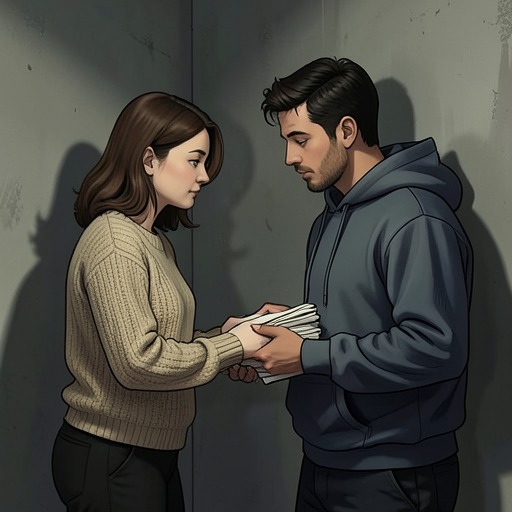
Lola proposes a handwritten-confessions spread, and Sadie contributes to it after recalling that she once set a school kitchen on fire. She had made lemon-curd cupcakes for her home-economics teacher, Mr. Hotchkiss, but resented the subject and its place in the curriculum; the fire became, in her recollection, the worst thing she had done as a teenager. Lola pushes paper and a pen toward her, and Sadie begins writing before anyone has looked up the statute of limitations for arson. The episode turns the staff’s improvised format into an invitation to confess rather than merely to submit finished articles.
A makeshift confessional and Henry’s page
The following morning, juniors arrive at ten, followed by Buck and two girls who had attended Heslin’s party the night before. Most pages are now filled, but Lola’s confessions spread remains open. The girls write down their sins and hand them over after being assured they will be absolved. More students follow. When the eighth person arrives, Lola makes a sign inviting people to confess for absolution and places a drop box in the hall. Murray appears at lunchtime in a priest costume, carrying holy water and greeting the people who come to the improvised confessional. Word spreads on Facebook, bringing classmates, friends, and students from other grades through the office over the course of the day.
At five in the afternoon, Henry asks how the page count stands. Lola tells him that only one spare page remains, then identifies it as his redemption. The exchange gives the rescue effort a final turn: Henry has organized other people’s admissions, but the issue has kept space for him as well. Looking at the black-and-white image of the supernova girl, he reflects that he had begun to mistake being repeatedly broken and repaired for what he wanted. His comparison to kintsukuroi—beauty imagined as the result of breakage—ends on a limit rather than a promise: something can be shattered too many times to be repaired, just as paper cannot be folded indefinitely. The last page is therefore not simply unused capacity in the layout. It marks the difference between creating room for remorse and assuming that every fracture can be made beautiful again.